
 E-Paper



China’s planned Turkish EV factories have yet to power up
When they do it could spell trouble for TOGG, Turkey’s domestic EV maker


 Prefer HTon Google


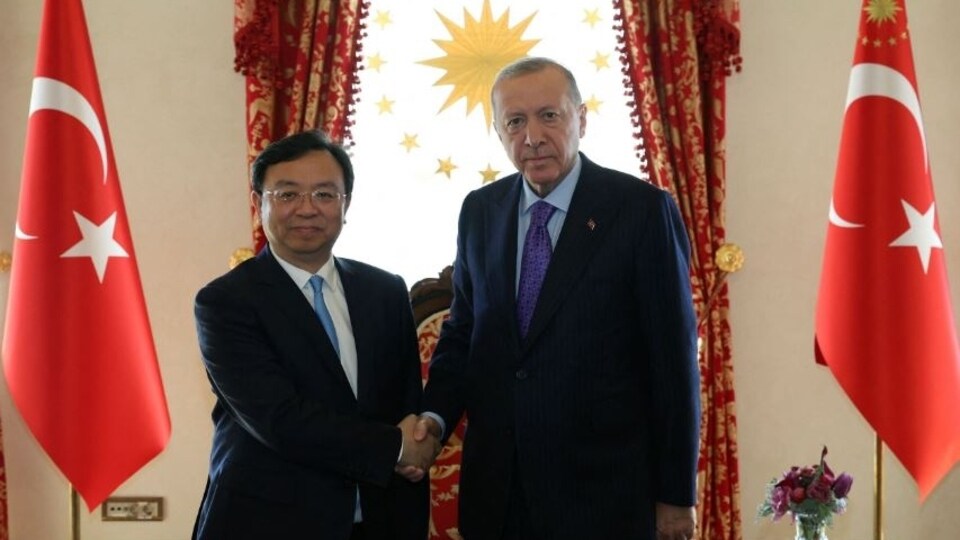
WHEN BYD, China’s biggest electric carmaker, offered a $1bn investment in the summer of 2024, Turkey rolled out the red carpet. Recep Tayyip Erdogan, the country’s president, attended the signing ceremony. Officials in Manisa, where the company plans to open a new factory, mused about a future “Chinatown” to house BYD workers. Yet a year down the line, despite reports the company would accelerate work on the plant at the expense of one in Hungary, things have not progressed much. The factory is supposed to open next year, but there are no signs of construction save for a few containers and the occasional dump truck.
Turkey’s location and relatively low labour costs make it a big draw for Chinese EV makers. So does its customs-union agreement with the European Union, which allows cars built in Turkey to be exported to the bloc tariff-free. Last year the EU slapped tariffs of up to 35%, on top of an existing 10% duty, on Chinese EVs. Other Chinese auto makers looking to Turkey as a way to avoid the tariffs include Chery, said to be eyeing a $1bn investment.
China is also keen to grab a slice of Turkey’s booming domestic EV market. High fuel prices and an extortionate consumption tax of up to 220% for conventional vehicles have driven up demand for EVs. Over 100,000 fully electric cars were sold in Turkey in the seven months to July, an increase of 147% on the same period in 2024.
Desperate for foreign investment but hoping to stem the tide of cheap Chinese EVs—which threaten its own electric carmaker, TOGG—Turkey has sought to solve both problems in one go. Last year the country raised tariffs on Chinese cars to 50%. But it made BYD and other carmakers who pledge to invest in Turkey exempt. Sales of BYD cars have surged.
On paper TOGG, one of Mr Erdogan’s flagship projects, has fared well. Since its launch in 2023, it has outsold every other EV brand at home, partly thanks to government support. But competition from foreign EVs and the prospect of 150,000 BYD cars per year from the plant in Manisa could spell trouble. “They may not survive in such a market,” says Cagdas Ungor of Marmara University.
Chinese investments in Turkey amount to only some $5bn, lower than in Saudi Arabia, Egypt or Iraq. Politics is no longer the main obstacle. Turkey has toned down its criticism of China’s treatment of its Uyghurs, a Turkic ethnic group. The biggest brake is instead Turkey’s rule-of-law record. Mr Erdogan and his inner circle enjoy nearly unchecked power. “Regulations and tariff decisions are made overnight without any consultations with the key actors,” says Ceren Ergenc of the Centre for European Policy Studies, a Brussels think-tank. “China perceives that as a high risk.”
China’s EV operations in Turkey have not escaped scrutiny by EU bureaucrats. Earlier this year the European Commission warned that it would go after countries and companies that engage in tariff circumvention. EU anti-dumping rules mean that cars made in Turkey could face punitive tariffs if imported parts account for 60% or more of their value, unless assembly adds over 25% to manufacturing costs. To have unfettered access to the EU market, companies like BYD will need to source at least some parts from Turkey.
Fear of pushback from the EU may explain why work in Manisa has slowed. Firms like BYD are hedging their bets, says Ms Ergenc, and waiting for the EU and China to settle their EV tariff dispute. Local officials and other analysts say BYD will finish the factory, though perhaps not on time. Turkey may be a convenient backdoor to the EU, but the Chinese have not yet prised it open.
To stay on top of the biggest European stories, sign up to Café Europa, our weekly subscriber-only newsletter.


