
 E-Paper



Factory production contracts in January inflation hits 3-month high
Retail inflation, as measured by Consumer Price Index (CPI) reversed its four-month-long decelerating spell to grow at 5.03% in February.

 Prefer HTon Google


Two important high frequency indicators released on March 12 paint a grim picture for the Indian economy. The Index of Industrial Production (IIP) contracted by 1.6% in January on the back of a poor performance by the mining and manufacturing sectors—lower than a Bloomberg estimate of 1% growth.
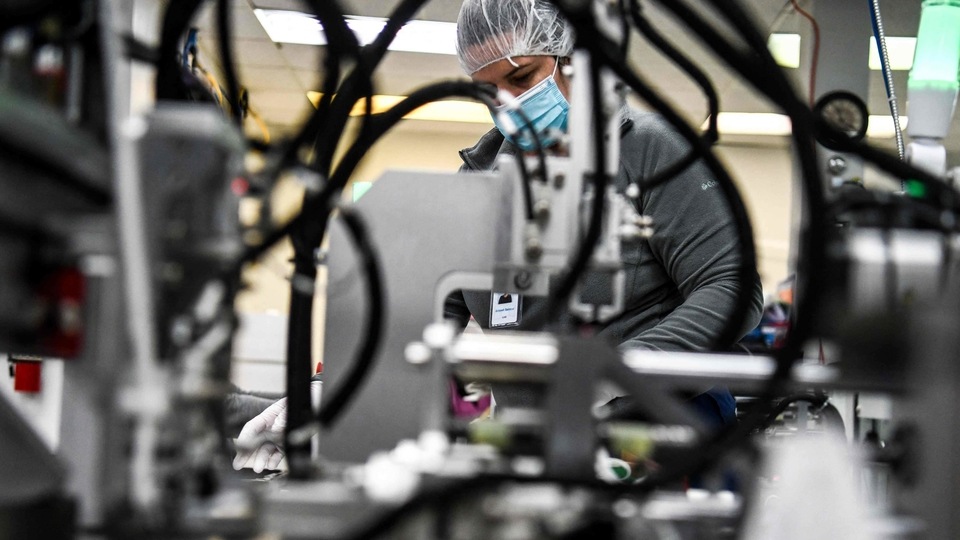
Retail inflation, as measured by Consumer Price Index (CPI) reversed its four-month-long decelerating spell to grow at 5.03% in February.
The numbers come at a time when India is staring at the possibility of a second wave of Covid-19. Some states such as Maharashtra and Punjab have begun re-imposing restrictions on mobility. The Nomura India Business Resumption Index (NIBRI) moderated to 95.2 in the week ending March 7, from 98.1 the prior week; 100 is the pre-pandemic level of activity.

That India’s industrial growth started losing momentum even before these restrictions and inflation has started rising again, even though food inflation is still at low levels—it was 3.9% in February—points towards growing headwinds for the economy. Experts attribute the rise in inflation to a sharp rise in fuel prices and companies trying to take up costs to make up for lost incomes during the lockdown.
A contraction in the consumer goods sub-category of the IIP, they say, could be a reflection of weakening of tailwinds from pent-up demand. That other widely used economic indicators such as the Purchasing Managers Index (PMI) and NIBRI did not capture the IIP contraction in January, also underlines the need for caution in drawing quick conclusions about the state of economic recovery, or lack of it.
IIP, which tracks economic activity in mining, manufacturing and electricity generation, contracted by 1.6% in January 2021. IIP remained in contraction zone from March 2020 to August 2020, showed positive growth in September and October 2020, contracted again in November 2020 and grew at 1.6% in December 2020.
An economic activity classification shows that contraction in headline numbers was on account of mining and manufacturing, even as electricity actually gained growth momentum in January 2021 compared to December 2020. A use-based classification shows a more nuanced picture. While primary goods, intermediate goods and infrastructure goods sectors show a positive, although low, growth in January 2021, capital goods and consumer goods, especially consumer non-durables contracted significantly.
“The pent-up demand story has quite clearly paused as seen by these numbers,” Madan Sabnavis, chief economist at CARE Ratings said in a note. “Capital goods production continues to decline which is a reflection of low private investment as well as cuts invoked by governments to balance their budgets,” he added.
“The data trend of past few months therefore reinforces the view that the uptick witnessed in the month of September and October was more due to a combination of festive and pent demand and we are still far from witnessing a sustained recovery. This also means government and the Reserve Bank of India will have to continue to support the ongoing recovery lest it fizzles out,” Sunil Kumar Sinha, principal economist India Ratings and Research said in a note.
After having fallen for four consecutive months from 7.61% in October 2020 to 4.06% in January 2021, annual growth in CPI increased to 5.03% in February 2021. Food inflation, which has a share of 39% in the overall CPI basket grew at 3.97% compared to 1.96% in January 2021.
The reversal in food inflation’s trajectory is on account of increase in prices of food items except cereals and products, vegetables and sugar and condiments. Inflation in oil and fats, pulses, meat, fish and eggs continued to grow in double digits.
The current trajectory of food inflation entails a double whammy for the economy. This is because India is a large importer of edible oil and pulses, items whose prices are going up, whereas prices of cereals, vegetables and sugar(cane), which are important constituents of the agricultural production basket are going down. This is bound to put a squeeze on farm incomes.
Core inflation, which measures the non-food non-fuel component of the CPI basket grew at 5.99% in February 2021, the highest since July 2018.


