The Reserve Bank of India on Wednesday announced that it would keep the policy repo rate unchanged, at 5.25%, for the third time in a row, against the backdrop of energy crises and supply disruptions triggered by the ongoing West Asia Conflict.
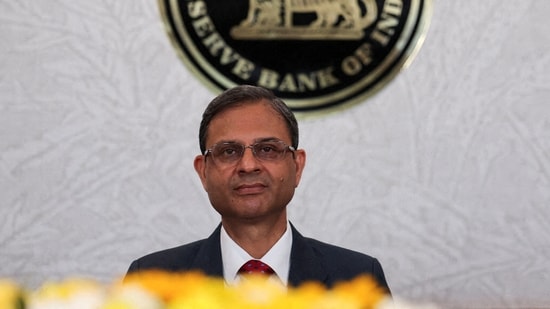
Announcing the key decision, RBI governor Sanjay Malhotra said the Monetary Policy Committee unanimously decided to retain the policy interest rate and with a neutral stance.
The interest rate pause comes even as the Consumer Price Index (CPI)- based headline retail inflation crossed the RBI's medium-term target of 4 per cent, reaching 4.38 per cent in June.
ALSO READ | Supreme Court tightens rules to curb 'digital arrests', RBI to frame SOPs to deal with mule bank accounts
However, the RBI raised the gross domestic product (GDP) growth forecast to 6.7 per cent from the earlier projection of 6.6 per cent for FY27. It also lowered the Consumer Index Price (CPI) inflation projection to 5 per cent from the earlier estimate of 5.1 per cent.
Disruptions due to West Asia
Governor Sanjay Malhotra noted that the West Asia conflict has challenged the global economy, with disruption to key trade routes. However, he said that economic growth continues to be supported by resilient demand.
{{/usCountry}}Governor Sanjay Malhotra noted that the West Asia conflict has challenged the global economy, with disruption to key trade routes. However, he said that economic growth continues to be supported by resilient demand.
{{/usCountry}}He also mentioned the challenges to growth and said, "Renewed tensions in West Asia, volatility in global markets and El-Nino pose downside risks to growth."
According to the RBI, moderation in global trade, increase in energy prices, and persistent trade policy uncertainties pose upside risks to India's Current Account Deficit.
India's economy and growth
But, he said that India continues to be the world's fastest-growing large economy.
Regarding India's economy, governor Malhotra said the domestic economy has exhibited resilience amid persistent global uncertainty. He stated that the Indian economy has performed better than expected in the April-June quarter of this fiscal.
Inflation expected to rise in near term
Further, the RBI governor stated that the rise in inflation exacerbated by food and fuel prices is not broad-based. The governor noted that headline inflation is expected to rise in near term, fuelled by higher oil and food prices. He said that it will peak in the third quarter of the financial year before starting to decline.
Governor Malhotra clarified that greater clarity is required on the inflation trajectory and its composition for any policy action to be taken.
ALSO READ | Report tabled in Lok Sabha: Haryana among top three states in financial fraud cases, says RBI data
The governor also said, "Core inflation, excluding precious metals is projected to be lower than core, although it is likely to align with core inflation towards the end of the financial year."
Liquidity conditions
The RBI said that average liquidity in the banking system has remained above ₹1 lakh crore since June. Governor Malhotra said that with robust, broad-based credit growth, the central bank will ensure sufficient liquidity in the system.
"Going ahead, the usual return of currency during the monsoon season, drawdown of government cash balances, and our special measures to attract capital inflows are expected to aid banking system liquidity in the near term," he said.
Governor Malhotra said that short-term money market rates, especially of commercial papers and certificates of deposit, moderated in July.
Notably, the rupee has been depreciating steadily since the beginning of this year, hovering between 95 and 96 against the dollar.
The rupee has taken a massive hit amid pressure from higher oil prices, capital outflows, widening trade deficits, and a surging US dollar.
So far in 2026, the rupee has depreciated by about 7 per cent and is down roughly 6 per cent since the war in Iran began on February 28.