
 E-Paper



Uday Kotak resigns: From aspiring cricketer to India's richest banker – the journey
Uday Kotak announced his resignation from the role of managing director and CEO of Kotak Mahindra Bank on Saturday.

 Prefer HTon Google


Uday Kotak, the founder-promoter of Kotak Mahindra Bank, announced his resignation as its managing director and chief executive officer on Friday, marking the end of his illustrious career spanning four decades in the financial services sector.
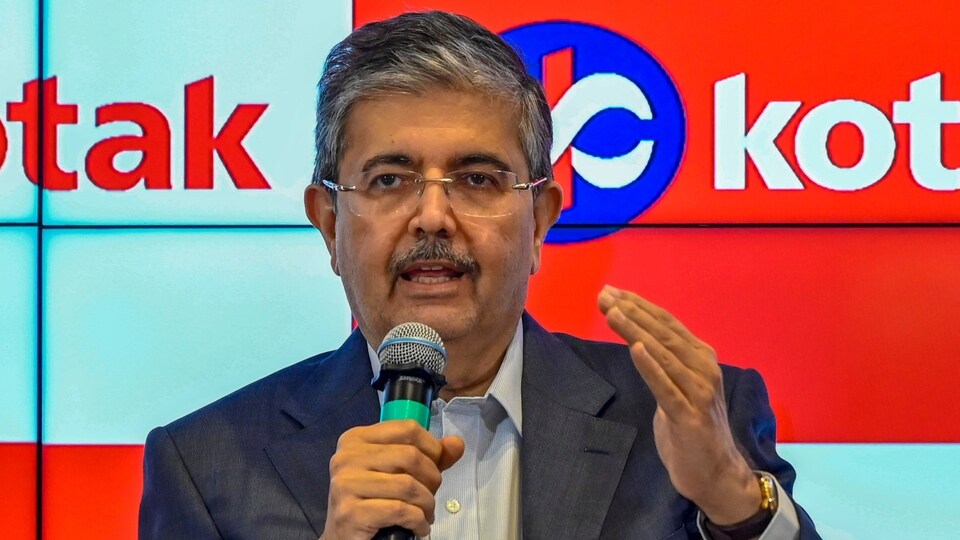
Kotak was set to retire from his executive role in December. However, it was cut short three months ahead of schedule. His early exit from the country's fourth-largest bank was cited as personal reasons.
This came as the Reserve Bank of India has capped the tenure of a managing director and chief executive officer at 15 years in private sector banks. This is due to the RBI's norms on leadership appointment which was reviewed after the Yes Bank debacle.
Also Read| Interview: Uday Kotak says Indian economy needs fiscal support to grow
Who is Uday Kotak?
1) Uday Kotak will continue to serve as a non-executive director on the bank's board. The 64-year-old India's richest banker founded Kotak Mahindra Bank in 1985. His entry into the finance sector was prompted after his cricketing dream was cut short due to an injury. In the 1970s, he aspired to be a cricketer and trained under legendary coach Ramakant Aachrekar.
2) He was born and brought up in Mumbai and pursued education at Jamnalal Bajaj Institute of Management Studies and Sydenham College of Commerce and Economics there. His family was into trading cotton and other agricultural commodities but he was not keen on joining his family business.
3) It was Kotak's father who persuaded him to set up his own business, offering him a 300 square feet of office space on the Navsari Building premises, a LinkedIn brief about him, written by journalist Tamal Bandyopadhyay, states. Kotak started his financial consultancy there at the age of 23 in 1982
4) Kotak's bank was given a banking licence in 2003. He was its MD and CEO for over 20 years from March 2003. Kotak owns 26 per cent of the bank which was valued at over ₹3.5 lakh crore as of Friday's close.
5) He was known as a rare voice in the banking sector who has publicly expressed his many concerns. He went public with his concerns on demonetisation. The outspoken Kotak also spoke disparagingly against the US Dollar recently, which was withdrawn later.


