Inflicting injury on self is a serious offence in the army. However, inflicting damage to the service has come to be a done thing. Failing to influence the external, the higher echelons of the army have been tinkering with the internal to the great disadvantage of the service. Military has had a long, well-established and well-tested system of rank structure and promotion policies for the higher ranks which stands seriously dented. However, in this piece we take up the issue of only promotions.
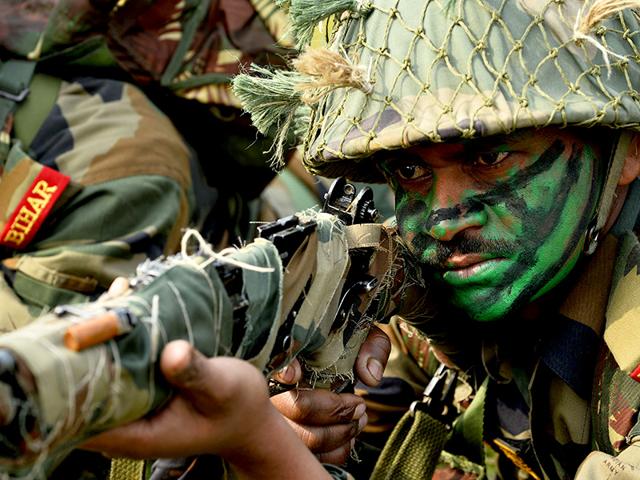
Army has command and staff stream for promotions in the higher ranks. While the fighting arms, that is, infantry and armoured corps, are a part of this stream, few, from the supporting arms, with outstanding service record are inducted into this cadre and can aspire to move to the highest ranks in the army, through a common filtering system for promotions.
Though some limited vacancies in higher ranks on staff are made available to supporting arms on pro-rata basis.
PRO-RATA SYSTEM
Vacancies in staff and command stream were never based on pro-rata basis but on merit alone. Pro-rata system militates against merit, which is the bedrock on which promotion to higher ranks in the military must rest and has a bearing on the overall performance of the army in any conflict. Criteria for promotion to higher ranks did not take into consideration Higher Command and NDC courses. Allocation of vacancies on these courses, among two fighting arms and supporting arms of the army, is based on pro-rata system. Thus when these courses have come to carry points or consideration for promotion, the pro-rata system in some manner gets injected into promotion to higher ranks in command and staff stream. This has been a major retrograde step against merit.
Since vacancies in higher ranks are extremely limited, unit command tenures get stretched up to four years and more. Thus their age while in command would render them somewhat less physically capable to take on arduous tasks requiring younger age and high standard of physical fitness. During Kargil operations it was seen that commanding officers, due to their higher age could not take effective part in assaults in high mountains up steep slopes. Though, actions at Kargil, due to narrow frontages along spurs, were confined to company and platoon level, at each stage/ phase. What was required was to lower the age of JCOs in infantry units. Instead the Kargil Review Committee (KRC) constituted after the conflict tried to find solution to this problem by reducing the tenure of command of infantry units to two years and six months.
{{/usCountry}}Since vacancies in higher ranks are extremely limited, unit command tenures get stretched up to four years and more. Thus their age while in command would render them somewhat less physically capable to take on arduous tasks requiring younger age and high standard of physical fitness. During Kargil operations it was seen that commanding officers, due to their higher age could not take effective part in assaults in high mountains up steep slopes. Though, actions at Kargil, due to narrow frontages along spurs, were confined to company and platoon level, at each stage/ phase. What was required was to lower the age of JCOs in infantry units. Instead the Kargil Review Committee (KRC) constituted after the conflict tried to find solution to this problem by reducing the tenure of command of infantry units to two years and six months.
{{/usCountry}}This requirement of physical fitness of a commanding officer related to only infantry officers, but on the KRC was also an officer from artillery, who taking advantage of lack of knowledge of chairman of this committee, grouped artillery unit commanders with those of infantry units. There is no particular requirement for commanding officers of artillery units to be as young as those in the infantry, because the former are not required to accompany assaulting infantry up steep slopes. In any case, demands of physical exertion on them are minimum.
This recommendation of the KRC on “command exit policy,” was blindly followed by army headquarters, with the same slant as was displayed by the artillery officer on the KRC. This shortening of tenures of commanding officer of infantry and artillery units, resulted in availability of additional vacancies to these two groups. Thus implementation of this policy resulted in 441 vacancies out of 734 generated as a result of implementation of phase two of A V Singh Committee’s recommendations going to the infantry. For infantry officers there has been an increase of 77% and for artillery officers 53%. This completely distorted the promotion prospects of officers other than those from these two groups.
PAROCHIAL APPROACH
Most regrettably, some army chiefs have acted in a parochial manner, changed certain other parameters for promotion within the command and staff cadre, such as giving weightage to certain courses (NDC and HC courses) which are allotted to infantry, armour and artillery on pro-rata basis, thereby indirectly bringing in pro-rata system into promotions to higher ranks as against merit. Such tampering with policy has militated against well-established systems. Pushing up own group or arm of service by certain army chiefs, to a position of advantage, has inflicted great damage on the service.
Such lopsided policies have caused serious divide within the officer cadre, created fissures in its mosaic and discoloured the very fabric of the army. This has eventually resulted in a large number seeking intervention of the courts. It is unfortunate for the service that some with narrow and parochial vision rose to the highest post in the army.