
 E-Paper



‘Hunger killed more people than the diseases did’: Centenarians of Chandigarh recall epidemics that rocked the nation
“The most dangerous disease was the plague. I have seen it twice in my life in 1937 and 1939.”


“The total deaths in the country have not even crossed 500 as of now, whereas during the plague epidemic of the 1920s, in a single village more than 500 people died,” recalls, 104-year-old Surender Kumar Bhalla, who was born in 1916 in Lahore.
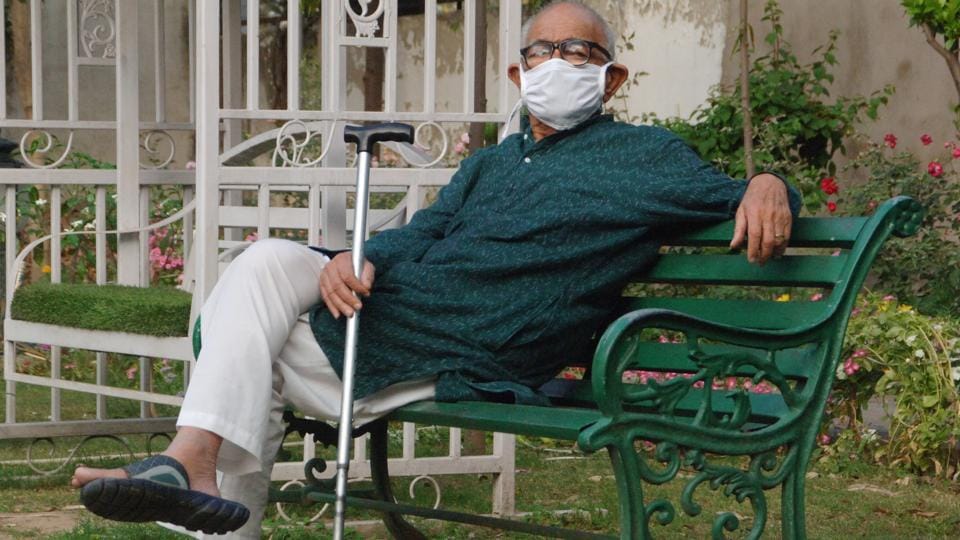
“Even treatable diseases like malaria killed thousands in the region, so if we compare Covid-19 with other pandemics, it’s nothing,” he adds.
Between the 1850s and 1940s, Punjab was the worst affected in India by outbreaks of several diseases like malaria, smallpox, cholera and plague, in which millions died while many were displaced. However, compared to the current health crisis in India, many centenarians in the region say they are more hopeful now.
Born in 1921, Manoj Kumar, 99, says, “Hunger killed more people than the diseases did. My brother who was in his twenties during the malaria outbreak in Punjab told me that the fields were overripe with ‘fasal’, but there was no one to harvest them. At least now the government is taking care of the poor, giving them food and helping them out. During that time, the British government couldn’t be more neglectful.”
Tara Devi, 101, born in 1919, says she was from a well-off family that is why she could survive, “otherwise cholera killed many people.”
CURFEW VIOLATORS WERE THROWN IN JAIL BY BRITISH
Comparing the curfew of today with that of during British India, 98-year-old Ajeet Singh, born in 1922, says, “During a curfew in Patiala in the 1930s, my brother was struck there. Whoever was seen outside was thrown in the jail.”
Bhalla recalls, “There was no relaxation in curfew, no food, no milk, no water was provided, one had to sit at home and stay with whatever they had at hand. I was in Lahore in the 1930s when the curfew was imposed.”
“The most dangerous disease was the plague. I have seen it twice in my life in 1937 and 1939,” he adds.
Comparing the precautionary measures mandated by the government now and then, Bhalla says, “It was not mandated by the government, but people used to take precautions during such outbreaks. At most, the British would provide one doctor per village.”
“Our mothers at home were the only doctors we had,” he says, adding, “Many families stopped eating at each other’s places out of fear of contamination.”
Ajeet Singh says, “There is a huge difference in outbreaks then and now.”
‘WE WILL DEFEAT THE VIRUS’
Born in 1923, Ramlata, 97, says, “I am hopeful that the kind of social cooperation we are showing, the way the government is helping everyone, we will defeat the virus.”
Professor Rajiv Lochan at Panjab University, Chandigarh, said, “Trauma of the past and trauma of today are not the same. For example, walking back to villages on foot was considered normal till the 1960s, whereas now, it is considered a crisis.”
He adds, “Plague and cholera epidemics hit the region severely during the 1930s and 1940s. People were removed from their villages, many ran away. Those times were comprehensively more traumatic, medical facilities were scarce and the political situation was such. But today we are better prepared.”


