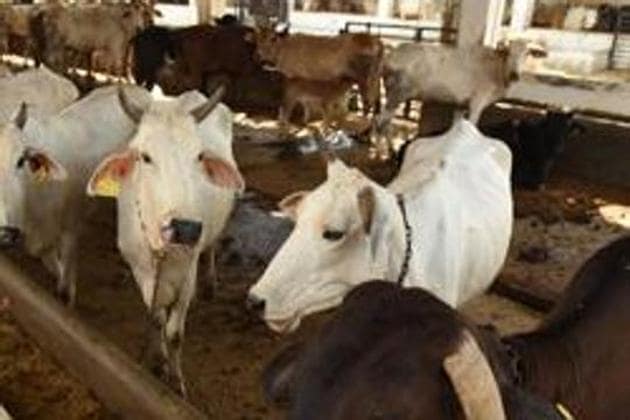
High hydrogen cyanide (HCN) concentration in fodder supplied to two cowsheds at the Mata Mansa Devi Gaudham in Panchkula district of Haryana could have killed 71 heads of cattle on October 27, it has been learnt.
The trust has been issued a notice and asked to give an explanation.
A report on the deaths was submitted on Thursday by an investigation team set up by deputy commissioner Mukesh Kumar Ahuja. It comprised the chief executive officer of the district rural development agency Nishu Singhal, assistant commissioner of police Raj Kumar and animal husbandry department deputy director Dr Anil Kumar.
Though the DC did not respond to the calls despite repeated attempts, Haryana Vidhan Sabha speaker Gian Chand Gupta said he had learnt from Ahuja that the probe team found high concentrations of HCN in the green fodder served to the cattle, which led to the deaths.
Apart from the notice sent to the Gaudham Gaushala Trust, the administration had also written to the Mata Mansa Devi Shrine Board which had given the cowshed to the trust, inquiring about the terms and conditions under which this had been done, Gupta added.
“Green fodder like sorghum, bajra and maize store HCN during the growing stage as part of a self-defence mechanism from animals,” explained Dr Anil Kumar. HCN concentrations could have increased during the summer due to lack of water. Cattle consuming it can die, he added.
{{/usCountry}}“Green fodder like sorghum, bajra and maize store HCN during the growing stage as part of a self-defence mechanism from animals,” explained Dr Anil Kumar. HCN concentrations could have increased during the summer due to lack of water. Cattle consuming it can die, he added.
{{/usCountry}}Traditionally, farmers used to dry the crop to be fed to the animals, which was cut in the growing stage as HCN is volatile and at 25 degree it evaporates. However due to commercialisation it was cut at the growing stage and not dried or mixed with dry fodder, he added.