Early in the morning of July 27, the army authorities were informed of the terrorist attack at Dinanagar. By 8:30am, four columns of troops -- each a hundred strong -- had been mobilised from military stations at Tibri and Mamun. They were immediately deployed to cordon off and contain the terrorists. In the meantime, a team of commandos from 9 Para (Special Forces) had been brought in by air from Udhampur. The police, however, decided not to use the army for storming the police station. As first responders to any attack, it was imperative for them to send a message to the terrorists that they were ready to take them on. This decision also helped build the police’s morale, confidence and professional self-esteem. The army then helped to fix and engage the terrorists in line with the police strategy to wear them out and exhaust their ammunition with a view to capture at least one alive. A bomb-disposal team from the engineers also defused the explosives found on the rail track nearby.
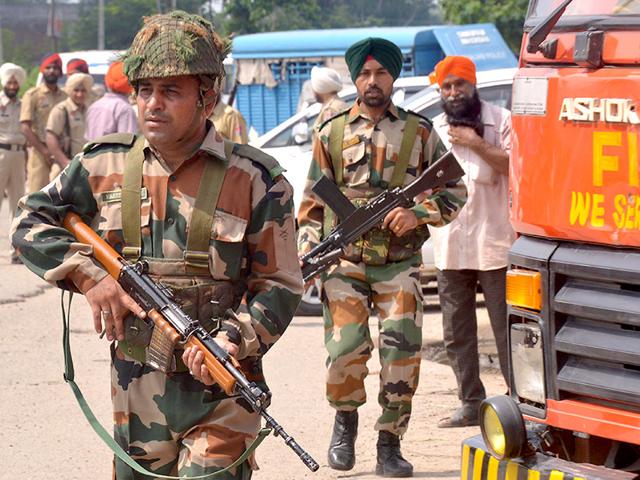
The police strategy to conduct the operation themselves, while laudatory, cannot become a permanent template for future operations. Next time there may not be enough time to mobilise adequate police force or the SWAT team. The circumstances could be different like the attackers holding hostages. Therefore, there is a need to evolve and practice meticulous anti-terrorist drills between the police, army, paramilitary forces, counter-terrorist outfits and the civil administration. A good example are the joint operations carried out in 1990-93 that won back control of the countryside in Punjab, particularly at night, and helped the police eradicate terrorists.
Army efforts in Jammu region
Western Command’s troops in Jammu region have effectively checked terrorist infiltration through a multilayered grid deployment with instant reaction brought about by good communications. Their attempt is to detect and restrain infiltration as close to the international border as possible. Constant vigilance and appropriate tactics have ensured that they have prevailed over terrorists in the three encounters that occurred last year at Junglote (Kathua), Arnia and Samba. Casualties, however, have occurred on our own side -- both among security forces personnel and civilians. The exception was the Samba attack on March 21 this year. Troops of 168 Brigade repelled an attack on their camp without any casualties to themselves. Later the two attackers were pinned down, surrounded and eliminated in a well-coordinated operation.
Interaction and winning the hearts and minds of the population in the region, particularly in the border areas, has resulted in a flow of information and other cooperation. Operation Haunsley Buland launched during December 2014 and January 2015 to help residents of Samba, Hiranagar and Kathua sectors affected in cross-border firing by Pakistani forces involved evacuation to relief camps set up with civil help with all facilities provided, construction of shelters for them to take cover in and disposal of unexploded ordnance. Operation Sadbhavna programmes include construction of community centres and education support for 36 children. More infrastructure development projects are planned for the current financial year, including providing computer labs for rural schools.
{{/usCountry}}Interaction and winning the hearts and minds of the population in the region, particularly in the border areas, has resulted in a flow of information and other cooperation. Operation Haunsley Buland launched during December 2014 and January 2015 to help residents of Samba, Hiranagar and Kathua sectors affected in cross-border firing by Pakistani forces involved evacuation to relief camps set up with civil help with all facilities provided, construction of shelters for them to take cover in and disposal of unexploded ordnance. Operation Sadbhavna programmes include construction of community centres and education support for 36 children. More infrastructure development projects are planned for the current financial year, including providing computer labs for rural schools.
{{/usCountry}}Under a project to uplift border areas the inhabitants have been provided medical, veterinary and dental services through a series of camps. The army commander, General KJ Singh, has been interacting with Gujjars and Bakarwals of the area.
Please write in with your narratives of war and soldiering to msbajwa@gmail.com or call on 093161-35343