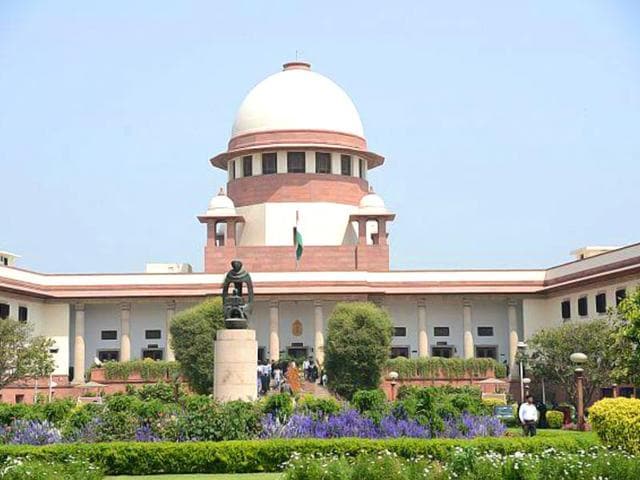
A three-judge bench of the Supreme Court (SC) will hear the appeal filed by the ministry of defence against an order passed in Navdeep Singh versus Union of India by the Punjab and Haryana high court directing that the control of the Armed Forces Tribunal (AFT) be shifted from the ministry of defence (MoD) to the ministry of law and justice.
The judgement had been rendered on a plea by Major Navdeep Singh that functioning of the AFT under the MoD reflected an acute conflict of interest since all orders of the AFT were to be passed against the MoD. The presence of the defence secretary in the selection committee for appointment of members of the AFT had also been challenged and better facilities and infrastructure were sought for the institution of the AFT and its members.
On the same day, a constitution bench of the Supreme Court is also hearing the challenge by the Madras Bar Association to the composition, structure and control of the National Company Law Tribunal and Company Law Appellate Tribunal.
The issue of tribunalisation has remained in focus over the past few years with many jurists and litigants raising concern over the lack of independence of tribunals since these function under the parent administrative ministries which are at times the main opposite parties in litigation before such tribunals. The provisions of direct appeals and that too with a limited scope from some of such tribunals to the SC have also received flak on the ground that such provisions attempt to bypass the writ jurisdiction of high courts and at times make appeals inaccessible and unaffordable.
In September last year, a constitution bench of the SC had stuck down the entire national tax tribunal on the ground that jurisdiction of the high court could not be transferred to a tribunal which did not enjoy similar independence and that presence of a party to a litigation in the selection of members would make a mockery of the constitution. It was also held that the National Tribunal Act was the ultimate encroachment on the exclusive domain of the high court.
In September last year, a constitution bench of the SC had stuck down the entire national tax tribunal on the ground that jurisdiction of the high court could not be transferred to a tribunal which did not enjoy similar independence and that presence of a party to a litigation in the selection of members would make a mockery of the constitution. It was also held that the National Tribunal Act was the ultimate encroachment on the exclusive domain of the high court.