
 E-Paper



Asia Economic Dialogue, day 3: 16mn passengers a year to take flight from Lohegaon airport, says civil aviation minister
The three-day event has been organised by the Pune International Center (PIC) in association with Ministry of External Affairs (MEA)


Pune (Lohegaon) Airport is already handling nine million passengers a year and now the airport administration wants to take it up to 16 million. They want more flights and we are working on it. Today we are already the third-largest domestic civil aviation market, we will be looking at one billion passengers per year in a very short time. We are also looking at adding 100 new airports in the country,” said Hardeep Singh Puri, Union minister of state for civil aviation (independent charge), housing and urban affairs and commerce and Industry.
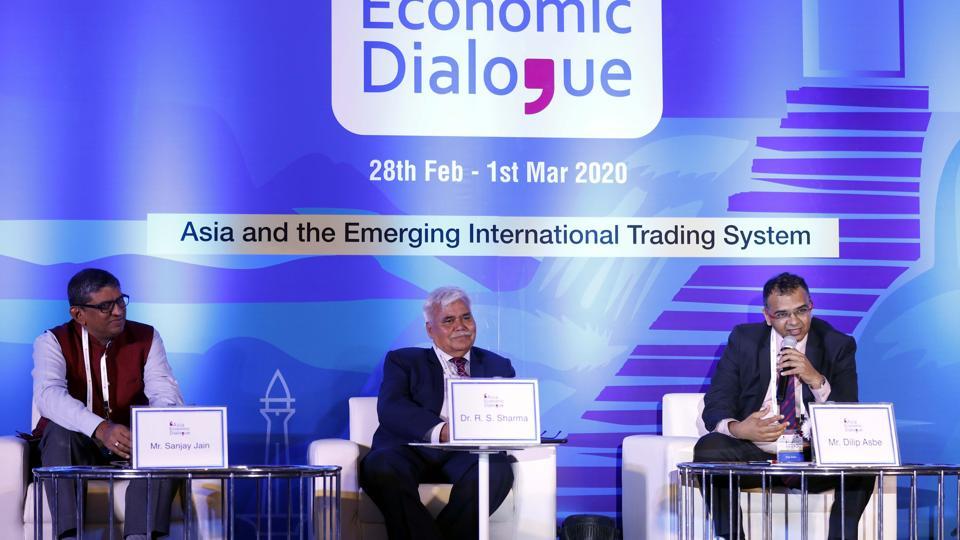
He was speaking at the valedictory session on the third day of the Asia Economic Dialogue on the theme, “Asia and the Emerging International Trading System”, at the J W Marriott in Pune on Sunday.
The three-day event has been organised by the Pune International Center (PIC) in association with Ministry of External Affairs (MEA).
Addressing a “false narrative going on in the country about an economic slowdown”, Puri said, “We are a growing Indian economy, already fifth-largest in the world, which seeks to transit from a $2.8 trillion economy today, to a $5 trillion economy by 2024, and to $10 trillion by 2030. You need foreign direct investment (FDI) today for growth of our economy, as we have massive economic challenges in front of us.”
In his session, Dr Rajiv Kumar, vice-chairman of Niti Aayog, said, “Asia’s share of the global economy before the 18th century was tremendous and it contributed to world trade. Unfortunately, over the years, as trading was affected the contribution of Asian countries declined. Now time has come that Asia will share in the global economy and go to what it was in the 18th century. We can be no longer taken for granted, as the time has come to become thought leaders of the world. The way forward is that Asian economy has to be an emerging power of the world.”
Aaditya Thackeray, minister for tourism, environment and protocol, government of Maharashtra, in his keynote address said, “We, as youth of this country and as Maharashtra government, are looking to grow and we are looking to move ahead from 2020. It is the time for us to be a super power, it means in different perspectives, different professions and almost in all walks of life. Traditionally, Asia has been a thought leader for the world, be it in trade or innovation, in all fields it has dominated the world. Today as the world is growing, the world is also coming closer together and we are looking at a trend where there is a reverse movement of thought, of innovation of growth, in Asia. We are the state which is open to ideas, trade and growth to stability. We are the state where everything is there you want, in terms of skills, thoughts and education.”
No cancer from mobile towers, says R S Sharma, Trai chairman
Today in our country we don’t want mobile towers, but people want good connectivity. There is a huge misunderstanding amongst the public that due to mobile towers we are getting affected with cancer. It is completely wrong and not true at all. Second thing, in large complexes, where there are large number of houses, you cannot provide connectivity through towers. You need to have internal optical fibre wires inside those buildings and we are working on it. That will hopefully solve the multi-storeyed buildings connectivity problem,” said R S Sharma, chairman of Telecom Regulatory Authority of India (TRAI).
He was talking at the opening session of Day 3 at the Asia Economic Dialogue on Sunday at the JW Marriott in Pune. The event has been organised by the Pune International Centre (PIC) in association with Ministry of External Affairs.
Sharma further said, “People don’t allow companies to lay fibre wires. Today, an optical fibre costs Rs 50 per metre, which means 1km fibre wire is Rs 50,000. So we are working with government agencies, local governing bodies, with the general public and creating awareness that towers are not harmful to us.”


