Bengaluru is gearing up for one of its most ambitious infrastructure pushes yet, as Namma Metro’s Phase 3 prepares to add the city’s longest double-decker viaduct, complete with new entry/exit ramps and loop connections designed to ease movement on some of the city’s busiest corridors.
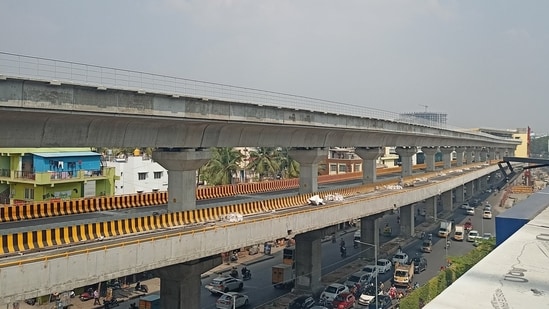
The structure will include five ramps and nine loops, planned specifically to cater to local traffic patterns along the Outer Ring Road and Magadi Road stretches, Deccan Herald reported.
(Also Read: Bengaluru woman rides wrong-way, hits auto, then argues, video goes viral)
The Bangalore Metro Rail Corporation Limited (BMRCL) will construct 37.121 km of double-decker flyover sections across both corridors of the 44.65-km Phase 3 expansion. Phase 3 consists of two major routes -
Corridor 1: JP Nagar 4th Phase to Kempapura, running along the western ORR
Corridor 2: Hosahalli to Kadabagere, aligned with Magadi Road
{{/usCountry}}Corridor 2: Hosahalli to Kadabagere, aligned with Magadi Road
{{/usCountry}}Of the total length, the western ORR section will carry a massive 28.486-km double-decker structure from Delmia Circle to Hebbal, making it Bengaluru’s longest flyover yet. The Magadi Road line will feature an 8.635-km double-decker between KHB Colony and Kadabagere, the report further added.
At Delmia Circle, where the double-decker begins, BMRCL will demolish the existing flyover and replace it with a new system supported by a 631-metre ramp. The corridor will run up to Hebbal, where the flyover will divert toward the airport while the metro continues toward its terminal at Kempapura.
Corridor 2 will see ramps at KHB Colony (Hosahalli), Sunkadakatte, and Kadabagere. At Sunkadakatte, dual ramps flanking the depot will help reduce viaduct height, making room for depot-entry lines within the available land.
Corridor 2 will include 3.19 km of loops at Sumanahalli Junction and NICE Road. Except at Delmia Circle, the new double-decker will either align beside or run above existing flyovers at Hosakerehalli, Mysuru Road, Nagarabhavi and Sumanahalli.
The project, costing ₹9,692.33 crore, will be entirely state-funded, with 50% from the Karnataka government, 10% from the Greater Bengaluru Authority (GBA), and 40% through loans.
According to the feasibility-cum-DPR, the Financial Internal Rate of Return (FIRR) is projected at 16.5%, supported by combined metro ridership revenue and toll income from the elevated road. While the government plans to introduce tolls, the exact pricing is yet to be decided.
Although the Centre approved Phase 3 on August 16, 2024, civil work has faced delays due to redesigning for the double-decker structure. The metro phase has a tentative deadline of May 2031, but the double-decker portions are expected to be completed earlier, by 2030.
(Also Read: Bengaluru’s dirtiest stretches to get special cleanup drive this Saturday—full list)