
 E-Paper



The welcoming ways of Gandhinagar
The wholehearted pan-Indian acceptance of a homegrown Kannada film series has been a shot in the arm for the Kannada film industry, whose glory days hitherto lay in the seventies and eighties, when Bengaluru’s Gandhinagar was where the lights, cameras and action were at.

 Prefer HTon Google


Around two months ago, the most expensive Kannada film ever made – KGF: Chapter 2 – opened to rave reviews across India. To date, it has raked in an incredible 1.25k crores, a dozen times over its production budget, making it the highest-grossing Kannada film, and the third highest-grossing Indian film, of all time. The wholehearted pan-Indian acceptance of a homegrown Kannada film series has been a shot in the arm for the Kannada film industry, whose glory days hitherto lay in the seventies and eighties, when Bengaluru’s Gandhinagar was where the lights, cameras and action were at.
Lying as it does at the junction of Kempegowda I’s 16th century fort town and the erstwhile British Cantonment, and as the home of both the ‘Majestic’ Bus Stand (officially, Kempegowda Bus Terminal) and the City Railway Station (officially, Krantiveera Sangolli Rayanna Railway Station), Gandhinagar has welcomed visitors to our fair city for several decades now. Since 2016, it has also housed the Kempegowda Interchange, the point of intersection of the two lines of the Bengaluru metro, making it a unique multi-modal transport hub at the city’s heart.
But the heart of Gandhinagar itself wasn’t always a bus terminus; it was a lake. City founder Kempegowda I raised the original Bengaluru pete in 1537 to the south of this lake, so that it would be well supplied with water. Remarkably, Dharmambudhi would continue to fulfil this function until the end of the 19th century. In 1889, when Prince Albert Victor, grandson of Queen Victoria, visited Bengaluru to lay the foundation stone of the Lalbagh Glass House, he emerged from the City Railway Station to a royal welcome that included a Bharatanatyam performance – on a raft of boats anchored in the middle of the Dharmambudhi lake!
In the decade after, as the city’s water demands grew, the lake began to deplete. In 1894, the Hesaraghatta Reservoir, created to be the primary water source for Bengaluru, was completed, killing any incentive to replenish Dharmambudhi. Part of the lake bed was soon turned into a space for cultural activities and political gatherings – in 1931, none other than Jawaharlal Nehru made a fiery speech there. In 1969, the now-dry lake bed was repurposed into the Majestic Bus Station.
Meanwhile, in 1934, the first Kannada talkie, Sati Sulochana, was released. None of the post-production was done in Bengaluru, however; it was Madras, with an already well-established cinema scene, that would serve for the latter until the seventies. In 1954, the beloved superstar and Kannada cultural icon, Dr Rajkumar, made his explosive debut as the eponymous hero of Bedara Kannappa, ushering in the golden age. By the time the Majestic Bus Stand (why Majestic? Because that was the name of a well-known theatre that stood close by) began operations, the city had no less than 149 cinema halls, 14 of them on Gandhinagar’s KG Road! To cater to every moviegoer in a city that had always welcomed immigrants, Bengaluru’s theatres screened movies in at least six languages, and continue to do so today.
The thriving domestic market soon convinced filmmakers that the city needed its own production infrastructure. With its proximity to theatres and transportation – film reels had to be physically delivered to theatres – Gandhinagar was the natural choice of location. For the next forty years, the neighbourhood would reign as the nerve centre of ‘Sandalwood’. Until, inevitably, change arrived in the shape of digital filmmaking and multiplexes. Today, only five theatres still function on KG Road, and most studios have moved to the city’s southwestern reaches, around Nagarabhavi and Rajarajeshwari Nagar. For now, Gandhinagar has slouched off into a Sandalwood sunset.
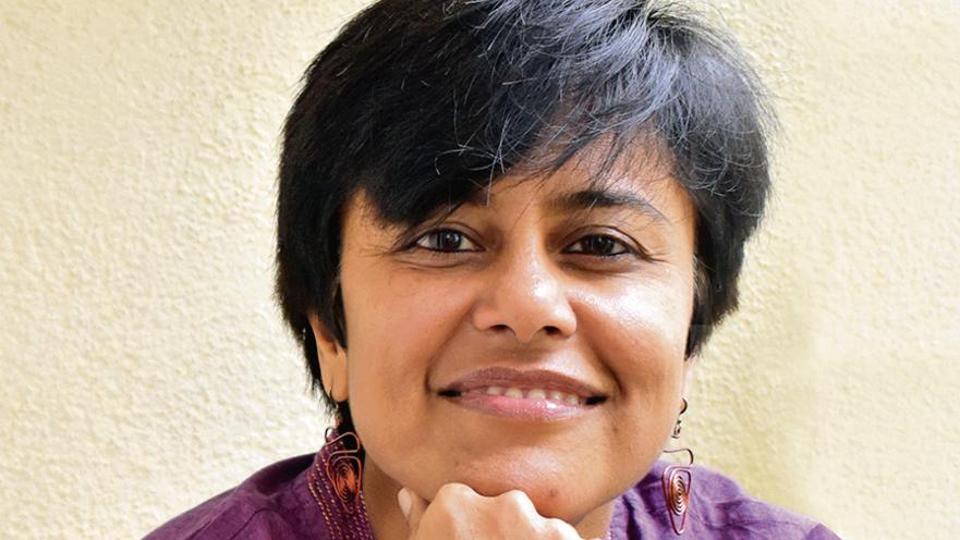
(Roopa Pai is a writer who has carried on a longtime love affair with her hometown Bengaluru)


