
 E-Paper



Locals voice protest as water level of Belagavi’s Hidkal reservoir drops
As the water level in Belagavi’s Hidkal reservoir goes down, the locals blame the elected representatives of exerting pressure on the administration to release water to agriculture, which was initially reserved for drinking purpose


Amid a delay in the monsoon season, the Hidkal reservoir in Belagavi district is on the brink of drying up, leaving only a mere 4-tmcf (thousand million cubic feet) of water remaining, people familiar with the matter said. The remaining water has been labelled as “dead storage water,” to be utilized only in emergencies. The situation has raised alarms for approximately 1 million residents of two taluks in the district, as the reservoir is their primary water source.
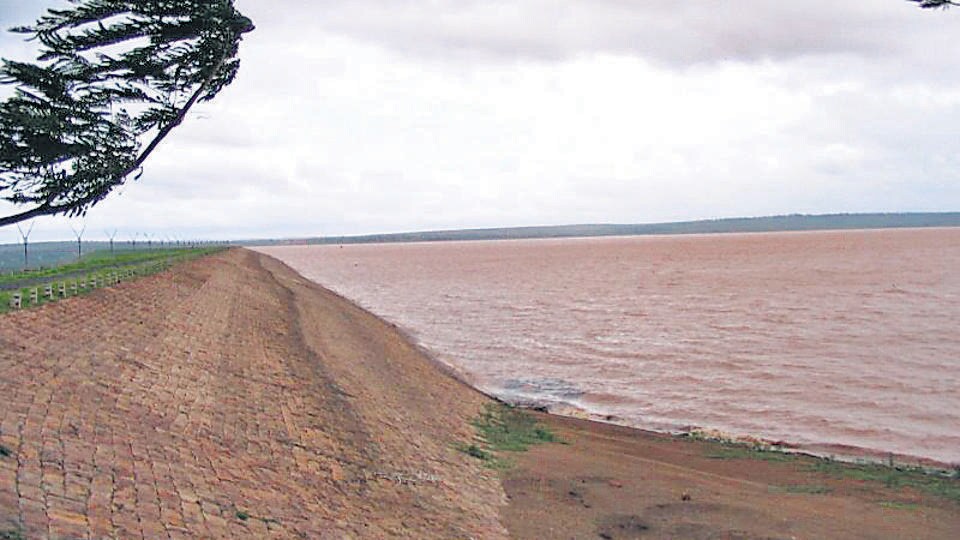
The locals allege the elected representatives exerted pressure on the administration to release water to agriculture, which was initially reserved for drinking. The decision to release 2-tmcf of water in four phases into Ghataprabha river canals, as instructed by the regional commissioner Gautam Bagadi, aimed to support the standing kharif crop in Gokak and Mudalagi taluks. This action has significantly contributed to the current critical state of the reservoir.
Gokak BJP MLAs, Ramesh Jarkiholi and Balachandra Jarkiholi, representing Gokak and Arabhavi constituencies respectively, requested the release of water meant for drinking purposes to sustain agricultural needs. Balachandra Jarkiholi defended the decision, explaining that it was a routine practice during March and April to release water for the Kharif crop, assuming the monsoon would arrive as scheduled. “Standing crops in hundreds of hectares of land would be affected if water was not released in time. After many years, the monsoon to the district was delayed,” he said.
The Hidkal reservoir, constructed in Hukkeri taluk in 1977, caters to the water requirement of approximately 100,000 residents in Belagavi city and Hukkeri taluk, including Sankeshwar town.
Assistant executive engineer of the Hidkal reservoir, SM Madiwale, said that after the completion of agricultural activities, all water sources, including small and large reservoirs, would be handed over to the regional commissioners. Following this protocol, the Hidkal reservoir was entrusted to Belagavi RC Bagadi, who subsequently instructed the release of water into the Ghataprabha canal for agricultural purposes. “The water left in the reservoir would last by July 10. The Vithal Dev temple marooned in the backwater of the dam is completely visible after ten years,” he said.
Markandeya river, flowing through Khanapur and Belagavi taluks, is the primary water source for the Hidkal reservoir. Apart from agriculture, the reservoir supplies water to an additional 1.2 million residents across three taluks, including Belagavi city.
Annasaheb Hanchinmani, a former secretary of KPCC from Ghataprabha in Gokak taluk, criticised the BJP legislators from Gokak and Mudalagi constituencies for consistently misusing their constitutional rights. “Bowing down to the instructions, all the officials violate the norms and release the water,” he said.
To mitigate the impact of the water crisis, the Belagavi city corporation has prepared 12 open wells in and around Belagavi for potential usage in emergencies. Among them, the Congress road well in Tilakwadi holds historical significance, having been dug for the National Congress Convention in 1924, and presided over by Mahatma Gandhi. These wells, which were rendered obsolete with the introduction of underground water connections, have been cleaned and recharged following a severe drought that occurred 15 years ago.
To felicitate during scarcity of water, the city corporation also cleaned and recharged the open wells in Old Belagavi, Vadagavi, Anagol, Shahapur, Kelkar Bhag, Shetti galli, Hutatma chowk etc. The wells dug much before the independence were not in use after underground water connections were provided to houses and were cleaned and recharged when the city suffered severe drought about 15 years ago.
Furthermore, the Rakaskop reservoir in Belagavi taluk, another crucial water source, has completely dried up. The remaining “dead storage” water is being rationed and supplied, but it too will likely be exhausted within a week, according to reservoir operators.
However, Belagavi north Congress legislator Asif Sait said that the Rakaskop reservoir is getting equal quantity of inflow to the regular outflow due to rains in southern parts of Maharashtra.
“In case of emergency, we will use the open well water which demonstrations carried out successfully. Besides, the government has initiated the work to dig 100 borewells in my constituency to curb the water shortage. People need not to worry if the rain is delayed,” MLA Sait said.
HT reached out to Belagavi City Corporation Commissioner Ashok Dudaganti for a reaction, but couldn’t get an immediate response.


