E-Paper



Khargone man missing after Ram Navmi clash found dead; curfew relaxation ends
The 28-year-old man’s family challenged the police version, and asked why they were not informed about his death earlier.

 Prefer HTon Google


BHOPAL/ KHARGONE: A 28-year-old man who went missing on April 10 after a communal clash in Madhya Pradesh’s Khargone district has been found dead. Police said the man, identified as Ibraish Khan, succumbed to his injuries on April 12 but they had not been able to identify him for six days.
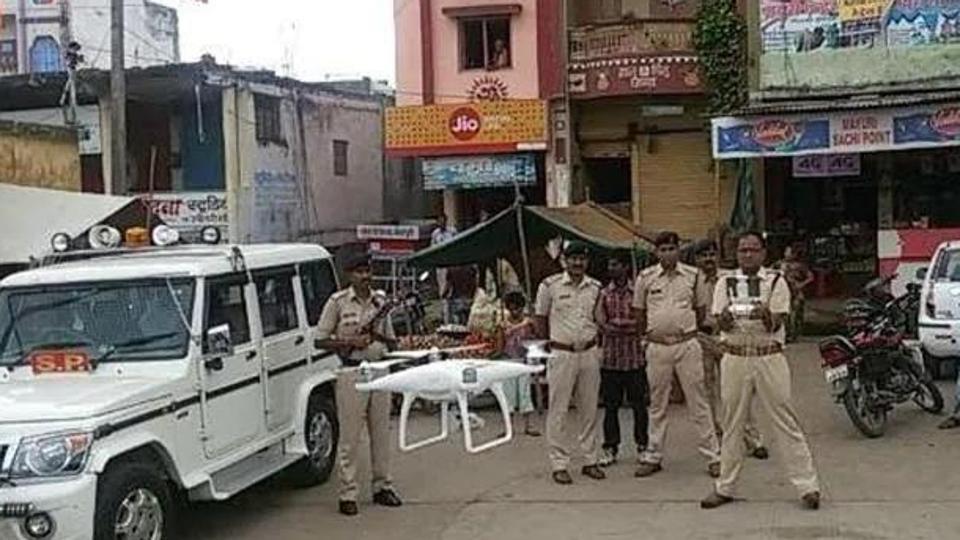
This is the first death reported in the communal clash in Khargone that erupted after some people allegedly threw stones at a Ram Navmi procession. 50 people including the district superintendent of police were injured in the clash and a curfew was imposed in the area to restore peace. After news of Ibraish Khan’s death emerged on Monday, police promptly reimposed curfew.
Ibraish Khan’s family has alleged that he was killed by the police after he was allegedly taken into custody after sustaining injuries in the clash, a charge that the police have denied.
Rohit Kaswani, who is officiating as Khargone superintendent of police, said police personnel found Ibraish Khan in an unconscious state in Khargone’s Anand Nagar area where a clash broke out.
“He was rushed to hospital and he succumbed to head injuries. The body was shifted to the morgue of MY (Maharaja Yeshwantrao) Hospital in Indore as the (Khargone) district hospital didn’t have any facility to keep the body,” Rohit Kaswani said.
Ibraish’s brother Iqlakh Khan said the police didn’t inform the family about his injuries or death for six days. On April 14, four days after he went missing, police registered a missing complaint at the instance of his mother Mumtaz.
“My brother was brutally beaten by rioters and later, police detained my brother. Many people told us that they saw my brother in the custody of policemen and said that my brother sustained a head injury and he was bleeding badly,” said Iqlakh Khan.
“On April 13, we asked the police about my brother but they denied that he was in police custody. On April 14, my mother Mumtaz filed a missing complaint but they didn’t inform us about his death. On April 17 night, a policeman came to our house to collect information about my brother,” Iqlakh Khan said, adding that the police first spoke about the possibility that he may have died after he threatened to approach the media.
The family was taken to Indore’s MY Hospital over 100km away to identify the body late on Sunday.