
 E-Paper



₹175 cr sought from Centre for anti-drone systems: Punjab DGP
Punjab seeks ₹175 crore from the Centre for 17 anti-drone systems, enhancing crime-fighting tech and infrastructure under "Vision 2026."


The Punjab government has sought ₹175 crore from the Centre to procure 17 anti-drone systems in the next financial year, DGP Gaurav Yadav said on Wednesday.
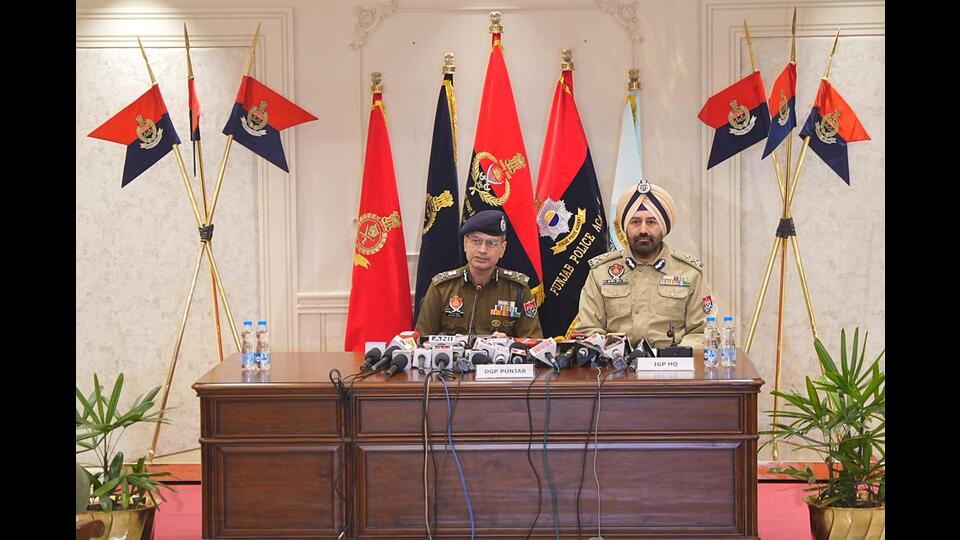
Addressing mediapersons here, Yadav said that the Punjab Police will also operationalise two software programmes for tackling organised crime in a scientific way.
“The Anti-Drone System (ADS) fleet will be expanded from the current three operational systems to an additional six under procurement, with 10 more to be procured later in a phased manner. The state government has sought ₹175 crore in funds from the Centre to procure 17 more anti-drone systems in the next financial year. A high-powered committee has been formed for this purpose,” he added.
DGP Yadav said that this year, around 270 drones have been neutralised using anti-drone technology, and most of the intercepts were done by the BSF as the central force’s anti-drone system was installed much before the state government’s anti-drone technologies. The top cop added that drone response teams (DRTs) have also been pressed into action.
“Trials (in coordination) with the BSF are going on, an expression of interest has been issued, and the best available system will be procured in a coordinated manner with the BSF and other agencies,” Yadav said. The committee will be headed by Special DGP Ram Singh and comprise senior IPS officers Praveen Sinha and Neelabh Kishore.
Focus on infra, tech & capability upgrade
Outlining an ambitious and technology-driven “Vision 2026” for the Punjab Police, centred on a massive infrastructure and capability upgrade, Yadav said that the ongoing anti-drug drive ‘Yudh Nashian Virudh’ received major success under the Safe Punjab helpline.
“A key focus is the upgrade of the Dial 112 Emergency Response Support System (ERSS) with a dedicated Dial 112 central control room building to be established at Mohali with the cost of ₹52 crores, while a fleet of vehicles will be augmented with the cost of ₹50 crores. Our target is to drastically reduce the current average response time of 12-13 minutes to just 7-8 minutes,” the DGP said, while adding that simultaneously, district control rooms across Punjab are also being upgraded with an investment of ₹25 crores to ensure seamless coordination and faster incident management, directly contributing to the reduced response time target.
The DGP said for border security, the second line of defence will see 2,367 CCTV cameras installed at 585 locations along the International border at a cost of ₹49.58 crores, which will act as force multipliers.
Cybercrime HQ part of infra push
He added that the state government has approved a mega police building project worth ₹426 crores to be spent over the next three years.
“This includes new headquarters for the Cybercrime division at Phase 4 in Mohali, new police lines in Nawanshahr and Malerkotla districts, and 11 other new police station buildings. New anti-narcotics task force (ANTF) range offices will be opened in Ludhiana, Ferozepur, and Jalandhar, with existing ones upgraded with modern gadgets and forensic tools,” he said.
The DGP said that pursuant to the new criminal laws, the witness protection scheme has already been notified by the Punjab government, which will further help in improving the conviction rate.
He informed that the anti-gangster task force (AGTF) has further upgraded its technical capabilities with Punjab Artificial Intelligence System (PAIS 2.0), now supporting voice analysis, besides other state-of-the-art features, and Organised Criminal Information System (OCIS)— a digital solution designed to streamline the management of criminal records— is further being upgraded.
Further, Yadav said that the police will focus on a thorough investigation to identify and take stringent action against travel agents involved in procuring and facilitating passports on fake particulars for organised criminals.
He also said that dedicated traffic and road safety police stations will be established in 2026, and these will be integrated with integrated command & control centres (IC3) for real-time monitoring using city CCTV feeds and adaptive traffic signals.


