
 E-Paper



Demography as diplomacy: New prospects of Japan and Northeast India’s relations
This article is authored by Monalisa Deka, manager, Aerospace Division, Manekshaw Centre, IIIT Delhi.

 Prefer HTon Google


Japan's demographic crisis is no longer a distant forecast—it is the defining economic challenge of the country's future. With nearly one in three Japanese citizens aged 65 or above, shrinking birth rates and a rapidly declining workforce have compelled Tokyo to rethink one of its longest-held positions: Its dependence on foreign labour. At the same time, India's Northeast, home to one of the country's youngest and most educated populations, continues to struggle with limited high-quality employment opportunities despite improving educational outcomes. These two realities are converging into an unlikely but promising partnership.
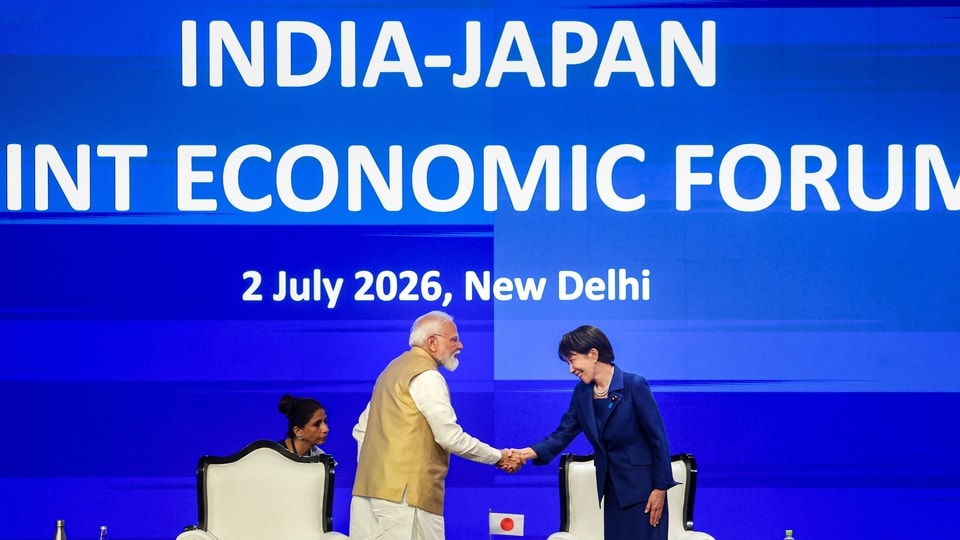
Over the past two years, Assam, Meghalaya and other northeastern states have quietly begun building institutional pathways that prepare young people for employment in Japan through Japanese language education, vocational training and direct recruitment partnerships. What appears today as a labour mobility programme could evolve into one of India's most significant people-to-people partnerships with Japan—provided policymakers view it not merely as overseas employment, but as strategic human-capital diplomacy.
Japan's demographic numbers are stark. The country's fertility rate remains around 1.2 children per woman—far below the replacement level of 2.1—while its working-age population has been declining for nearly three decades. More than 29% of Japan's population is now over 65 years of age, making it the world's oldest major society. Labour shortages have become acute across sectors including elderly care, construction, hospitality, manufacturing, agriculture and transportation. Estimates suggest Japan could face a shortage of several million workers by 2040 unless labour productivity or immigration rises substantially. Recognising this reality, Japan introduced the Specified Skilled Worker (SSW) visa system in 2019, allowing foreign workers to enter sixteen sectors suffering from labour shortages. The programme marked a significant shift in Japan's traditionally restrictive immigration policy and has steadily expanded since then as the country seeks sustainable workforce solutions.
India has emerged as an increasingly attractive partner. Unlike many labour-exporting countries, India offers a large young population, English-language familiarity, technical education and growing bilateral strategic ties with Japan. But within India, the Northeast presents distinctive advantages that deserve greater policy attention. The region boasts relatively high literacy rates, strong educational attainment and a youthful demographic profile. Many communities already display remarkable cultural adaptability, discipline and service-sector orientation—qualities highly valued in Japanese workplaces. Equally important, growing popular interest in Japanese language and culture among northeastern youth has created fertile ground for deeper engagement.
Recognising this opportunity, Assam has taken one of the country's most ambitious initiatives. In October 2025, the state government launched the Chief Minister's Foreign Languages Initiative for Global Human Talent (CM-FLIGHT), beginning with Japanese language instruction, cultural orientation and overseas placement assistance. The first batch included 180 trainees, while the programme aims to expand substantially in the coming years. The initiative targets sectors such as nursing care, food services, construction and information technology under Japan's SSW framework. The programme has since been strengthened through partnerships with Japanese firms including ASEAN ONE, Meiko Career Partners and Jaceex Ventures. According to the Assam Skill Development Mission, the state ultimately seeks to prepare over 50,000 youth within three years for opportunities in Japan under the SSW programme, while pilot batches have already commenced training across Guwahati, Dibrugarh and Jorhat.
Meghalaya is following a similar trajectory. After chief minister Conrad Sangma's visit to Japan, the Meghalaya State Skill Development Society signed an agreement with Japan-based ASEAN ONE to train and facilitate overseas employment for more than 500 youth initially, with ambitions to scale the programme to 5,000 candidates over five years. Plans include establishing Japanese language academies and structured recruitment channels linking Meghalaya directly to Japanese employers. Another important development is the growing institutional ecosystem supporting Japanese language education. In 2026, the Japan Foundation, in collaboration with Assam Skill University and the Indo-Japan Business Council, launched a dedicated Japanese Language Teacher Development Programme for Northeast India to create a sustainable pool of language instructors within the region. Rather than relying solely on teachers from metropolitan cities, the initiative seeks to institutionalise Japanese language education locally.
These developments matter because language is often the biggest barrier preventing skilled Indians from accessing Japan's labour market. By creating local language infrastructure, Northeast India is addressing precisely the constraint that has historically limited labour mobility. Yet policymakers should resist viewing these programmes merely as overseas placement schemes. Japan increasingly seeks workers who can integrate socially, not simply fill vacancies. That requires investments in language proficiency beyond JLPT N4 certification, cultural orientation, labour rights awareness, financial literacy and mental health support. Likewise, India must ensure that migration remains safe, ethical and skills-driven rather than becoming another low-wage migration corridor. The partnership also offers opportunities beyond labour exports.
Returning workers will bring international work experience, advanced technical skills, higher savings and familiarity with Japanese production systems. Similar return-migration experiences transformed sectors in South Korea, Taiwan and parts of Southeast Asia. If properly harnessed, returning workers could strengthen manufacturing, health care, hospitality and logistics industries across Northeast India. For India, this also fits neatly within the Act East Policy. Northeast India has long been described as India's gateway to Southeast Asia. It can equally become India's gateway to East Asian labour and skills partnerships. Human mobility should become as central to Act East as highways, railways and border trade.
Japan, too, gains strategically. As Tokyo deepens security cooperation with India through the Indo-Pacific partnership, investing in human-resource connectivity builds societal trust alongside defence and economic cooperation. Soft power increasingly rests not only on technology or investment but also on educational exchanges and workforce partnerships.
The next phase should, therefore, move beyond individual state initiatives. New Delhi should establish a dedicated India–Japan Skills Mobility Mission that coordinates Japanese language training, internationally recognised vocational certification, employer partnerships and worker protection across northeastern states. Universities in Assam, Meghalaya, Nagaland and Mizoram should integrate Japanese language programmes with nursing, engineering, hospitality and information technology curricula. Private industry must also participate through apprenticeship programmes and co-funded training centres.
The Northeast possesses something Japan urgently needs: Youth. Japan possesses something many young people in the Northeast seek: Dignified employment, advanced skills and international exposure. Demography has often been described as destiny. But destiny alone is never enough. It requires institutions, policy imagination and sustained cooperation. If India and Japan invest wisely, the journey from Guwahati, Shillong or Dibrugarh to Tokyo may become far more than a migration story. It could become one of Asia's most successful examples of how demographic complementarity creates shared prosperity in the 21st century.
(The views expressed are personal)
This article is authored by Monalisa Deka, manager, Aerospace Division, Manekshaw Centre, IIIT Delhi.


