
 E-Paper



Accused can’t say no to voice sample: Punjab and Haryana High Court
Chandigarh The Punjab and Haryana high court has said that voice sample sought from an investigating agency is like handwriting or fingerprint samples and an accused can’t say no for the same


Chandigarh
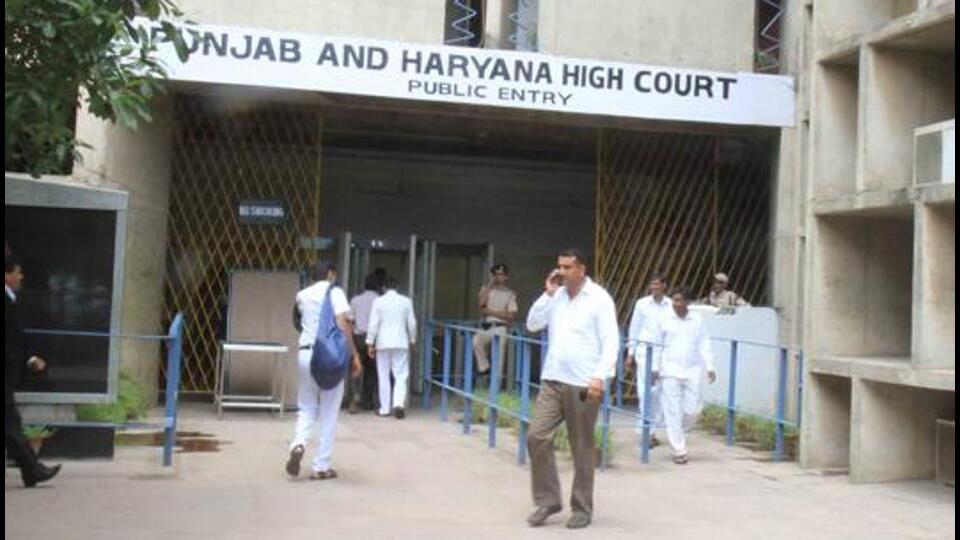
The Punjab and Haryana high court has said that voice sample sought from an investigating agency is like handwriting or fingerprint samples and an accused can’t say no for the same.
The high court bench of justice Avneesh Jhingan observed that voice sample in a sense resembles fingerprints and handwriting. Each person has a distinctive voice with characteristic features dictated by vocal cavities and articulates. “The samples are collected after having permission in accordance with law. The sample taken itself would not be an evidence, rather they are for comparing the evidence already collected,” the bench added.
The court was hearing a plea from one Sunil Kumar Gulati, who had challenge directions of chief judicial magistrate, Patiala for giving voice samples.
According to the case, he allegedly demanded bribe from one Jaspreet Singh, a chemist. Gulati, posted in the land branch of the municipal corporation, Patiala, had allegedly demanded ₹25,000 bribe. On a complaint, Rakesh Behal, whom Gulati had allegedly asked the complainant to hand over money, was caught red-handed on October 10, 2020. A telephonic conversation with regard to demand of bribe was recorded and the memory card was handed over to the investigation agency by the complainant.
The vigilance bureau filed an application seeking voice samples of both the accused. Behal had no objection for giving his voice samples but the petitioner, Gulati, opposed it. The trial court allowed the plea of vigilance bureau, but it was challenged by Gulati in the high court.
He argued that the directions given are for the purpose of identifying him. Hence, it would result in self-incrimination. He also argued that the petitioner’s right to privacy would be invaded. It was said that the memory card being a secondary evidence is not admissible as evidence without certification under Section 65-B of Indian Evidence Act, 1872. It was contended that the complainant could not have recorded the conversation without consent of the petitioner.
The high court bench referred to the apex court judgment in which it was held that the direction to give voice sample does not infringe Article 20(3) of the Constitution of India. The voice sample is only for purpose of comparison and is not a testimony. Also, the right to privacy cannot be construed as absolute, it was held.
On the issue raised that memory card produced by the complainant cannot be relied upon without certification, the court said that needs no adjudication at this stage. “The application for voice sample was filed for further investigation of the matter, it was not the stage for production of certificate under Section 65-B of the Act, even if required,” the court observed, adding that the relevancy of the recording would be determined only after comparison of voice sample, the requirement of certification under Section 65-B of the Act would arise later when recording is given in evidence.
The court rejected the argument that the complainant could not have recorded conversation without consent of the petitioner, further observing that seeking the consent of the petitioner would have defeated the very purpose of the recording.


