
 E-Paper



Area under summer maize dips by 32% in 2024: PAU experts
Experts from the Punjab Agricultural University and the Punjab agriculture department promoted pulses as an alternative which fetches almost same or equivalent remuneration

 Prefer HTon Google


With the government’s impetus on saving groundwater, the area under water guzzling summer maize fell by over 32% in 2024 compared to 2023, as per the data collected by Punjab Agricultural University (PAU).
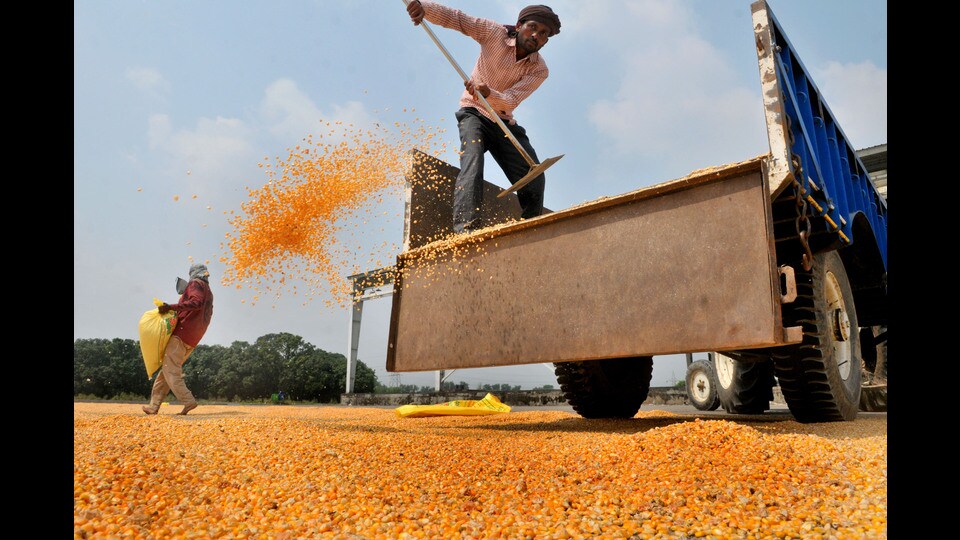
In 2023, summer maize was grown over around 66,817 hectares, and in 2024, the total area was 44,834 hectares, a dip of 21,983 hectares.
According to PAU experts, the dip is the result of a sustained campaign and making farmers aware of alternative crops like pulses, which can also fetch the same or equivalent remuneration as summer maize.
Ludhiana chief agriculture officer Gurdeep Singh said that the department ran village-level camps regularly where the farmers were made aware of the strain the summer maize adds to the already depleting water table.
“The farmers were educated on alternatives like pulses, which could earn them around the same profits as maize and only needed 2-3 irrigation cycles,” he said.
Principal maize breeder and in-charge of maize research group (PAU), Surinder Kaur Sandhu, said that while the government was already stressing crop diversification in the kharif season to relieve pressure on the water table by asking farmers to switch to other crops from paddy, summer maize had added to the problem.
“Grown as a third crop between wheat and paddy, the summer maize is dependent on irrigation and hence increases the rate of depletion of groundwater. With the dry and hot months of April and May it requires an irrigation every 2-3 days. With 15-20 irrigations, the summer maize consumed as much water as paddy. This doubles the strain on the already depleting water table in the state,” she said.
An official from the agriculture department said that the summer maize was not grown for the grain but for silage specifically. “Farmers earned around ₹40-45,000 from an acre during the time their fields lay unused. This maize, however, is not grown to maturity and is harvested before it goes ripe to prepare a fodder with long-shelf life called silage,” he added.
Sandhu noted the fall in area under summer maize was a positive sign and said that by the end of the month, once the wheat harvest is done, the PAU will be able to get a better on-ground picture to see if the trend has continued this year as well.
“Instead of summer maize, farmers can go for growing pulses to supplement their income between the rabi and kharif crops,” she added.


