
 E-Paper



BJP sees gains in Punjab civic polls as big boost ahead of 2027 assembly battle
According to a senior leader, the party began laying the groundwork for the 2027 assembly elections immediately after the setback in 2022

 Prefer HTon Google


The Bharatiya Janata Party, buoyed by its performance in the recently held local body elections in Punjab, claims the results are a sign of its growing acceptance in the state which will go to the polls next year. Although its overall performance was way behind the ruling Aam Aadmi Party’s, the BJP’s tally grew from 49 in 2021 to 170 in the polls spread across 1,977 wards. AAP won 954 wards., the Congress 397, and the Shiromani Akali Dal 192. Independent candidates won 251 wards.
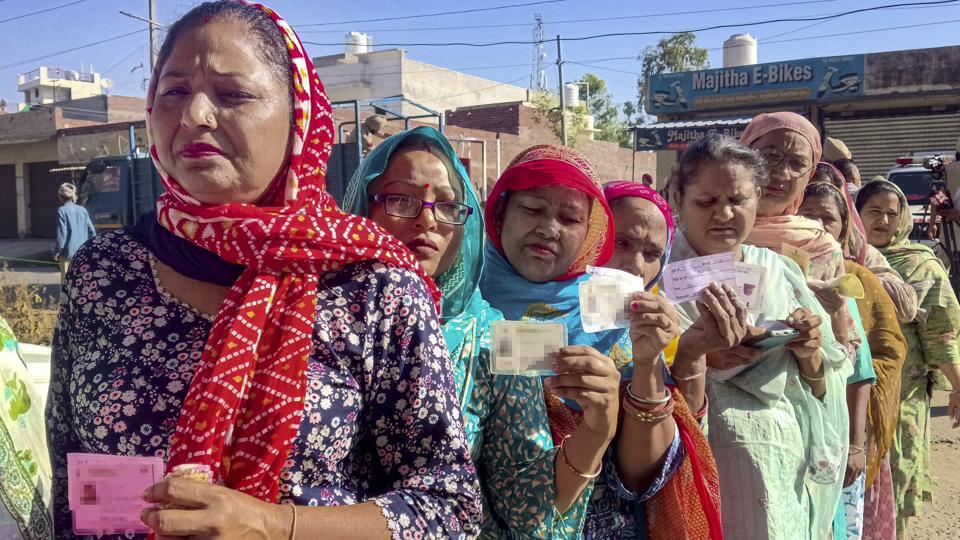
But the BJP is enthused by its performance, and a senior party functionary said the results indicate the mood for a change in the state. “The AAP tried its best to prevent the BJP from campaigning; it used the state’s machinery, money and even muscle to prevent the BJP from gaining, but the public’s inclination is now showing,” the functionary claimed.
After the dissolution of the BJP’s alliance with the Shiromani Akali Dal in 2020, the party has been trying to increase its presence in the state. The experiment of aligning with former chief minister Amarinder Singh’s Punjab Lok Congress and Sukhdev Singh Dindsa’s SAD (samyukt) in 2022 did not pay off. The BJP won two of the 65 seats it contested while the two other alliance partners drew a blank.
According to the leader quoted above, the party began making preparations for the 2027 elections soon after the electoral debacle of 2022. It began scouting for faces, identifying possible strongholds and building contact with non-dominant castes to build a coalition like it does in other states.
“Since the BJP was in alliance with the SAD since 1998, it has largely been confined to the urban areas and drew support from a section of the non-Jats and Hindus. Over a period of time, attempts were made to increase the catchment area…a section of party leaders had been prodding the state unit to be more assertive. The RSS (the ideological fount of the BJP) had also flagged the issue of rampant conversions and prevalence of social ills,” said a second leader.
The compulsions of alliance and the absence of a strong line of leaders cutting across caste groups became a major impediment to the party’s growth in the state. Over the years, the party’s vote percentage has been between 6% and 8%, dipping below 5% in 1984 when the anti-Sikh riots raged and shooting up to 16% in 1992 when the SAD boycotted the polls.
“Other than the limitations of being in an alliance, the BJP has also not been able to address the narrative that projects it as a Hindu party and also anti-minority. The narrative was predominantly used to defame the (Union) government when it came out with the three farm laws (subsequently withdrawn),” said the second leader.
Induction of leaders from other parties, especially the Congress, such as minister of state Ravneet Singh and the current party chief KS Dhillon among others is seen as the BJP’s effort to woo the Jat Sikhs. But the party wants to balance the outreach.
“The BJP walks the talk on Sabka Saath, Sabha Vikas. Unlike some regional parties who focus only on the predominant castes, we build a coalition of the whole samaj (communities); Hindus, Dalits and OBCs are as important as the Jat Sikhs,” said the first leader.
Responding to a question on whether the party will see large-scale inductions from other parties in the run-up to the elections, the leader said, “There is an attraction…people are drawn to the BJP. We saw that in the Rajya Sabha too (when six of the eight AAP leaders switched sides). While we are open to inducting more people, we have also focussed on strengthening the party’s own cadre. The PM has already spoken about the need to bring a million youngsters with no political lineage or experience…” the first leader said.
He cited the example of West Bengal, where the BJP banked heavily on TMC turncoats in the 2021 polls but scripted the 2026 election victory on the basis of its “strengthened” cadre and network on the ground.
To be sure, the opposition has been criticising the BJP for relying on turncoats. Soon after the appointment of Dhillon as state party chief, CM Bhagwat Mann and Congress lawmaker Manish Tewari took potshots at the BJP for having to rely on outsiders.
In a post on X, Mann said: “Congratulations to Kewal Dhillon who was rejected by the people of Barnala in 2017-2019 and 2024 on becoming the President of the BJP. My sympathies with Sunil Jakhar. May God give the strength to Ravneet Bittu, Manpreet Badal, Fateh Jang Bajwa, Tarun Chugh and Ashwani Sharma to bear this humiliation.”
Jakhar, formerly of the Congress, was the BJP’s state chief before being replaced by Dhillon.
Tewari also mocked the choice on X, “It is a telling comment of the State of @BJP4India in Punjab that they can only find former Congressmen to appoint as State Presidents…”


