
 E-Paper



Carmel Convent tree mishap:No specific agency monitoring health of heritage trees: Chandigarh admits in HC
The UT administration was responding to a public interest litigation seeking directions to “ensure safety of life and property of the public” and that an inquiry be conducted by a high court judge in a time bound manner to fix responsibility for the Carmel Convent School tree mishap.

 Prefer HTon Google


The Chandigarh administration has admitted before the high court that no authority has been specifically tasked with monitoring the health of heritage trees. Rather, departments and institutions where the 31 heritage trees stand are responsible for them.
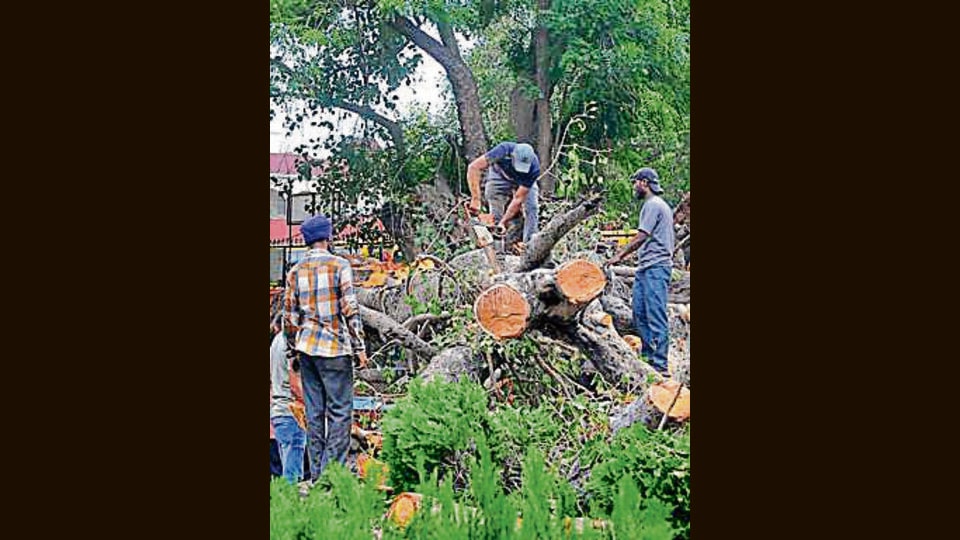
The UT administration was responding to a public interest litigation seeking directions to “ensure safety of life and property of the public” and that an inquiry be conducted by a high court judge in a time bound manner to fix responsibility for the Carmel Convent School tree mishap. On July 8, a student had died and 19 students had suffered injuries at Carmel Convent School, sector 9, when an heritage peepal tree came crashing down on them.
The UT told the court that a former high court judge was probing the incident. Teams have been formed to identify and remove dangerous and dead trees across the city, and some have already been removed, it said.
During the hearing, the petitioner’s counsel said the information supplied was in non-compliance of the order, in which the UT was told to respond to issues raised by the petitioner with regard to fixing responsibility for the mishap.
It was also argued that how departments and institutions, who do not specialise in ascertaining the health of trees, can monitor the same.
With two agencies – the municipal corporation and UT administration – responsible for the trees in their jurisdiction, it often leads to confusion. The entire jurisdiction should be given to one competent authority, which should be given charge of the maintenance of trees, this can only be done by the forest department, it was submitted.
Taking note of the submissions, the court pointed out that the August 1 order was not complied with in letter and spirit. The bench also said that in a small city with a radius of 12-km, the Chandigarh administration has neither been able to understand the order or the city, it further observed, adding that it would be forced to pass strictures, if orders are not complied with.
Later, court gave UT the last opportunity to resolve all these issues and file a fresh affidavit by the adjourned date.


