
 E-Paper



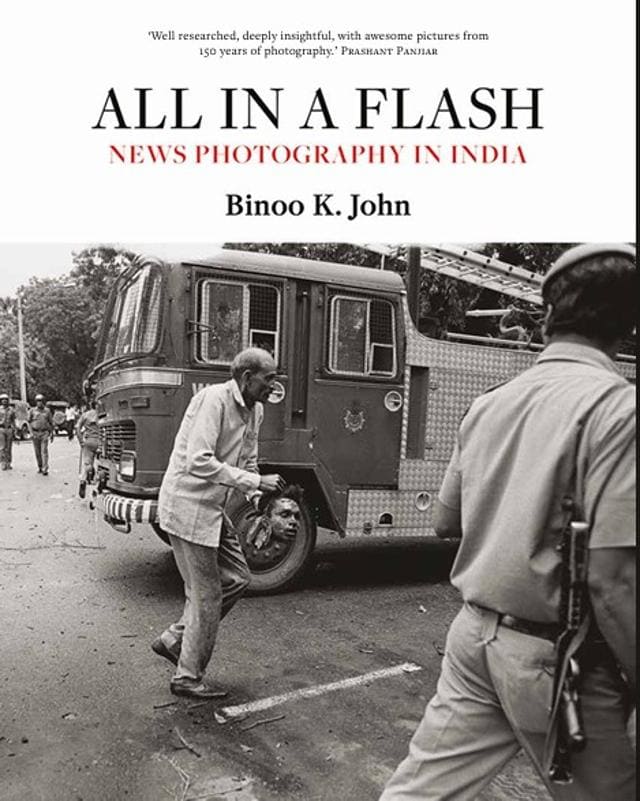
Excerpt: All in a Flash; News photography in India by Binoo John
This extract from a new book looks at the Taj Mahal as a newsy monument that draws visiting statesmen and millionaires

 Prefer HTon Google


Apart from being a thing of beauty, how did the Taj assume a newsy version of itself? Is it because it is stated to be a monument of love by a husband for one of his many wives? Some critics argue that it is nothing but a monument to the powers and wonders of Islamic architecture, which Shah Jahan was aware of. In reality, the Taj was planned not just as a monument of love but as a symbol of Shajahani architecture and the power of Mughal rule. In the words of Shah Jahan’s early historian Muhammad Amin Qazwini, writing in the 1630s:
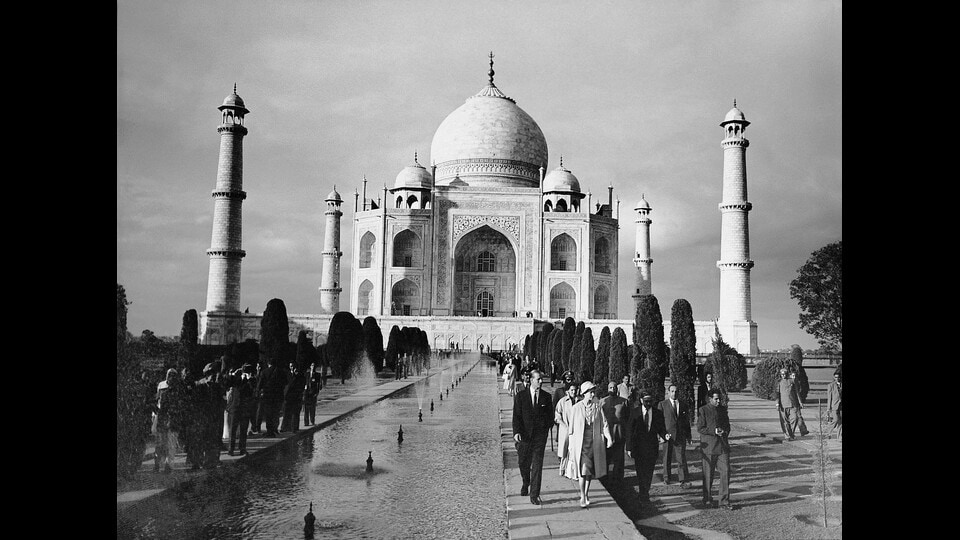
“And a dome of high foundation and a building of great magnificence was founded — a similar and equal to it the eye of the Age has not seen under these nine vaults of the enamel-blue sky, and of anything resembling it the ear of Time has not heard in any of the past ages… it will be the masterpiece of the days to come, and that which adds to the astonishment of humanity at large.”
In any case, over the years, the marble monument has become embedded in global consciousness as a place to be seen, to be photographed at and to be viewed. No dignitary is known to have refused to visit it during their rushed trips to talk peace and commerce. Even Donald Trump came to the Taj in February 2020 and the Reuters photographer Al Drago captured him in many wonderful poses including one with pigeons forming a fluttering screen all around the president unconcerned about his importance, his bluster and his role in history.
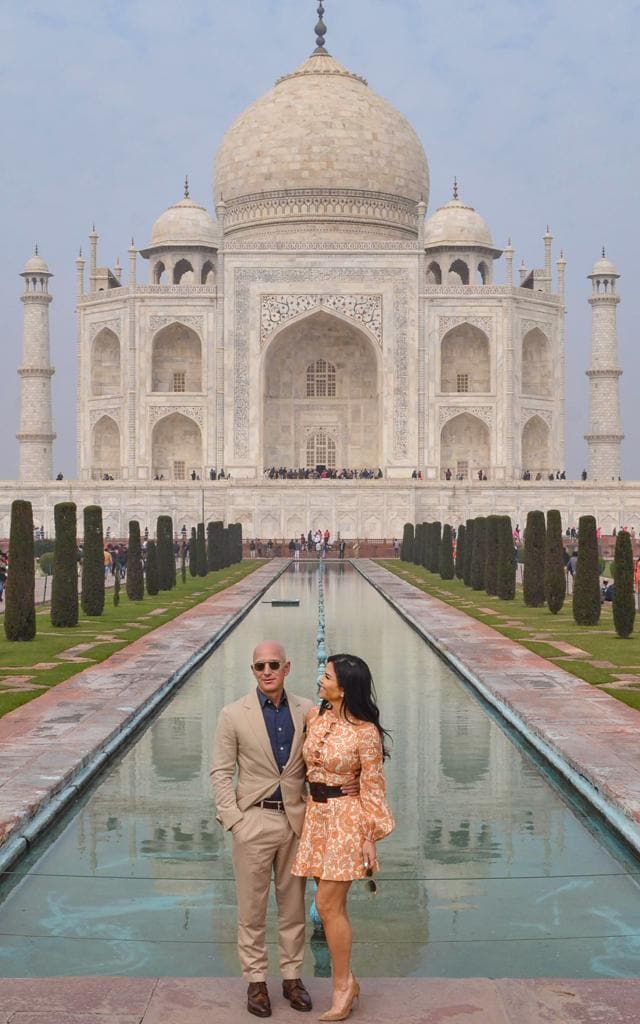
As if the visit of people who wielded immense power and wealth – like Amazon’s Jeff Bezos who came with his girlfriend – was not enough to add to the immense aura of the Taj, the government went ahead in 1996 and held a musical extravaganza of Greek pianist Yanni, who had developed a brand by holding his concerts inside or near historical monuments like the Pantheon. Such a thing hadn’t happened before since no permission is given for such events in places under the Archaeological Survey of India. In India any minor reason is enough to deny permission but the Yanni event became a widely talked about event, though western classical music is not entirely an Indian cup of tea. Taj made all the difference conferring on the event a sanctity and greatness it would not have got had the event been held in an auditorium. That was the first and last concert that was held there. Taj had to be left in peace. No noise.
The Taj completed in 1653 would have gone into disuse from the early part of the 19th century but for some colonial photographers taking up the task of documenting Indian architecture and social and tribal life. Lord Curzon, viceroy of India between 1899-1905, described the Taj Mahal as a “a vision of eternal beauty” and set about repairing the monument, which had faced many years of neglect. He castigated local artisans as unfit to undertake any restoration work and then he himself “supervised it with a single minded devotion to detail”. Such architectural photography merged seamlessly into the photographing of the Taj Mahal in the latter part of the 19th century. The role of Samuel Bourne, John Murray and Captain Linnaeus Tripe (12th Madras Native Infantry) and Felice Beato was crucial to popularising Indian architecture apart, of course, from the picturesque. In 1854, two photographers, Thomas Biggs of the Bombay Artillery and, in 1855, William Pigou of the Bombay Medical Service, were assigned to photographic duties in India.
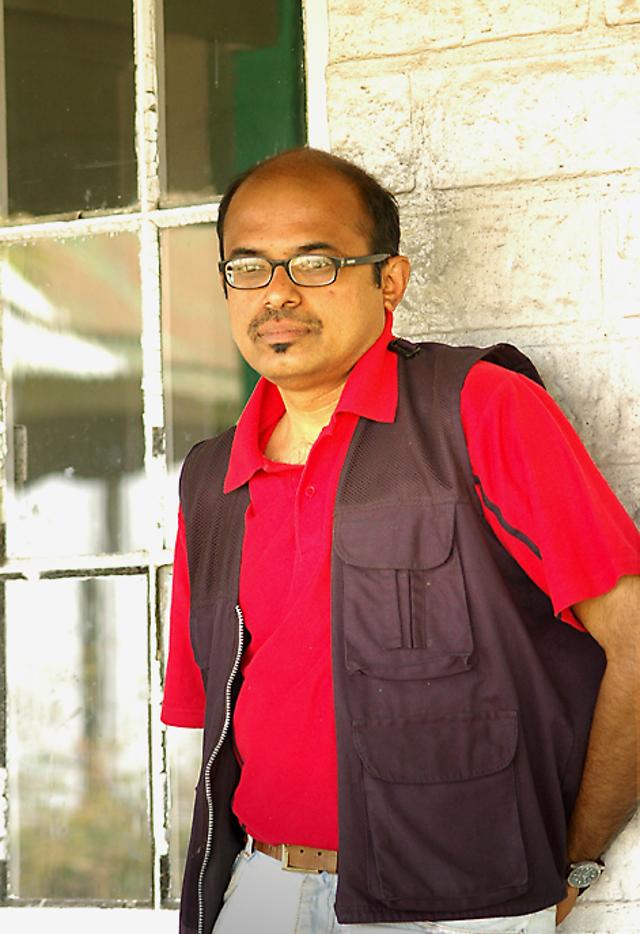
Biggs and Pigou did pioneering work in architectural photography, especially temple architecture in western India. A decade later, in 1866, their work was collected and published in Architecture of Dharwar and Mysore and Architecture at Beejapur. According to photography historian John Falconer, “There is some suggestion by Biggs himself that it was he who was responsible for first alerting the East India Company to the potential benefits of photography”. Falconer goes on to suggest that the work of Biggs and Pigou “was inevitably biased because of their positions as representatives of a foreign ruling class whose Judeo-Christian values were inherently antagonistic to the subject of much of their work. Biggs, in particular, considered that the “indecent” Hindu sculptures he encountered in the Badami district only proved that “the early date at which the morals of India assumed such a headlong and downward tendency and anyone who has the opportunity of comparing the ancient and modern sculptures cannot fail to see the gradual but remarkable flight of steps down from artistic beauty and chaste tendency to the greatest deformity and disgusting immorality which the sculptures betray.”
Excerpted with permission. All in a Flash: News Photography in India is available for pre-order at www.niyogibooksindia.com It will be published in September. John’s earlier books include, Entry from Backside Only, Hazaar Fundaas of Indian-English, Under a Cloud: Life in Cherrapunji Wettest Place on Earth and Top Game: Winning, Losing a New Understanding of Sport.


