
 E-Paper



Chandigarh equipped with adequate Covid infrastructure: Health secretary
The Chandigarh health department has enough beds, ventilators, medicines and medical oxygen to tackle another surge, said health secretary Yashpal Garg

 Prefer HTon Google


Amid the rapid surge in Covid-19 cases, the UT health department has assured that it has adequate facilities to tackle another surge.
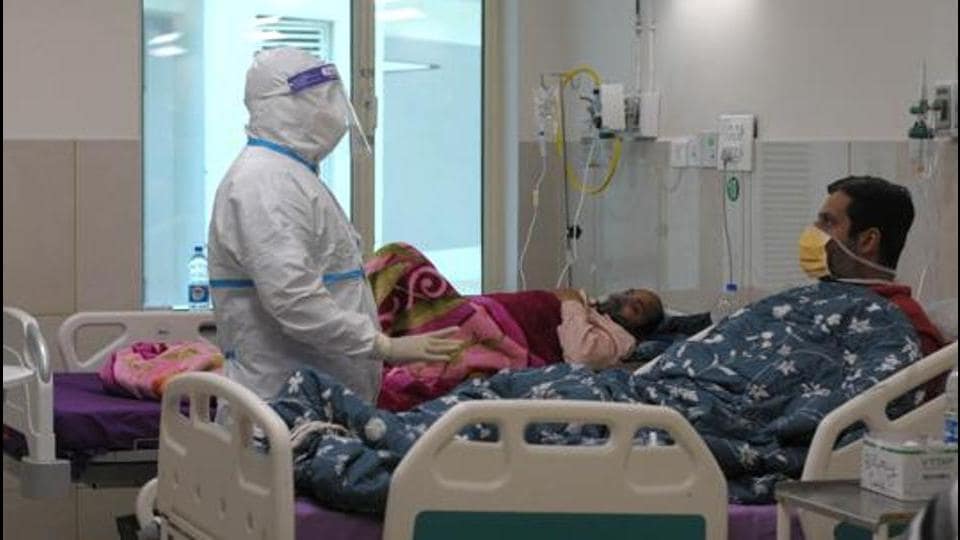
“During the peak of infection, the state must have adequate beds, ventilators, medicines and medical oxygen to cater to the patient load. The UT health department has enough of these facilities to tackle another surge,” said UT health secretary Yashpal Garg.
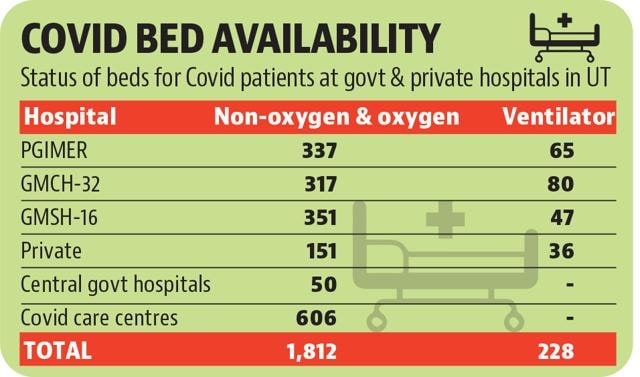
Giving details, Garg said, “In various government and private hospitals of Chandigarh, 1,206 beds have been reserved for Covid-19 patients. Besides, 606 beds are also available in Covid care centres, taking the total count to 1,812. In the first wave, 3,163 beds were reserved for Covid, while the count was 3,740 in the second wave. Since hospitalisations are low at present, the beds reserved are limited and the number will be increased as per requirement.”
‘Oxygen capacity increased’
Chandigarh presently has 53.8 million tonnes (MT) of daily medical oxygen generation capacity, against the requirement of 49.5 MT during peak Covid spread.
“We will get 40 MT oxygen from central allocation, while we will be generating 6.7MT through pressure swing adsorption (PSA) oxygen generation plants. Also, 4.7 MT will be available from oxygen concentrators and 3.4 MT from air separation units,” the health secretary said
He added that the PSA plants’ capacity had been increased from 1,600 litres per minute (LPM) during second wave to 2,050 LPM at present. Also, projects are in pipeline to increase the capacity to 2,240 LPM.
Essential medicines kept in stock
The UT health department has also procured essential medicines for emergency use. Currently, UT has a stock of 43,923 injections of dexamethasone, 31,371 enoxaparin, 18,756 remdesivir, 5,090 methylprednisolone, 4,811 amphotericin B deoxycholate, 470 posaconazole, 241 tocilizumab and 173 intravenous immunoglobulin.


