
 E-Paper



Chandigarh Housing Board revenue falls ₹5 crore short in FY23’s first half
The Chandigarh administrator had placed board’s Sector-53 General Housing Scheme on hold in August; its 88 leasehold commercial properties have also found no takers


The Chandigarh Housing Board’s revenue in the first half of financial year 2023-24 fell ₹5 crore short of the estimated target.
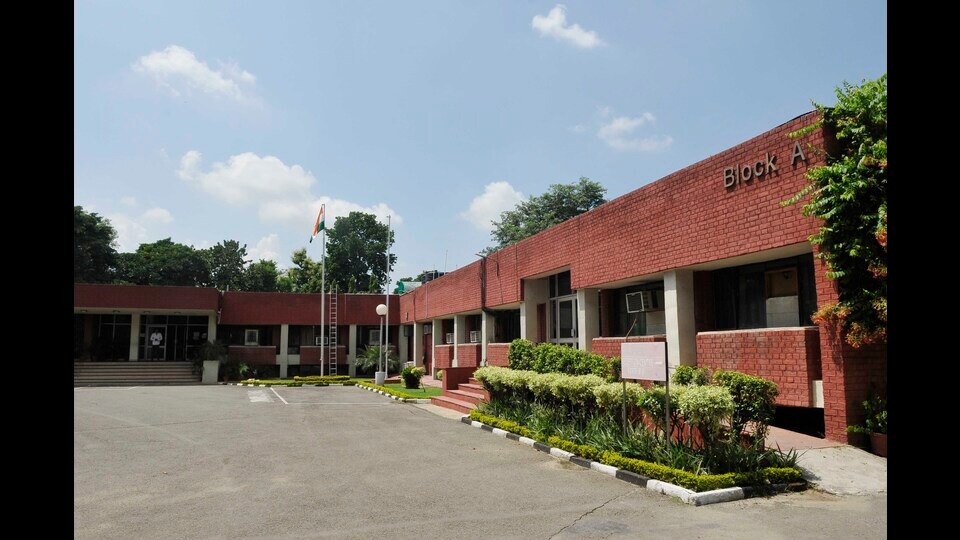
The board earned ₹19 crore in the first two quarters of the fiscal, against an expenditure of ₹24 crore, as per information obtained by RTI activist RK Garg.
In the budget estimate for the entire year, the board had projected ₹47 crore as income and ₹33 crore as expenditure, a profit of only ₹14 crore. The expenditure was estimated to be 45% higher than previous year and the receipt 58% more, primarily due to estimates related to construction of new projects.
However, UT administrator Banwarilal Purohit put its ambitious Sector-53 General Housing Scheme on hold in August, terming it unnecessary. Consequently, the board cancelled the ₹200-crore tenders floated on August 2 for construction of 340 flats on nine acres.
The administrator had also told CHB not to pursue another housing scheme at IT Park, which has been caught in environmental clearance tangles. In October last year, the Union ministry of environment and forest had refused to accord approval to the scheme, featuring 728 flats in three categories, stating that the project site falls in the eco-sensitive zone of the Sukhna Wildlife Sanctuary.
As a result, now, no housing scheme, either in the private or public sector, is in the works in the city. On August 23, Purohit had also sought details from CHB on how it spent ₹1,000 crore on IT Park since 2005 that the board has sought back from the administration.
Further, CHB’s major source of income — sale of residential and commercial properties — also fell flat.
Despite slashing the reserve price by 10%, the board failed to find buyers for its 88 leasehold commercial properties in the past five auctions in 2023.
Even after repeated attempts, CHB chief executive officer Ajay Chagti could not be reached for comments.
In 2022-23, the receipts had fallen by 55%, from an estimate of ₹43 crore to ₹24 crore, and expenditure for the same period had decreased from ₹29 crore to ₹18 crore due to increase in the retirement age of employees with the implementation of Central Service Rules.
RTI activist RK Garg said CHB had failed to make correct budget estimates and also incurred an expenditure of ₹50 crore on salaries during 2022-23, compared to ₹29 crore in 2021-22.
Garg further suggested that a special audit of CHB may be conducted, and with no major projects being undertaken, the staff may be shifted to other needy departments like the UT engineering department, municipal corporation and Chandigarh Smart City Limited.
At present, CHB boasts of a workforce comprising around 300 regular employees, supplemented by an additional 200 engaged on contractual and outsourced terms. The monthly disbursement of salaries to this collective body amounts to a substantial ₹2 crore.
Additionally, the chairman’s post at CHB has been vacant for the past five years and the charge is being given to other officers since March 2018.
The last regular chairman of the board was Maninder Singh Bains, who was transferred in March 2018. Even since, the UT adviser has been holding the additional charge.


