
 E-Paper



Chandigarh’s Sukhna Lake feeling the heat, water level drops to 1,156 feet
A senior officer of the Chandigarh administration attributed the decline in water level to increase in evaporation amid the hot weather


The unrelenting heat gripping Chandigarh has caused Sukhna Lake’s water level to drop to 1,156.35, one foot lower than the 1,157 feet recorded on May 15.
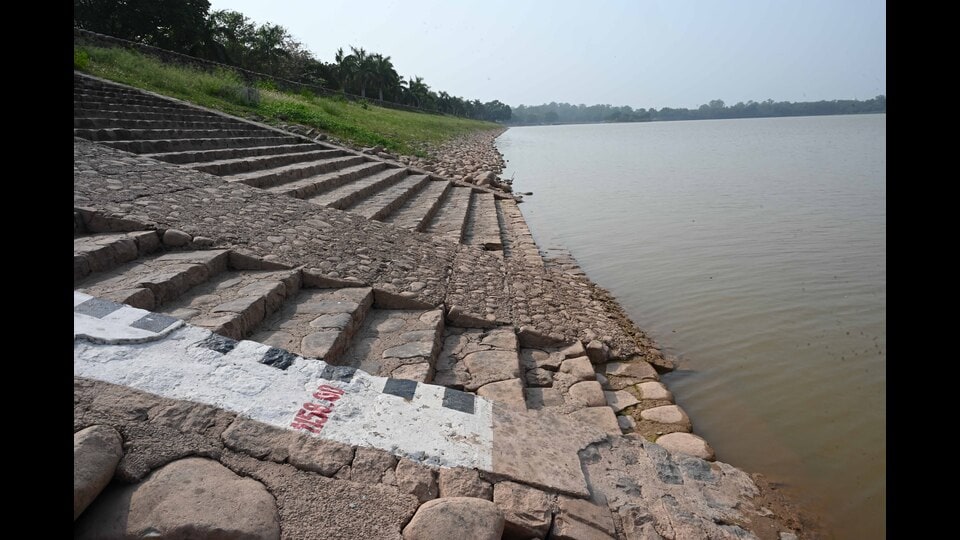
A senior officer of the UT administration attributed the decline to increase in evaporation amid the hot weather. On the bright side, the current weather conditions are ideal for desilting as large portions of the lake bed have dried up, particularly near the regulator end, with the dry bed is now visible.
The official added that silt accumulation remained a significant environmental concern that must be addressed urgently. Despite the drop, there is still enough water for boating, the officer assured.
He noted that low water levels during summer were not unusual, recalling that in 2016, the lake level had fallen to 1,153 feet. In June 2015, the water level at Sukhna Lake had sunk below 1,152, more than 10 feet below the ideal benchmark of 1,163 feet.
The rain-fed Sukhna lake at the foothills of the Himalayas was created way back in 1958 by damming the Sukhna choe, a seasonal stream formed by the confluence of two tributaries—Kansal and Suketri, also known as the Ghareri and Nepli choes.
Recently, the UT administration drafted a comprehensive five-year plan to preserve and enhance the lake.
A Wetland Authority has been constituted to oversee the development and conservation efforts, with the administrator of Chandigarh serving as its chairman.
The five-year plan includes proposals to introduce new activities and address challenges such as falling water levels during summers. Special attention will be given to the lake’s catchment area, with a focus on maintaining water purity.
One of the primary focuses of the plan is to prevent the ecologically sensitive area from water pollution and to ensure all future activities or constructions around the lake are approved by the authority.
The water body covers an area of around 338 acres. It is 1.52 km long and 1.49 km wide with an average depth of around 5 metres.


