
 E-Paper



Cross-border trade with China via Shipki La pass to resume after 2 years
The Himachal Pradesh government has sought clearance from the Union ministry to resume the business through Shipki La pass in the tribal Kinnaur district


After two years of trade suspension between India and China through the mountain passes connecting the two countries, primarily due to the Covid pandemic, the Himachal Pradesh government has sought clearance from the Union ministry to resume the business through Shipki La pass in the tribal Kinnaur district.
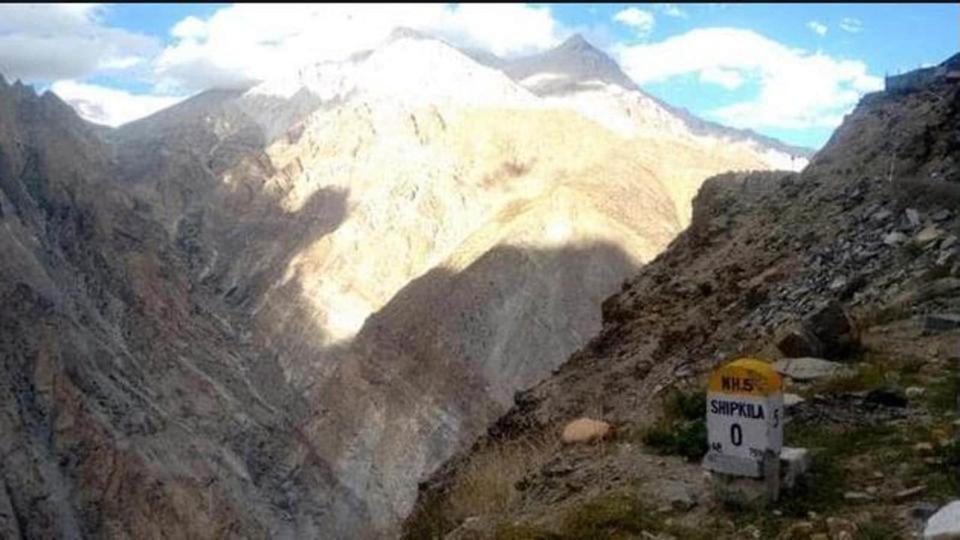
Villagers, particularly those living along the international border in Lahaul and Spiti and Kinnaur districts, make living by shuttling goods too and from China.
The annual trade is carried out through Shipki La pass from June to November.
Traders, mostly from Lahaul and Spiti and Kinnaur districts of the state adjoining China start registering themselves in May.
These two districts share 240-km-long boundary with China, which includes a 80km stretch between Chumar in Lahaul and Spiti and 160km from Daroti to Mumri Dogri in Kinnaur district.
Last year, the trade was called off due to the stringent Covid protocols across the borders. In 2020, there was no trading through Shipki La amid the border tension that escalated after a face-off between Indian and Chinese armies wherein 20 Indian soldiers were killed.
“The last two years have been difficult for the traders. Our association too had requested the government that if the situation permits, it should resume the trade. The last two years had a lot of impact on the local economy,” said Hishey Negi, Indo-China Trade Association president, Kinnaur.
The district administration of Kinnaur has also written to the state government to take up the issue with the Centre.
“We have asked the government if the trade could be resumed. The request has been forwarded. Trade passes will be issued to traders after we get clearance,” said Kinnaur deputy commissioner Abid Hussain Sadiq.
Director, industries, Rakesh Prajapati also confirmed that the issue has been taken up with the central government.
“There was some clarification the central government had sought to which we have responded,” he added.
The traditional trade between India and China has seen many ups and downs.
The bilateral trade through Shipki La pass reopened in 1993 after it was shut due to the Indo-China war in 1962.
Shipki La is a mountain pass that connects the Kinnaur district to the Tibetan Autonomous Region in China.
It’s a border post at 18,599ft. It is through this pass that the turbulent Sutlej enters India from the China-occupied Tibet.
The traders had for long been demanding the government to develop more facilities for the traders along the border.
They had urged the government to set up a trade centre in Chupan. The government identified the land for construction, but the construction is still pending.
Nearly 29 items are imported from China, including wool, raw silk, yak hair, China clay, borax, butter, common salt, horse, goat, sheep, ready-made garments, shoes, quilts, blankets, carpets, and local herbal medicines.
Trade had suffered a setback when the Indian government banned the import and export of livestock, which was a major component of business in 2012 due to a lack of quarantine facilities for animals.
Livestock comprised a major portion of cross-border trade.
Traders imported chigu goats reared for wool and meat in China-controlled Tibet, while Chamurthi horses, known for their sturdiness, were popular among Indian traders.
Trade stats
Year: Business
2014 : ₹7.32 crore
2015 : ₹9.72 crore
2016 : ₹8.59 crore
2017 : ₹59.21 lakh
2018 : ₹2.52 crore
2019 : ₹3.05 crore


