
 E-Paper



Delhi’s poor air quality not Punjab’s doing: PAU study
The study was conducted by PAU climate change and agricultural meteorology department head Pavneet Kaur Kingra and meteorologists Harleen Kaur and Sukhjeet Kaur, in which they looked at the month-wise AQI of the National Capital over the last three years.

 Prefer HTon Google


Delhi’s poor air quality index (AQI) in winter months is not due to stubble burning in Punjab but due to accumulation of its own pollutants, a study by Punjab Agricultural University (PAU) has found.
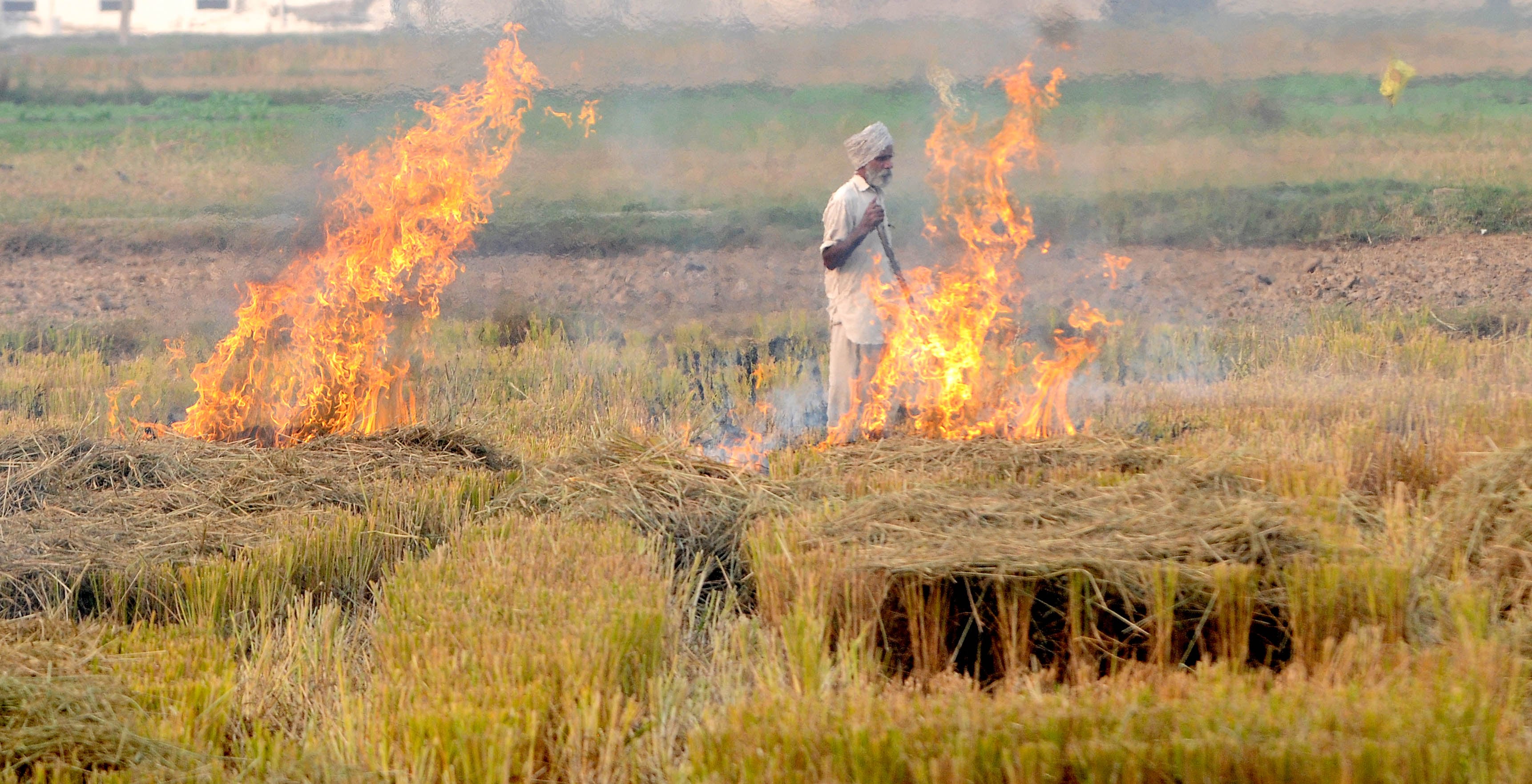
The study was conducted by PAU climate change and agricultural meteorology department head Pavneet Kaur Kingra and meteorologists Harleen Kaur and Sukhjeet Kaur, in which they looked at the month-wise AQI of the National Capital over the last three years.
“The data showed that Delhi’s pollution levels remained significantly high throughout the year, except for the monsoon months of July and August, when atmospheric pollutants settled down owing to the rain,” said Kingra. She, however, accepted that stubble burning does bring down the quality of air in Punjab and poses problems for the inhabitants here.
Also Read| Delhi's average PM 2.5 pollution in winter 20% lower compared to pre-pandemic level: Report
Kingra cited the wind direction and speed to further substantiate the argument. She said that wind blows from the South-East, i.e, from the Delhi side towards Punjab. “So there is no possibility of pollutants moving Punjab to Delhi. The wind speed is also low, around 6km per hour, during this period in the region, which is not enough to push the pollutants,” she elaborated.
Explaining the reasons behind the high pollution levels in winter months in Delhi, Kingra said, “The poorest AQI is witnessed during the winter months of November to January. This is mainly due to festivities and stable weather conditions, which result in the accumulation and locking of pollutants in air till January and February.”
The researchers also pointed out that crop residue is also burnt during the wheat harvesting season, in April and May, but that doesn’t seem to have any effect on Delhi’s AQI, which, as per data, shows improvement from January till August.
This indicates that degradation of Delhi’s air quality from November to January is not due to the movement of pollutants and smoke from Punjab, but due to locking and accumulation of its own pollutants, further triggered by festivals under stable weather conditions.
‘Delhi has its own pollution sources’
“The fact cannot be denied that Delhi has its own pollution sources, in the form of vehicles/large population and industrial processes etc. During monsoon, AQI becomes better as these pollutants mix/settle down with rainwater. With the culmination of monsoon, these pollutants keep on accumulating in the atmosphere under stable winter weather conditions till January. Due to which we witness hazy conditions in the National Capital Region,” said Kingra.
As the temperature starts increasing in February and March, the pollutants start dispersing due to air movement and thus the air quality starts improving.
A similar study had been carried out by the previous department head Prabhjyot Kaur by analysing data of three years from 2017 to 2019.
This study too found that stubble burning in Punjab chokes locals, but is not the cause of pollution in NCR.
Another study, which was carried out jointly by the Indian Institute of Science Education and Research (IISER), Mohali, and Punjab Pollution Control Board had concluded that a significant contribution to Delhi’s air pollution was from within the NCR or Uttar Pradesh.


