The prolonged dry spell and unusually high temperatures have created a drought-like situation in Himachal Pradesh, where 16.5% area under cultivation has been affected and 434 water supply schemes have been hit.
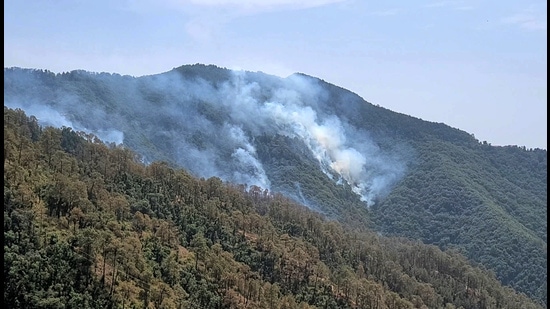
The state has experienced 94% deficit rainfall in April and March. Sirmaur has recorded a 99% spring rain deficit, followed by 98% in Una, Chamba, Lahaul and Spiti and Bilaspur (96%), Solan (95%), Kinnaur (94%), Shimla (93%), Kangra and Hamirpur (92%), Kullu (85%) and Mandi (83%).
Una district has borne the maximum brunt where 53% of the total area under cultivation has been affected. The crop loss is equal to 33% or more in 36.6% of the area. Una recorded 42 degrees Celsius temperature this season.
Similarly, more than 18% cultivable area in Sirmaur has been affected. In Hamirpur, where 17% of the cropped area has been hit, maximum loss has been reported from Bamsan and Sujanpur.
Among the 434 water supply schemes hit, maximum 61 are in Kullu, 42 in Sirmaur, 40 in Mandi and 38 in Bilaspur.
The Jal Shakti department has warned of water scarcity in Bhoranj, Lag-Nalti and Bamsan areas of Hamirpur district.
{{/usCountry}}The Jal Shakti department has warned of water scarcity in Bhoranj, Lag-Nalti and Bamsan areas of Hamirpur district.
{{/usCountry}}The fire department is also facing water shortage in Bhoranj, Bamsan and Nadaun areas to fill its tenders.
“The drought-like conditions are adversely impacting the crop and water supply schemes in Himachal, particularly in the rain-fed regions of the state. The government is keeping tabs on the situation,” said special secretary, revenue, Sudesh Mokta, who is also the director of the State Disaster Management Authority.
Scores of villages in the Theog assembly segments are also facing water shortage. “Water level in the perennial sources has begun to recede. The villages in Fagu, Matiana, Jiskoon, Kangal, Bhareri, and Badagon are the worst hit,” he added.
The arid climate has also caused the loss of garlic crop in Sirmaur district. Due to lack of rain for a long time, the garlic crop has started to dry up and 50% to 60% of the crop has been damaged.
Most of the problems are being faced by those farmers, who are completely dependent on rain for irrigation.
“Garlic requires a lot of irrigation. Adequate moisture is needed for the formation of the garlic cloves. It’s been over a month since it rained. In such a situation, the stem of garlic starts falling,” said Raman Sharma, a young farmer from Millah village in Shillai assembly segment.
The department of agriculture had estimated 60,000 metric tonnes of crop production.
Garlic is grown in the large tracts of land in the Trans-Giri region of Sirmaur district, which includes Nauhradhar, Haripurdhar, Sangrah, Rajgarh, apart from Saindhar, Dhartidhar and Pachhad region.
The dry spell has also caused loss to the apple farmers, particularly in orchards situated in the lower elevation.