
 E-Paper



Elevated or underground Metro track in Chandigarh? Ball now in Centre’s court
Hoping to initiate work on the ambitious project by April next year, Chandigarh administration has now decided to write to the central government to take the final call between the two


An elevated Metro network, which will impact Chandigarh’s heritage and aesthetic appeal, or underground tracks that will bump up the project cost by over 70% — the UT administration is finding itself at a crossroads.
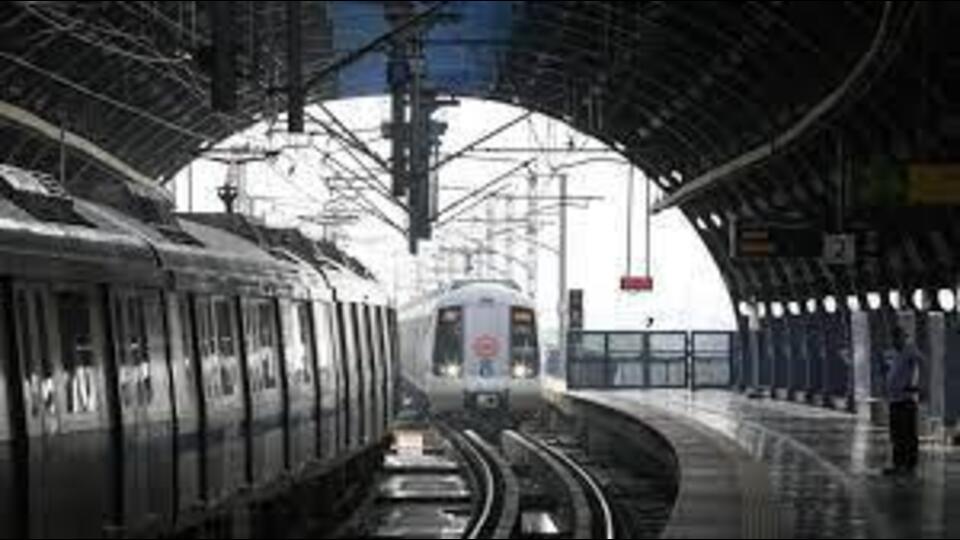
Hoping to initiate work on the ambitious project by April next year, the administration has now decided to write to the central government to take the final call between the two.
On Monday, UT administrator Banwarilal Purohit chaired a meeting of the 23-member Unified Metro Transportation Authority (UMTA), where approval was granted for the alignment option report and the alternative analysis report (AAR) prepared by Rail India Technical and Economic Services (RITES).
According to the alignment option report, the 154-km Metro network proposed across the tricity will mostly feature elevated tracks and stations, albeit at the cost of altering Chandigarh’s aesthetic landscape.
The report has listed three corridors as part of Phase 1, criss-crossing through Chandigarh, Mohali and Panchkula.
Among them, the one along the Madhya Marg, which falls in Chandigarh’s heritage sectors (1 to 30), will be completely elevated, while the other two will be mostly elevated and partly underground. Phase 2, planned in Mohali and Panchkula, will also have a mostly elevated network.
However, opting for underground corridors is projected to increase the expenditure by nearly ₹8,000 crore, bringing the total project outlay to around ₹19,000 crore.
UT adviser Nitin Yadav said at the meeting, UMTA finalised proposals for both elevated and underground corridors, as recommended by RITES, which will be submitted to the Union ministry of housing and urban affairs (MoHUA), along with their respective advantages, disadvantages and financial implications.
Yadav said aesthetic concerns had been raised for elevated corridors in Chandigarh, while the underground option was associated with increased costs. Of the total 20 km network proposed in Chandigarh, approximately 8 km is elevated.
“With both the AAR and alignment option report in, RITES has been instructed to prepare and submit the detailed project report (DPR) soon,” he said.
Running into a total of 91 km, the first phase includes three routes — Sultanpur, New Chandigarh, to Sector 28, Panchkula (34 km); Sukhna Lake to Zirakpur ISBT via Mohali ISBT and Chandigarh airport (41.20 km); and from Grain Market Chowk, Sector 39, to Transport Chowk, Sector 26 (13.30 km), apart from 2.5 km long depot entry.
As per the RITES report, most of the tracks and stations in the first two corridors will be elevated, while some parts will be underground. However, the third corridor, between Sector 26 and Sector 39, along Madhya Marg, will be fully elevated. These are expected to be completed by 2034.
In Phase 2 of 25 km, which will be developed after 2034, Metro has been proposed on Airport Chowk to Manakpur Kallar (5 km) and ISBT Zirakpur to Pinjore (20 km), also with a mostly elevated network.
As per this plan, the overall tentative cost of the Metro project is around ₹11,000 crore, of which 20% will be paid by Haryana and Punjab, 20% by the Centre and the remaining 60% by the lending agency.
In July this year, the Chandigarh administration had decided that it will take on board all stakeholders – Haryana and Punjab – in preparation of the AAR and DPR for Metro as per the guidelines of the central government. Both states have already released their contribution for the DPR’s preparation.
Metro plan rejected by Centre previously
The Metro project was first proposed for Chandigarh in 2009 and a DPR was also prepared in 2012 after spending ₹1.5 crore. The first phase was to begin in 2013. But in 2014, member of Parliament (MP) Kirron Kher opposed it, stating that it will uproot the city, before it was ultimately rejected by the Home ministry in 2017.
The ministry had asked the UT administration to look for alternative models of transport, contending that Metro was not viable in Chandigarh due to the city’s size. Also, its ₹14,000-crore cost was not financially feasible. For the project to be viable, the Metro network needs to be used by 40,000-70,000 passengers at the peak hour in peak traffic to ensure viability, which is expected to be achieved only by 2051, the ministry had stated.
After remaining in cold storage for years, the Metro plans were revived in August 2021, with the UT administration deciding to go in for a fresh comprehensive mobility plan by RITES.
With 14 lakh registered vehicles among a population of over 12 lakh, Chandigarh has the highest density of vehicles per household in the country, leading to traffic congestion and snarls. In addition to these, over two lakh vehicles on interstate routes cross the city daily.
The comprehensive mobility plan, allotted to RITES Limited in December last year, is aimed at resolving this burgeoning problem.


