The Chandigarh municipal corporation has completed the upgrade of all six sewage treatment plants (STPs) with sequencing batch reactor technology, paving the way for trial runs.
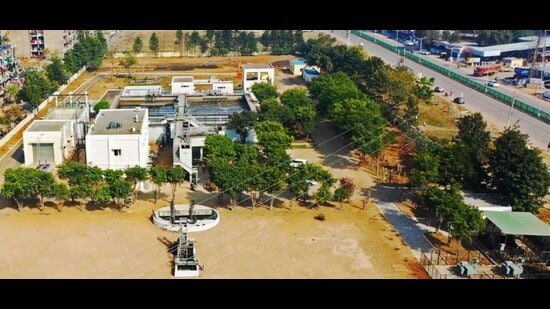
The six STPs — 3BRD, Dhanas, Raipur Khurd, Raipur Kalan, Maloya and Diggian — have been upgraded at a cost of ₹650 crore. Sequencing batch reactors produce effluent low in organic compounds, meeting the desired effluent standards.
Among the six plants, those at Raipur Khurd, Raipur Kalan and Diggian have been newly constructed, while the other three have been upgraded.
The project, underway since December 2021, was carried out under the Smart City Mission by Chandigarh Smart City Limited. The agencies allocated the work will operate and maintain these STPs for the next 15 years.
The treated water will be utilised in parks, stadiums, golf clubs, parks, houses above 1 kanal and even industrial units. Chandigarh generates 220 million litres per day (MLD) of wastewater/sewage.
What will change
Apart from making the plants more energy efficient, the upgrade will help bring the biochemical oxygen demand level in the sewage under 10 mg per litre, reducing risk to public health and environment.
Biochemical oxygen demand (BOD) indicates the amount of decaying matter in water. A low BOD is an indicator of good-quality water, while a high BOD indicates polluted water.
{{/usCountry}}Biochemical oxygen demand (BOD) indicates the amount of decaying matter in water. A low BOD is an indicator of good-quality water, while a high BOD indicates polluted water.
{{/usCountry}}Besides polluting the Ghaggar, where the treated sewage is discharged, the higher BOD level was affecting the quality of treated water that MC was releasing for irrigation of public and private parks. The tertiary treated water would stink, leading to lower use by private households.
Besides, earlier none of the STPs had the requisite machinery to deal with faecal coliform, a major water pollutant after BOD, whose most probable number (MPN) value needs to be contained below 230 MPN per 100 ml.
MC commissioner Anindita Mitra said the STPs were now running through a fully automated supervisory control and data acquisition (SCADA) system, where the quantity and quality of water at the inlet and outlet will be continuously monitored, and further checked by the engineering department and the Chandigarh Pollution Control Committee on a real-time basis.
She said the STPs were currently undergoing trial runs and will hopefully be inaugurated in the next few days.