
 E-Paper



Focus back on Punjab’s high death rate, worries mount
The state’s Case Fatality Rate of 3.1% is more than double the national figure of 1.4%; Maharashtra and Sikkim are next to the state ar 2.2 %

 Prefer HTon Google


Blurb:
Chandigarh With over 200 deaths in last one week, the focus is back on Case Fatality Rate (CFR) or death rate of Punjab, which is highest in the country, as 20-25% of country’s total virus-related deaths are coming from the state.
The situation is getting critical day-by-day with the state contributing 100 deaths in the last three days, 35 on Wednesday, 38 on Tuesday, and 27 on Monday.
As per the state health authorities, Punjab has contributed maximum deaths in the country after Maharashtra in recent days. The state’s Case Fatality Rate of 3.1% is more than double the national figure of 1.4%.
As per information procured from state authorities, Maharashtra and Sikkim stand below Punjab when it comes to CFR at 2.2%.
Punjab’s high CFR, as per information, also cropped up during chief minister Captain Amarinder Singh’s interaction with Prime Minister Narendra Modi on Wednesday.
‘Late medical help main reason’
As per the analysis carried out by the Covid management group of the Punjab government for the last 10 days, 77% of those died of the virus reported for the first time at the nearest health centre when their symptoms had reached the severe stage. Only 14% of those who lost their lives reported when their symptoms had reached the moderate stage and 8% reported at the health facilities when their symptoms were still mild.
“Most virus-hit patients report at the health centres when the symptoms are serious and this is the biggest reason behind high number of deaths in Punjab. Majority of those who died reported for the first time when their symptoms had reached the severe stage. Early reporting is the only way to save lives,” said a senior official, who was present during the presentation given during the meeting of the Covid management group.
As per an analysis of the figures available in the daily media bulletin of Punjab, Faridkot is the only district whose CFR is lowest at 1.9% and that too is more than the national figure. Three districts of Punjab, Sangrur, Ropar and Tarn Taran have CFR above 4%.
Co-morbidity is the biggest reason behind deaths and figures suggest co-morbid condition was common in almost 95% of fatalities in the recent days.
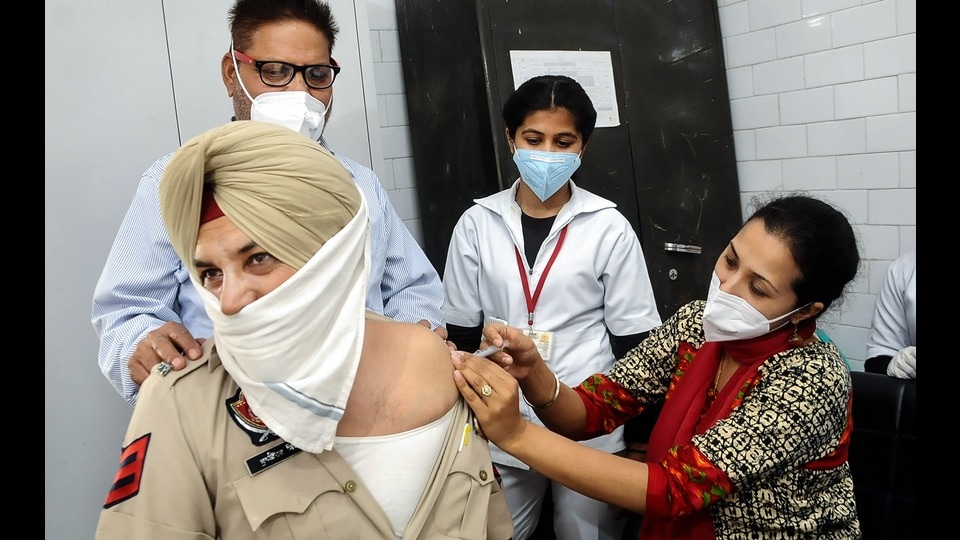
The low turnout in the vaccination drive has also added worries of the health department. “Even people with co-morbidities are shying away from getting the jab. We must keep in mind that even after getting first dose, the risk of reaching the severe stage reduces to a large extent,” said Punjab’s nodal office for Covid-19 Dr Rajesh Bhaskar.


