
 E-Paper



Gharial rescued from Muktsar may have swept downstream from Harike: Experts
Harike, located on the Ferozepur-Tarn Taran border, is the only natural habitat for gharials in Punjab. These endangered crocodilians are a vital part of the region’s aquatic biodiversity.

 Prefer HTon Google


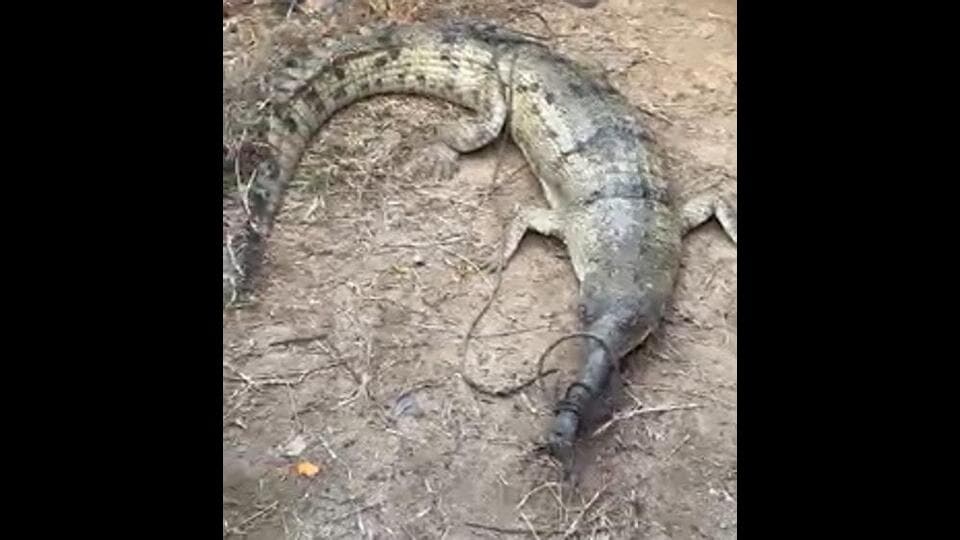
A week after a gharial was rescued from an irrigation canal near Dhaula village in Muktsar, wildlife experts have concluded that the reptile might have swept downstream from Harike Wetland.
Harike, located on the Ferozepur-Tarn Taran border, is the only natural habitat for gharials in Punjab. These endangered crocodilians are a vital part of the region’s aquatic biodiversity.
Dhaula village near Malout town in Muktsar lies approximately 200 kilometres downstream Harike. On January 16, a private diver rescued an 8-foot-long gharial from the canal. Jagdev Singh, a former sarpanch of Dhaula, said the gharial had been spotted in the canal for over two months. Its presence caused fear among locals as it was seen floating in the canal that runs through six villages.
“We had not heard of any attacks on humans or animals, but its presence frightened us. The gharial was mostly seen in the water and was rarely spotted on roads or fields,” Singh said.
Punjab’s chief wildlife warden Dharminder Sharma said the gharial was a sub-adult, under 10 years of age. It is uncommon for gharials to stray so far from their natural habitat, he added.
“Due to excessive rainfall in 2023, there was a widespread flooding in the Beas and Sutlej rivers. At that time, too, a section of the reptile population had reportedly swept into Pakistan waters. On another occasion, a gharial was rescued downstream in Punjab. This time, too, it is felt that the reptile accidentally swept down due to strong water current near Harike head. However, it was rescued and released safely in Harike wetland again,” he said.
Conservation efforts
Senior coordinator for aquatic biodiversity at the World Wildlife Fund for Nature-India Gitanjali Kanwar confirmed that the gharial originated from Harike. She said such incidents are not unique as gharials have been displaced downstream in other states as well.
“In these situations, farmers and locals report sightings and the wildlife is rescued and relocated to safe habitats,” Kanwar said.
Harike Wetland was historically home to gharials until the species disappeared from the region in the 1960s. In 1975, under India’s Project Crocodile, 47 gharials bred at the Morena Captive Breeding Centre in Madhya Pradesh were reintroduced into the Beas in Punjab in three phases.


