
 E-Paper



Haatee community to boycott HP elections over ST status
Dominant community in Sirmaur district revived its five-decade-old demand for ST status recently and is now determined to get its due

 Prefer HTon Google


The Haatee community of Sirmaur district, which borders Uttarakhand, has announced that it will boycott the Himachal Pradesh assembly elections later this year if its demand of being accorded Scheduled Tribe (ST) status in the Trans Giri region is not met.
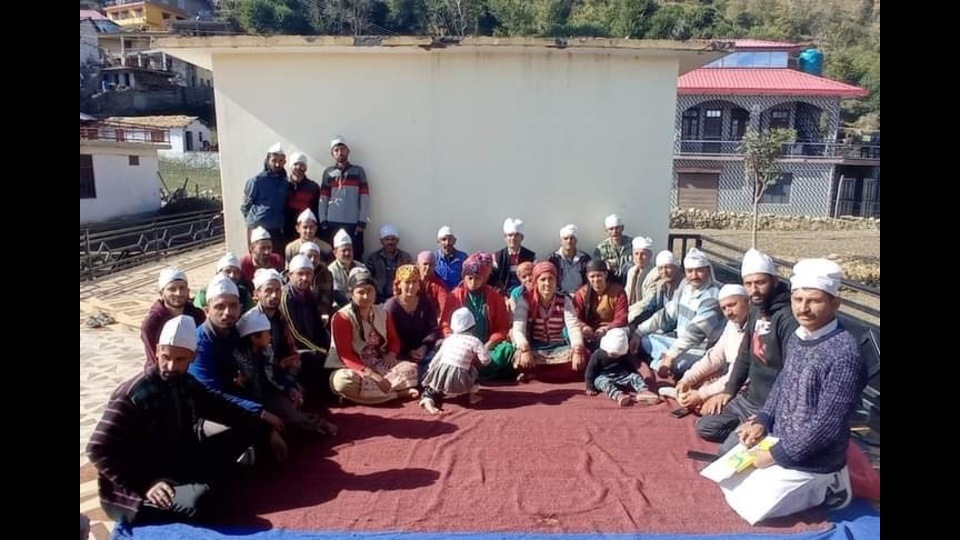
The announcement was made at the Mahakhumbli, a congregation of the community, at Sangrah in which thousands of community members from 154 panchayats took part.
“We will take our fight to a logical end whatever the cost we have to pay for it. The movement for the rights started by the Haatee Central Committee has gained momentum now,” committee president Amichand Kamal said. The committee has been at the forefront of the campaign for tribal status for the community in the remote regions across the Giri river in Sirmaur.
Uttarakhand has given ST status in border areas
The Haatee community is dominant in four of the five assembly segments of Sirmaur district. The committee has been organising the congregation to mobilise the community since December. This time, its leaders called for boycotting the assembly elections if the demand is not met. Renukaji MLA Vinay Kumar and Vidyanand Seraik, a Padma Shri awardee, were among the attendees.
“Hatees should have been given the tribal status much earlier. It’s sad that we are fighting for our rights for five decades,” Kumar said.
Nearly 50% of the population in Sirmaur district comprises the Haatee community that lives in difficult conditions across the Giri river. Ever since communities in the Jaunsar and Babbar areas of Uttarakhand, which share their boundaries with the Trans Giri area, were granted Scheduled Tribe status in 1967, the inhabitants of Trans Giri have been seeking ST status. “It’s high time now. People can’t be fooled by political leaders. The community will now fight its own battle,” said Pradeep Singhta, the president of the Haatee Vikas Manch.
Efforts of state leaders hit hurdles
In 2016, the then state government headed by Virbhadra Singh moved the Haatees’ case to the Centre for granting tribal status to the Trans Giri region and Dodra Kwar in Rohru.
In 2018, the tribal affairs ministry wrote back to the state government saying that details provided in the ethnography report about the Haatees was not sufficient. The government had written to the state to reexamine the proposal for inclusion of the Haatee community in the list of Scheduled Tribes and further recommended the government conduct full-fledged ethnographic studies.
BJP state president and MP Suresh Kashyap met registrar general of India (RGI) Vivek Joshi in Delhi and raised the demand for giving tribal status to the community. Kashyap also met Union minister Arjun Munda on December 9 last year regarding the demand. During the recent budget session, Mandi Lok Sabha member Pratibha Singh raised the issue in Parliament.
In 1992, the government conducted a survey to assess the socio-economic condition of the people. Based on the survey, the state government asked the Centre to categorise inhabitants of both regions as Scheduled Tribes. The Trans Giri area comprises 124 panchayats (the number has increased now). The Dodra Kwar sub division is equally backward with most villages lacking road connectivity.
In 2014, the government asked the department of tribal studies at Himachal Pradesh University to conduct ethnographic studies.


