
 E-Paper



Himachal Pradesh’s cold desert biosphere reserve gets UNESCO tag, India count now 13
The decision to include India’s Cold Desert Biosphere Reserve in the WNBR was taken at the 37th session of UNESCO’s International Coordinating Council of the Man and the Biosphere (MAB) held in Paris on Saturday

 Prefer HTon Google


Himachal Pradesh’s Cold Desert Biosphere Reserve, perched high in the trans-Himalayan region, is among the 26 new biosphere reserves across several countries, designated by UNESCO, the world body announced on Saturday.
With this addition, India now has 13 biospheres listed in UNESCO’s World Network of Biosphere Reserves (WNBR).
The Cold Desert Biosphere Reserve of northern India spans approximately 7,770 sq km across the dramatic landscapes of Himachal Pradesh’s Lahaul-Spiti district, according to UNESCO.
Encompassing windswept plateaus, glacial valleys, alpine lakes, and rugged high-altitude deserts, it is one of the coldest and driest ecosystems in WNBR.
“UNESCO designates 26 new biosphere reserves across 21 countries – the highest number in 20 years. The World Network of Biosphere Reserves now includes 785 sites in 142 countries, with an additional one million sq km of natural areas brought under protection since 2018 – equivalent to the size of Bolivia,” the world body said in a statement.
The decision to include India’s Cold Desert Biosphere Reserve in the WNBR was taken at the 37th session of UNESCO’s International Coordinating Council of the Man and the Biosphere (MAB) held in Paris on Saturday, Union Minister for Environment and Forests Bhupender Yadav said in a post on X.
“India continues to make dedicated efforts towards preserving, protecting and restoring the ecosystem under the leadership of Prime Minister Narendra Modi,” he said.
The development comes soon after two Ramsar sites in India were added to the UNESCO list, increasing the total number of Ramsar sites to 93, Yadav added. Ramsar sites refer to those listed on the List of Wetlands of International Importance.
The UNESCO recognition of the cold desert biosphere is likely to promote tourism and research in the region.
Cold Desert Biosphere Reserve harbours 732 species of vascular plants, including 30 endemics and 157 near-endemics of the Indian Himalayas, according to UNESCO.
Altitudes in this reserve range from 3,300 to 6,600 m, covering the Pin Valley National Park and Kibber and Chandratal Wildlife Sanctuaries, it said.
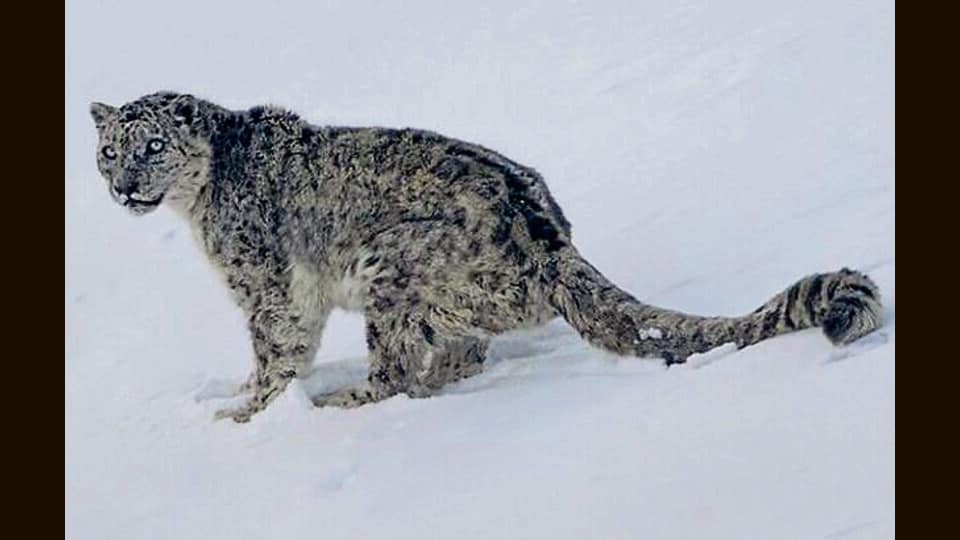
This fragile cold desert ecosystem supports hardy alpine grasses, medicinal herbs, and rare stands of Willow-leaved sea-buckthorn, Himalayan birch and Persian juniper. Iconic fauna include the snow leopard, Himalayan ibex, blue sheep, Himalayan wolf, and rich bird life such as the Himalayan snowcock and golden eagle.
Around 12,000 inhabitants live in scattered villages, practising traditional pastoralism, yak and goat herding, barley and pea farming, and Tibetan herbal medicine, knowledge sustained through Buddhist monastic traditions and community councils that regulate the use of fragile alpine resources, UNESCO said in a statement.
As India’s first high-altitude cold desert biosphere reserve, it highlights the urgent need to safeguard mountain ecosystems facing tourism pressures and climate change, UNESCO added.


