
 E-Paper



HT Readers’ Take: Don’t fall into the web of lies
Tricity residents feel that awareness is the key to remaining safe in the cyber space. They feel that people should not trust anyone easily and avoid giving out personal information to unknown persons. They should also not click on unknown links, and if they do fall prey to such fraudsters, they must report it to the police immediately

 Prefer HTon Google


Change behavioural responses
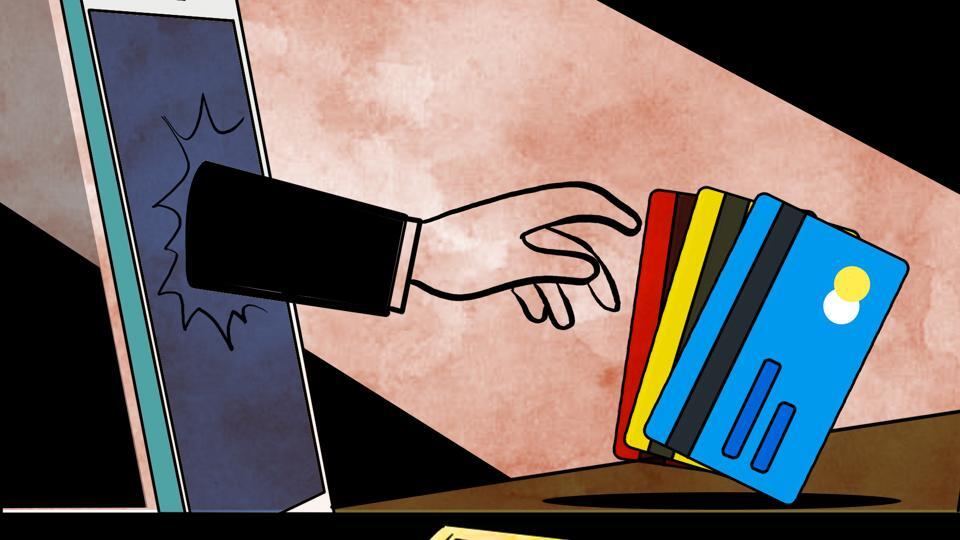
Technology has made everything easy, even scamsters. But behind the success of scamsters are several emotional vulnerabilities and behavioral limitations that make people easy targets. Here are some ways you can outsmart the criminal. Modify your behavioral response towards the fraud calls, junk mails, fraud SMS, etc. Just like we are trained not to open the door for strangers, it is important to train ourselves to not open up to strangers online, click on links from unknown numbers, emails etc. Instead of panicking on any emergency fraud call, it’s good to crosscheck. Do not fall prey to deals or offers that promise to double your money etc.
Prabhjot Nagpal, Zirakpur
Stay up-to-date with cyber security
The internet has become one of the most popular tools used to commit fraud and criminals are becoming more and more sophisticated with their hacking techniques. It has therefore become extremely important for us to use only trusted and secured wireless networks when carrying out financial transactions. Defend your devices against malware and watch out for phishing scams. Never reveal any personal information to any random caller, do not click on links or open any attachments or pop-up screens from sources you are not familiar with. Cyber experts must be invited by police/RWAs to speak on cyber crimes and laws. Awareness through popular media such as newspaper, radio, television etc will also help.
Vineet Gandhi, Chandigarh
Eternal vigilance is the price of liberty
In view of the rising cyber crimes, it is important for us to take a few steps so that we can protect ourselves from becoming the next victim. Always secure your accounts with strong passwords. Be alert about your bank balance, credit card and debit card limits, Frequently change your net-banking passwords. Install spyware blockers on your devices. Never befriend strangers on social media sites and never share your banking or other account information with anyone.
Kidar Naith Sharma, Chandigarh
Can’t bank on cyber space
Cyber crimes, involving digital transactions, have increased manifold as some novice account holders, who are not so tech savy, had to switch to digital mode mode in the midst of the pandemic-induced restrictions. By doing so, they became soft targets of cyber criminals, who have forever been on the prowl for unsuspecting prey. Despite repeated warnings through TV advertisements, people are not cautious and end up burning their fingers. For those struggling with technology, its best to stick to the old, tried and tested methods, such as bank drafts & cheques than being sorry.
SC Luthra, Chandigarh
Track down the fraudsters, punish them
Cyber crimes has been continuing manifold but in most cases, the criminals get away as the police force is not equipped with the latest technology to hunt them down. It is the responsibility of the government to find a problem to the growing menace and track down such fraudsters and punish them. These cyber criminals are so sharp that even educated young people fall prey to them, not just innocent elderly persons.
Kundan Lal Sharma, Mohali
Cops need to pull up their socks
There is no doubt that in recent years, there has been a spurt in cyber crimes not only in Chandigarh but across the country and the globe. But what’s shocking is that the Chandigarh police have registered only 252 FIRs against the 9,316 cyber complaints received between January 1, 2014 and March 31, 2019. These cases pertain to card-cloning, data theft, online job scams, hacking, etc. Police must not take such cases lightly. People who have lost their hard-earned money to fraudsters deserve justice, or else they will live with life-long trauma.
Sanjay Chopra, Mohali
Check greed, tendency to trust easily
The main cause of increased cyber crime is greed coupled with lack of computer knowledge and awareness. RBI and other financial services are doing their bit to guard the public against fraudsters. TV channels are creating awareness among people against crimes such as murder, rape, abduction etc, but they must also air shows on cyber crimes to create public awareness. Tech savvy children should educate their grandparents to not to share their bank details, IDs, password, OTP etc with anyone. People should also guard against getting swayed by messages/mails that promise free gift, lottery etc.
Sqn Ldr Manjit Singh Johar (retd), Chandigarh
Awareness is the key
Digital frauds have become ubiquitous these days. RBI is taking necessary steps like transaction control on cards, net banking, UPI etc., but more needs to be done. Regular awareness in the form of official phone calls, SMS, emails, display boards, advertisements etc. needs to be generated. RBI should make it mandatory for every banking and fintech app to display the message of never sharing banking credentials and OTP when the app is opened for use and also new cards being issued should have a warning in clear terms mentioning the same.
Kampreet Gill, Chandigarh
Lure of quick buck driving these crimes
The graph of online frauds is increasing as fraudsters get to make quick bucks. The need of the hour is to not disclose our personal data to unknown persons. At the same time, government should come up with strict punishment for the culprits. Lastly people, especially senior citizens, must be educated on how to avoid online frauds through seminars, online classes etc. Printing Dos and Don’ts in leading newspapers must be encouraged by IT ministry.
Col TBS Bedi (retd), Mohali
Multi-layer authentication for internet banking
Banks need to adopt multi-layer authentication for internet banking so as to make transactions safer. Government must curb the menace of invalid apps, sites and social media. It is the obligation of the government to make cyber security safer.
Abhilasha Gupta, Mohali
Change passwords frequently
In the current situation, there are two aspects of safety that are of paramount importance – the first one concerns your health and the second one concerns your digital safety. Carefully check official websites, email addresses, phone numbers and social media handles of persons and entities you interact with online. In case of any suspicion, look up the domain names to verify its authenticity. Details like debit and credit card numbers, PIN, expiry dates, CVV numbers, bank account details, OTP, etc., should never be shared with anyone. Choose to memorise internet banking passwords and ATM PINs rather than writing them down or storing them on your phone. Cultivate the habit of changing your passwords frequently.
Advocate Vijay Malia, Chandigarh
Cyber frauds downside of digital revolution
The downside of digital transactions is the mushrooming of cyber frauds. Many gullible people are losing their hard-earned money on account of cyber and digital frauds. There are organised gangs and international networks which are defrauding people in the name of lucrative offers. Many such crimes take place due to greed and lack of awareness about online financial transactions. Banks and cyber police have to continue educating people about the precautions they need to take online. Financial education is needed even for educated people as we have had many instances of government officials, teachers, judicial officials also falling prey to cyber crimes. More effective inter-state police coordination is needed for cybercrime investigation. If these crimes keep happening, people will lose faith in the digital space. Enforcement agencies need to step up their vigil too.
Anil Kumar Yadav, Chandigarh
Proactive measures needed to rein in on cyber criminals
Due to the Covid-induced restrictions, people were forced to switch to digital tools for day-to-day activities, including carrying out bank transactions, shopping, etc. This gave a boost to cyber criminals. The police, meanwhile, have failed to keep up with the growing trend, thus gullible residents have been falling prey to such swindlers. Proactive steps are needed to stay a step ahead of cyber criminals. This can be done by strengthening financial institutions and banks, creating awareness among people to be cautious and alert. Fake calls offering attractive interest on savings should not be attended. Civil society, residents’ welfare associations, tech-savvy youth should help elderly people so that they are not be fooled by fraudsters. Inter-state police-co-ordination will help in catching the culprit. Jurisdiction issues should be resolved promptly , it would allow the police to apprehend the culprit irrespective of the jurisdiction.
Usha Verma, Chandigarh
Need better cyber laws
During the pandemic, people left with no option but to go digital. At the same time, it gave rise to cyber crime and fraud. A better security check and strict cyber laws need to be framed so that people develop a sense of security and can carry out money transactions without any fear of fraud. Digital signatures, e governance, and checks on privacy breach need to be stronger.
Garv Bhupesh, Panchkula
Public and authorities together can tackle cybercrime
Every day, several people fall victim to online frauds. However, this can be fought by making upgrades to security softwares. Special cyber police should with trained IT experts is the need of the hour. Better coordination between various state police, better vigil over possible data leaks from banks, awareness programmes and drives carried out by both official bank employees as well as civilians who are well-versed with the subject can all help in reducing the risk of relatively unaware customers, including the elderly, falling victim to such frauds.
Navjot Singh Chhabra, Mohali
At-risk customers need awareness
The technological boost has led to digital transactions becoming an everyday part of our lives, but at the same time, the number of online frauds has also gone up at an alarming rate. The most vulnerable of all customers are often senior citizens and children as they are not the best trained at handling the newer technology. Door-to-door awareness campaigns by the administration, along with the teams of financial institutions and resident welfare associations, public and private sector banks, should ensure educating the customer on the issue. Banks should encourage account holders to only use official banking apps for transactions and training sessions should be given for using these apps. Awareness and alertness can save many from losing their hard-earned money.
Sunny Dhaliwal, Chandigarh
Stringent punishment required for cybercrime
In the present digital era, a majority of digital-users are vulnerable to cybercrimes because of relative unfamiliarity with the fast-developing field of technology. Stringent punishment then becomes the need of the hour as it could well help rein in online frauds and cyber-criminals. In the present set-up cyber-criminals, however, are either let off with minor punishments or not punished at all. Citizens who even manage to report cybercrimes seldom see their case be brought to the logical end or see the culprits getting punished. Awareness campaigns can also take us so far, so the only way to rein in the cybercrimes is to impart the most stringent punishment to guilty cybercriminals.
AK Sharma, Chandigarh
Strict laws needed
Cyber crime is on the rise and even cops have difficulty tracing the culprits. I too became a victim of cyber crime recently when I made a payment at the website, but neither received the order nor a refund. Fraudulent sites are becoming increasingly common. Framing strict laws, and thorough policing are the only way to curb cyber crime.
Anju Mohan, Panchkula
Sensitise the masses
With advancement in science and technology, cyber crimes have been increasing alarmingly for the last couple of years, especially in the wake of the Covid pandemic, which caused unemployment to soar. We must sensitise people about ways of avoiding cyber fraud such as not downloading anything from a link that is not from a trusted source; not share their OTP, PIN or password; knowing that banks or customer care providers never ask for confidential information; not storing your username and password on your phone or desktop; only using HTTP websites; and avoiding using net banking at cyber-cafés. In the event of fraud, one may notify the central special cyber cell number 1930 or http\\cyber-crime.gov.in or the police station within three days.
SK Khosla, Chandigarh
Increase vigilance
There has been rapid development in the cyber sphere, which has also led to concerns over cyber security. We must remember that the cyber space is an open network, and therefore set strong passwords, and avoid storing vital details such as bank account numbers and passwords online. Large businesses and government data must be protected. The cyber wing should keep up with the evolving scenario.
We need stronger laws, and increase vigilence.
Komal Sharma, Chandigarh
Set up central complaint system
Each day we hear about KYC frauds on a daily basis. The government with help of Resident Welfare Societies should authorise a couple of people to sensitise the people. A central online complaint system should also be setup so that cases can be resolved in a timely fashion. There should be a single KYC for all banks and final institutions.
Avinash Goyal, Chandigarh
Ditch the high risk scheme for safer, more reliable options
Given the alarming rise in cybercrimes, one needs to be extremely careful while sharing your pin number, one-time passwords, and seeking KYC updates even if the person involved is a close associate or a relative. It is better to visit your bank/concerned office to fulfil all requirements. Keeping a bare minimum balance in the account which you use digitally is also a good way of avoiding being attacked. Tried and tested investment schemes run by recognised government entities such as the post offices and nationalised banks, might offer slightly lower returns, but they steer clear of the high risks involved in investing with private players.
Chander Vij, via email
Let’s bring technology back on our side
The pandemic has given a big impetus to the digital economy, but it has also led to a spurt in cybercrimes. There are many apps that sometimes help avoid fraud phone calls regarding cybercrimes, but none are 100% effective. In such a scenario, certain easy-to-use apps should be developed to help avoid such crimes. People who have already fallen victim to cybercrimes should report them and share their stories as it can help others avoid falling prey.
Ishita Nara, via email
Reader of the week
Fraudsters well-versed with technology, psychology
With the advancement of digital age, the issue of online frauds has become not only a reality but a nightmare. All fraudsters are well-versed with the latest technology and psychology of the individuals. They operate in a number of ways. The most common is to operate from posh offices, hire hundreds of individuals under the grab of call centres to serve or loot people across the globe by posing as employees of organisations like SBI, LIC or utility services etc. Not only the poor or illiterate but intelligent, educated senior officers of civil or military services and women from higher strata of society fall prey to such scamsters and are looted of crores of rupees. The other kind of victims are those who give in to greed. They can be lured easily by promising higher interest or a free gift. They realise their folly only when it’s too late. A systematic public campaign should be launched to warn and educate the people.
Suresh Verma, Chandigarh
What experts say
Awareness
We have been holding cyber awareness drives in schools and colleges, and also been appealing to residents to stay alert. It’s best to not entertain any unknown callers, and avoid clicking on suspicious email links
Ketan Bansal, superintendent of police, cyber crime investigation cell, Chandigarh
Look out for elderly
Apart from staying cautious themselves, the youth must take it upon themselves to educate their parents and other elderly persons of the risks of cyber frauds. Teach them to never share bank details or OTPs with anyone.
Mohit Handa, DCP, Panchkula
Report immediately
The perpetrators of cyber crimes sometimes are based out of the state or even in another country. If you become a victim, always report immediately to the local police. Apart from that, make sure to have strong passwords and not trust anyone easily on cyber space.
Samarpal Singh, deputy superintendent of police, state cyber crime, Punjab
Staying vigilant
Institution mechanisms such as building robust internal IT systems, strengthening security protocols, educating staff, increasing awareness, and remaining vigilant about cyber-security risk can help combat cyber threats. Civil society indeed can play a significant role by scaling up their own vigilance and ensuring the use of reliable sources to obtain information. It also becomes imperative for us to regularly talk about these issues with our families.
Dr Divya Bansal, professor and head of cyber security research centre, PEC
Justice for victims
I fell prey to fraudsters who asked me to send ₹1 from my GooglePay account, on the pretext of checking if it works. Authorities should work on making the public aware of the methods used by fraudsters and make sure there is no delay in bringing the criminals to book.
Shivani Sharma, Mohali resident, victim of cyber fraud


