
 E-Paper



Interview | Solution to Punjab’s fiscal crunch lies at home, not in Delhi: Lakhanpal
Punjab Finance Commission chairman KR Lakhanpal says asking Delhi for a package is just to make a point and everybody knows that it is not going to come

 Prefer HTon Google


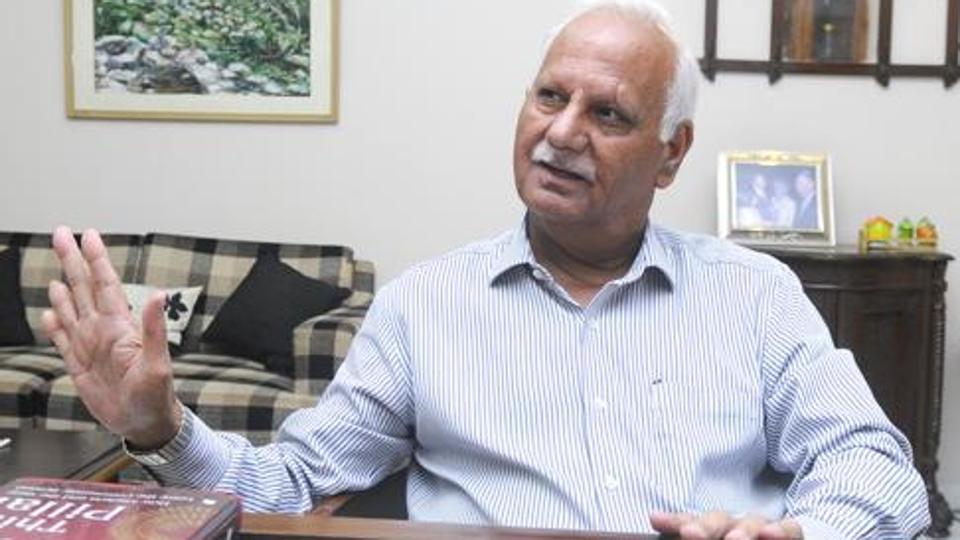
Punjab’s finances have been in dire straits. The worsening fiscal health has impacted the state’s capacity to invest in infrastructure, education, health, nutrition and other key areas, besides leading to non-release of funds to local bodies. The 6th Punjab Finance Commission (PFC), mandated to look at devolution of funds and the imbalance that exists, also examined the financial health of the state. Hindustan Times spoke to PFC chairman and former chief secretary KR Lakhanpal, who submitted the commission’s report to the Punjab governor last week, on the state’s financial health, framework for fiscal consolidation and resources of urban bodies. Edited excerpts:
What is your take on the state of finances in Punjab?
The state finances are in a terrible shape. You need to make a strenuous effort. The solution to this lies in Chandigarh and in Punjab, not in Delhi. Asking Delhi for a package is just to make a point. Everybody knows that it is not going to come. Every state would like to ask for a package because that is the easiest way out. This is the line of least resistance, which, unfortunately, the previous Punjab governments have been following for the last 30 years. This government should not fall in this trap.
Three things the government needs to do to improve its finances?
Punjab has to increase its tax-GDP ratio which is very low as compared to other states. Number two, the state is not realising optimal revenue from various economic and social services it is rendering. Third, you need to also look at your expenditure. Unfortunately, we have enhanced our expenditure base so much so that mere raising of additional resources and enhancing revenues will not suffice. Our per capita carrying cost of the government is the highest in the country. Punjab used to be proud of its highest rate of growth and per capita income. Today, we have the highest per capita expenditure on salaries, highest per capita expenditure on pensions and highest per capita debt and high per capita interest on debt. The direction is totally reversed.
Where do the local bodies stand in all this?
They are not in a good position. They get funds from central transfers, state transfers and own resources. All three handles have to be pressed to improve the functioning of these bodies and enable them to deliver. However, they are totally dependent upon transfers from the Centre. The central grants based on the recommendations of the central finance commissions (CFCs), which started with the 10th CFC, have been consistently rising, while the fund transfers from the state governments to local bodies have been dropping.
What do you propose to make the local bodies self-sustaining?
The present practice of pressing on more central and state transfers to local bodies would not be sufficient. Local bodies should raise their own resources. With the implementation of goods and services tax (GST), most of the local resources like octroi and local development tax have been subsumed. The resources of local bodies come from two areas the world over – property and consumption. Unfortunately, none of these two streams have been pressed into service in Punjab in a viable manner. The collection of taxes is lackadaisical. There are huge exemptions. In property tax, there are problems related to mapping, updating property registers and ensuring compliance. In 2018, the state government came out with new display advertisement and property tax policies for urban local bodies. It is a good first step, but whether these measures have been able to generate resources will be known over time.
What about their share in taxes?
This is the consumption part – taxes on power, excise, petroleum products, etc. When we abolished octroi in 2006, a new law was put in place to compensate the local bodies for loss of revenue by giving 10 (now 11%) of the value-added tax revenue (vAT). This was being implemented till there was a statutory backup. However, the GST law does not provide for this and the resources of local bodies have become subject to the vagaries of state finances. Our view is that a new law should be made to statutorily ensure that this money (a part of GST, VAT and other taxes) goes to local bodies. The state government has done it for power. It is needs to be done for GST as well.
Any other areas suggested for resource mobilisation?
There are areas like entertainment tax and tax on mutation of land and property. We have provided a template of what other states like Maharashtra, Gujarat, Tamil Nadu, Kerala and Andhra Pradesh are doing. Their municipal bodies are financially sound.
What is your suggested road map?
The transfer of resources or even the larger picture of improving the finances of the state government and local bodies is only a subset of overall improvement in governance. There is a need to reinvent governance. For example, value capture in land is important as property prices have skyrocketed. Punjab is the only state which is capturing any enhancement in value by levying change of land use charges, development charges or tradable development rights, etc, whereas other states have developed mega projects such as Sabarmati riverfront or Bandra-Kurla complex through value capture finance. Another important area is management of properties owned by the state government and local bodies, not by disposing them of but by putting them to optimal use. Then, urban planning is totally fragmented with no periphery planning. We have emphasised that you must develop synergies between development of urban and rural areas. We have to enable cities, town and mandis to generate huge resources by using innovative measures.
What has been the government response to reports of PFCs in the past?
Regrettably, while the state governments have been very prompt in constituting the commissions, the processing of their reports has not been according to provisions of the Constitution sometimes. The Constitution requires the state government to process each of the recommendations, tell if it agrees or not and what action has been taken. The state did not follow the strict constitutional path while processing the reports of fourth and fifth commissions. There was token compliance. In ATR and explanatory memorandum on the fourth finance commission report, the state government merely summarised the recommendations and said nothing about the action taken.


