
 E-Paper



Jammu: No new illness case reported in Rajouri’s Badhaal village
As many as 16 people, including 13 children, have died due to illness since December 7 last year; to mitigate the situation and prevent further casualties, 87 families comprising 364 individuals have been shifted from Badhaal to Rajouri

 Prefer HTon Google


Showing encouraging mitigation signs, no new illness case has been reported among the residents of health crisis-hit Badhaal village in Rajouri district since January 24, officials said.
The district administration, under the supervision of deputy commissioner Abhishek Sharma, is continuing with the intensive preventive care. As many as 16 people, including 13 children, have died due to illness since December 7 last year.
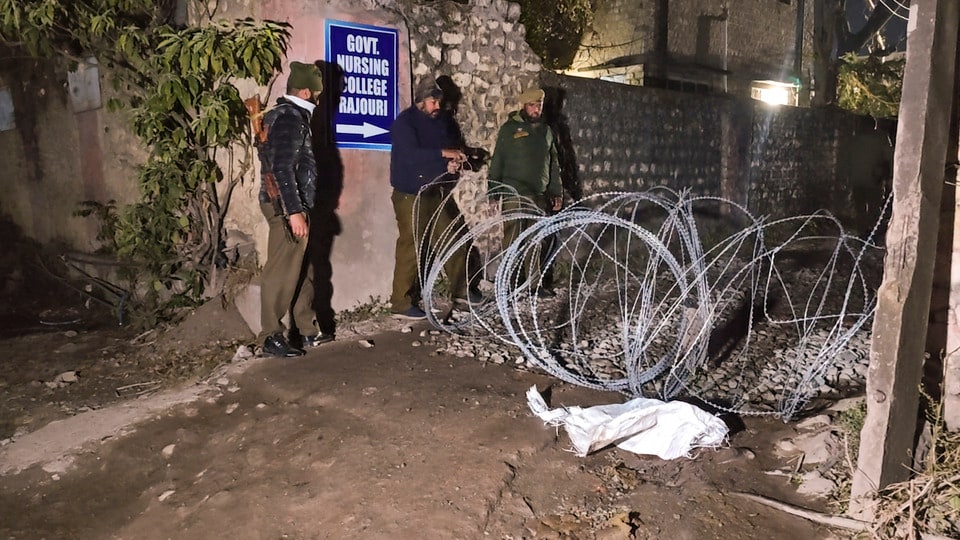
To mitigate the situation and prevent further casualties, 87 families comprising 364 individuals were shifted from Badhaal to Rajouri. These families are currently housed at Government Nursing College, Government Boys Higher Secondary School and the Rajouri GMC under observation. On-site medical team, comprising three doctors and six paramedics, has been put on duty round the clock. Critical care ambulances are stationed at the venues.
Families are being provided with meals, beds and other items of daily needs. “Meals are prepared in kitchens under CCTV surveillance with food samples sent for testing at the NFL in Ghaziabad and Patoli Food Testing Lab in Jammu,” officials said.
Anganwadi workers and child development project officers (CDPOs) are deployed to take care of children below six years of age. Temporary schooling arrangements are in place for kids. Craft teachers and ITI instructors are providing training to individuals in tailoring and other trades. Sewing machines have been supplied by the social welfare department.
Officials from agriculture, horticulture and labour departments are educating families about government schemes such as PMEGP, Daksh Kissan, e-SHRAM, PMJJBY and PMSBY.
To ensure the safety of the remaining 808 households (3,700 individuals) in Badhaal, the village has been divided into 14 clusters monitored by multi-departmental teams of 182 officials.
All shops and establishments have been sealed and ration is being provided under strict supervision. Teams are feeding 424 domestic animals and 168 poultry birds belonging to shifted families.
Daily sampling of food and consumables is underway and 167 blood, urine and nasal swab samples have been collected for testing at GMC Rajouri.
A control room under the supervision of the Additional District Development Commissioner has been established to coordinate efforts, address public queries, and provide updates to prevent panic.
Recently, tests by the CSIR-Indian Institute of Toxicology Research, Lucknow, found some neurotoxins, especially aldicarb and cadmium, in the samples of those affected with the illness.


