
 E-Paper



Kishtwar National Park, Padder emerge as key habitat of snow leopard
The exercise was carried out in Kishtwar High Altitude National Park, Marwah-Dachhan and south-eastern Padder in Kishtwar

 Prefer HTon Google


The first-ever survey of snow leopards in Kishtwar district, conducted by a team of conservationists and researchers, has shown a significant upward trend of the cats in the region.
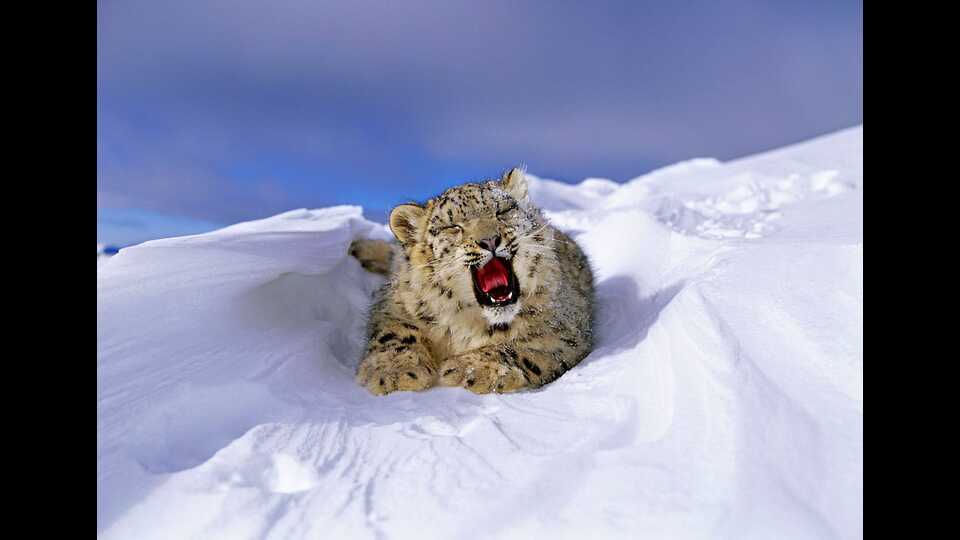
The exercise was carried out in Kishtwar High Altitude National Park, Marwah-Dachhan and south-eastern Padder in Kishtwar. In both these areas, proper planning was done and a survey was carried out in grids of 5x5 sq km area.
The snow leopard, which is the smallest of the big cats, is least known, owing to its highly elusive and shy nature.
The endangered species is adapted to montane habitats in central Asia, including the Altai, Tian Shan, Kun Lun, Pamir, Hindu Kush, Karakoram and Himalayan mountain ranges in 12 range countries.
These are Afghanistan, Bhutan, China, India, Kazakhstan, Kyrgyzstan, Mongolia, Nepal, Pakistan, Russia, Tajikistan and Uzbekistan.
It preys on ungulates mainly Ibex, blue sheep, marmots and lagomorphs.
“We are delighted to share the exciting news regarding the recent completion of the first ever survey of snow leopards in Kishtwar. Conducted by a dedicated team of conservationists and researchers, the study has yielded significant results, showcasing a significant presence of snow leopards in the region,” said Kishtwar deputy magistrate (DM) Devansh Yadav. Through the utilisation of advanced camera trap technology, the survey recorded a commendable number of snow leopards along with their prey base in their natural habitat, he added.
The DM stated that their presence not only highlights the ecological significance of the Kishtwar region but also underscores its potential as a key conservation area for these elusive and rare cats.
“Overall, a total of 225 grids were delineated, which included 105 grids within the Kishtwar High Altitude National Park and 120 outside the park. A total of 278 cameras were deployed at 135 locations,’’ said Yadav.
These camera traps for the first time ever captured about 20 individual snow leopards in the landscape at 30 locations, he informed.
“They included an adult with two cubs, which confirms the breeding status of Kishtwar snow leopards,” he said.
In India, snow leopards are found in Ladakh, Jammu and Kashmir, Uttrakhand, Sikkim and Arunachal Pradesh.
“After Ladakh, the landscape of Kishtwar High Altitude National Park and Padder in Kishtwar has maximum density of snow leopards and overall population estimation for Kishtwar will be done once we get data for a few more years,” Yadav added.
Overall, the Kishtwar landscape is a heaven for snow leopards and this needs to be protected by effectively implementing all the conservation measures
“Moreover, this landscape has great opportunity for promoting ecotourism initiatives focused on snow leopards as is being done in Ladakh and other areas,” he said. This will offer immense opportunities for local youth to act as tour guides and thus will also help in employment generation, he added.
Our study has yielded results for a high snow leopard density in the landscape. The study results provide a strong baseline that will be further refined following the rigorous surveys aimed to arrive at robust snow leopard population estimates for the entire Jammu and Kashmir.
This is the first of its kind study in the region and the results of this study should be looked at as a massive opportunity for conservation as well as for the promotion of responsible ecotourism in the area. This can help both in the protection of snow leopards and associated species and will also help in creating job opportunities for the local youth.
“As we celebrate this milestone in snow leopard conservation, we look forward to collaborative efforts between government agencies, conservation organisations and local communities to ensure the long-term protection of Kishtwar snow leopard population,” said Yadav. Together, we can not only safeguard this iconic species but also unlock the ecotourism potential that lies within this breathtaking landscape, he added.


