
 E-Paper



Land pooling policy to be enforced in two villages first: Chandigarh adviser
Chandigarh adviser Dharaml Pal said that under the land pooling policy, the vacant land in villages will be freed from encroachment and allotted for residential and commercial development

 Prefer HTon Google


The UT administration is working on implementing the land pooling policy initially in two villages, UT adviser Dharam Pal said on Sunday.
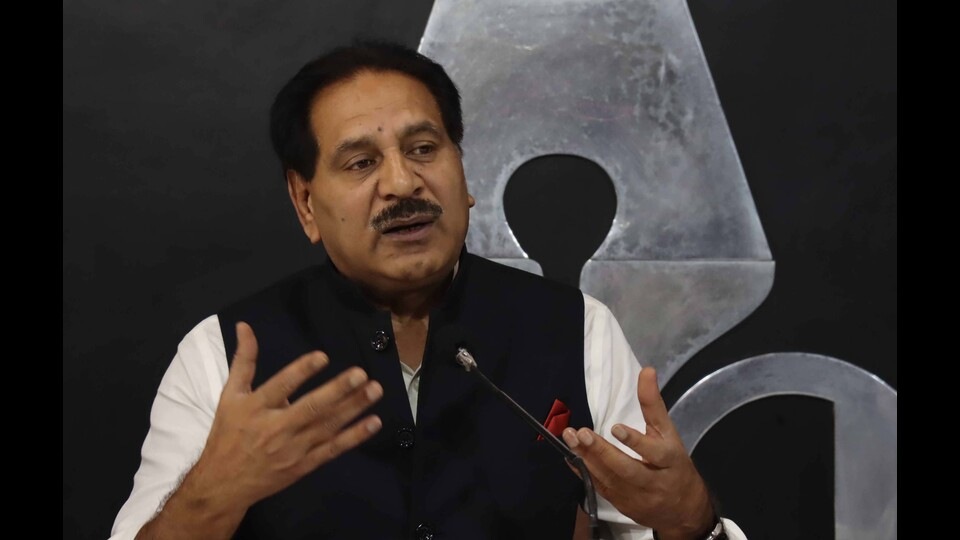
Speaking at a meet-the-press event organised by the Chandigarh Press Club, Pal said, “We are working on a land pooling policy, but with limited vacant land available, we are planning to implement it first in two villages and see how it goes from there.”
He said under the policy, the vacant land in villages will be freed from encroachment and allotted for residential and commercial development.
If the pilot project is successful, it will be implemented in other villages of the city, depending on the demand. The policy will also help the administration get rid of hassles like court cases for land acquisition, he said.
The adviser said the vacant space available was either a green area or land earmarked for other projects. The Indian Institute of Human Settlement (IIHS), Bangalore, was hired as a consultant for the policy and has already submitted a draft after studying the states of Punjab, Haryana and Gujarat.
‘Working on rationalising collector rates’
On the question of high collector rates, the adviser said he had directed the deputy commissioner to work on the rationalisation of collector rates as per the market situation. Due to high collector rates, the commercial properties of the UT administration are not finding buyers, despite the properties being converted from leasehold to freehold.
Last year, the administration had reduced the collector rates on commercial properties by 10% in key sectors. Also, it was reduced by 5% on the properties at industrial areas, making registration of commercial and industrial properties a little cheaper than before. But no changes were made for residential properties, while the collector rate of agricultural land was spiked by 10%.
At present, the collector rate of a Sector-17 SCO is ₹5,25,405 per square yard, that of SCOs in Sectors 22, 34, 35 and along Madhya Marg ₹3,75,289 per square yard and ₹62,599 per square yard in Industrial Area, Phases 1 and 2.
Eco-sensitive zone
The adviser said the administration had for long been putting in efforts for the conservation of Sukhna Wildlife Sanctuary. He said the UT will raise the issue in the meeting of the North Zonal Council (NZC) that Punjab and Haryana had not declared their respective areas around the sanctuary as eco-sensitive zones. The matter was raised in a previous (NZC) meeting as well, but no further action has been taken in this regard.
On the increasing traffic congestion in the tricity, he said efforts will be made to expedite construction of ring roads in Haryana and Punjab areas adjoining Chandigarh. He will soon talk to the Punjab and Haryana governments in this regard, Pal said.


