
 E-Paper



Random Forays: Six management lessons to learn from Oppenheimer
The film, through its brilliant showcase of a certain J Robert Oppenheimer, the father of the atomic bomb, a flawed genius, leaves an indelible mark on our minds

 Prefer HTon Google


It seems as if half the world has already been to a screening of Christopher Nolan’s magnum opus, Oppenheimer. The other half and some from the former group, meanwhile, had their tickets booked for Barbie. For the sake of this column, let us focus on the former.
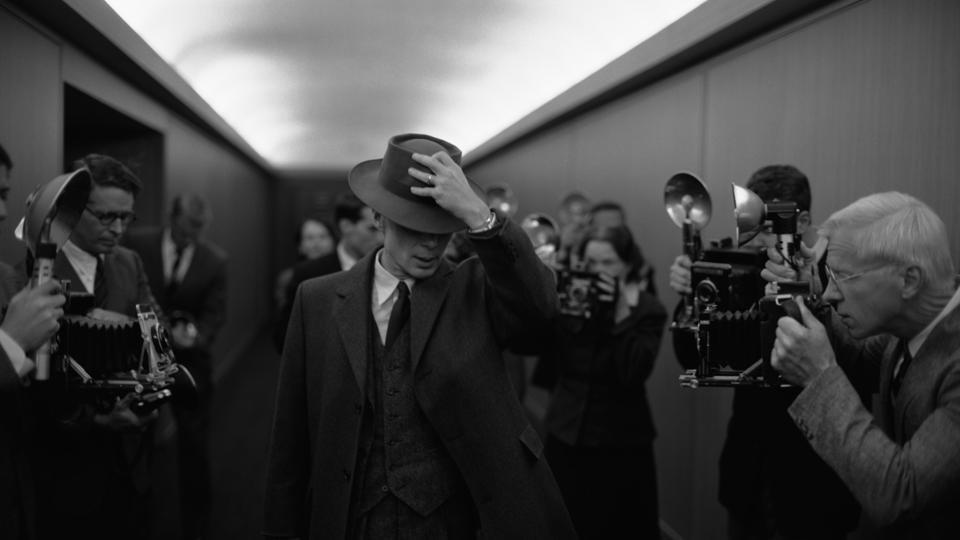
The film, through its brilliant showcase of a certain J Robert Oppenheimer, the father of the atomic bomb, a flawed genius, leaves an indelible mark on our minds. Beyond that, the film itself provides several management lessons for us to imbibe and make our own.
Firstly, the bigger picture is extremely important in any situation. Often, we must focus intently on our work, to the point that we forget everything else, but to keep the larger perspective in mind helps us to truly succeed. The ability to concentrate deeply on a project or assignment or task without losing sight of the overall objective is truly vital.
Secondly, we would do well to be generalist-specialists. Perfect at his speciality as Oppenheimer clearly was, he was able yet to adapt so well to a leadership role which turned out to be the absolute clincher for him. A specialist who has mastered the nuances of his own craft and yet possesses people skills and coordination skills is able to lead teams to great heights of excellence.
Thirdly, working with the ability to handle the unpredictability-factor in any human situation is very necessary. It is impossible to precisely envision all the unfolding scenarios as one goes about tackling one’s challenges. It is absolutely vital to navigate the ship through imponderable situations and unforeseen circumstances. True leaders are those who come into their own when adversity strikes or a crisis shakes the very foundation of a venture.
Fourthly, nobody is perfect. And Oppenheimer, despite all his brilliance and unique stature, had personality flaws that are amply highlighted in the film. There are also some subtle hints indicative of an even bigger malaise. Yet, despite his own infirmities, to be able to propel a super-intelligent team towards excellence in their scientific domain was Oppenheimer’s unqualified achievement
Fifthly, the heart should rule the brain! There is a famous quote in which a scientist states that even after 45 years of research, he is most embarrassed to state that his most important advice to others is to be kind to all others. Having empathy for society and humanity is what icons must exemplify despite their superior intelligence and capacity to be world beating path breakers. Oppenheimer’s idea of enabling America to be the first to own the atomic bomb was more towards it being a clear deterrent to other ambitious nations. It was president Harry S Truman who decided to allow death and destruction of unimaginable proportions to reign upon Hiroshima and Nagasaki.
A team of researchers and scientists cannot be faulted for attaining sheer excellence in their pursuit of knowledge and executing plans with poised perfection. It is left to the prudence of the leadership of powerful nations to be discerning enough when it comes to using technology which is potentially pernicious and destructive.
Sixthly, lows will accompany highs forever, in a world of duality. Oppenheimer staved off several attacks upon his integrity and dealt with vindictively conducted enquiry procedures. He was loyal to his nation and his science, yet for months and even years his loyalties were scrutinised by vested interests. Had he been allowed to nurture his scientific creativity to the hilt, he may well have been able to lead the world of science to great heights in solving some of the world’s major problems.
The film Oppenheimer is also a stark reminder of all that can yet be good about cinema. Real people with believable personas and powerful characterisation knitted together by a master filmmaker, ensures that Oppenheimer will be known as one of the most superior films of its kind.
Nolan could well have depended hugely upon pyrotechnics and artificial intelligence enabled exaggeration to portray a subject which enveloped such a vast canvas. Yet, in this era of technological hype, he has portrayed human beings with their frailties and has brought to life characters who remain with us, much after we have left the cinema hall.


