
 E-Paper



Ludhiana: Locals, officials against carcass plant in Garhi Faizal village
In a detailed report submitted to deputy commissioner (DC) Himanshu Jain, the joint inspection committee has advised careful reconsideration of the project, citing formal objections raised by local panchayats and villagers


A joint inspection committee has flagged strong local opposition, environmental risks, and potential law and order disruptions over the proposed carcass utilisation plant in Garhi Fazal village, falling under tehsil Koomkalan in Ludhiana East. In a detailed report submitted to deputy commissioner (DC) Himanshu Jain, the committee has advised careful reconsideration of the project, citing formal objections raised by local panchayats and villagers.
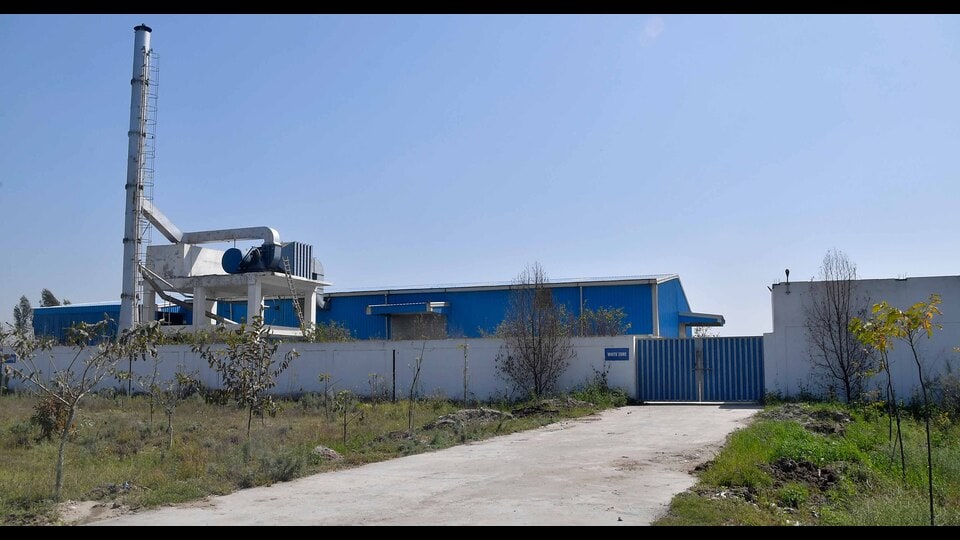
The committee, constituted on April 15, included officials from the Ludhiana MC, Punjab Pollution Control Board (PPCB), Greater Ludhiana Area Development Authority (GLADA), district forest department, and local revenue officials. Notably, the team inspected the proposed site on April 17.
According to the report, the gram panchayats of villages Garhi Fazal and Garhi Seru have unanimously opposed the setting up of the plant and passed formal resolutions. Villagers cited fears of pollution, traffic congestion, and possible law and order disturbances, particularly in light of anticipated protests from farmers’ unions. The BDPO forwarded these resolutions, confirming that the matter was thoroughly discussed at the village level and the community had categorically rejected the project.
The proposed site, spread over 16 acres owned by the Punjab Urban Planning and Development Authority (PUDA), is located approximately 1200 metres from the outer periphery of Garhi Fazal village. A narrow, unpaved road, measuring around 27 feet in width, serves as the only access point, prompting further concern about its ability to support the movement of heavy machinery and animal carcass transport vehicles.
Environmentally, the PPCB flagged several key concerns. The board noted that a carcass utilisation plant falls under the ‘red category’ of industries on par with slaughterhouses and must be located away from habitation zones under Central Pollution Control Board (CPCB) guidelines.
While initial observations suggest the site lies beyond 4 km from the Ludhiana municipal limits, a definitive land use clearance is still pending from the district town planner, who must assess whether the proposed location is marked under mixed land use in the Ludhiana Master Plan and is compatible with such an industrial activity.
The report also refers to a 2024 high-level meeting chaired by the Punjab chief secretary, in which it was decided that the non-forest land in Garhi Fazal would be reserved for compensatory afforestation, replacing forest land diverted for road construction projects. Officials noted that altering this designated use now would necessitate fresh government approvals and clearances, adding another layer of procedural complexity to the project.
While PPCB officials pointed out that the existing carcass plant in Ludhiana employs odour control systems and waste treatment technologies, the committee recorded that villagers remained unconvinced by these assurances. Concerns over odour, water contamination, and declining air quality persist. The committee emphasised that robust inter-departmental coordination and transparent public engagement will be essential if the project is to move ahead.
The report is scheduled to be presented before the cabinet sub-committee in its upcoming meeting later this month, where a final decision on the project’s feasibility is expected to be taken.
The carcass disposal plant, originally set up to manage animal waste and reduce pollution, has been at the centre of controversy due to its proximity to residential areas. Residents have alleged that the plant’s poor management and long spells of non-functionality have only worsened their living conditions.
The municipal corporation (MC) had earlier initiated cost estimates for shifting the plant from Sidhwan Bet to Tajpur Road. Officials estimate the relocation will cost ₹3.5 crore, even though the plant was originally constructed at Sidhwan Bet for ₹8 crore.
Few months ago, the PPCB had submitted a detailed report to the deputy commissioner. Based on a visit to a similar plant in New Delhi, the report included photographs and recommendations to address the issues associated with the carcass plant.
In January last year, the MC attempted to operate the plant briefly, but protests from the villagers halted operations. Residents were concerned about the potential impact on their health and the local environment. The protests initially subsided after officials assured
villagers the plant would run only until January 22. However, demonstrations resumed after that date, following which union minister Ravneet Bittu locked the plant’s gates. Since then, the plant has remained closed.


