
 E-Paper



Ludhiana: Minister reviews health services in flood-hit areas
The minister also directed the Municipal Corporation (MC) and the Rural Development and Panchayats Department to initiate immediate fumigation in affected areas to curb disease outbreaks

 Prefer HTon Google


Punjab cabinet minister Dr Balbir Singh here on Tuesday held a review of health services in flood-affected areas, emphasising robust medical support and proactive measures to safeguard people from the diseases.
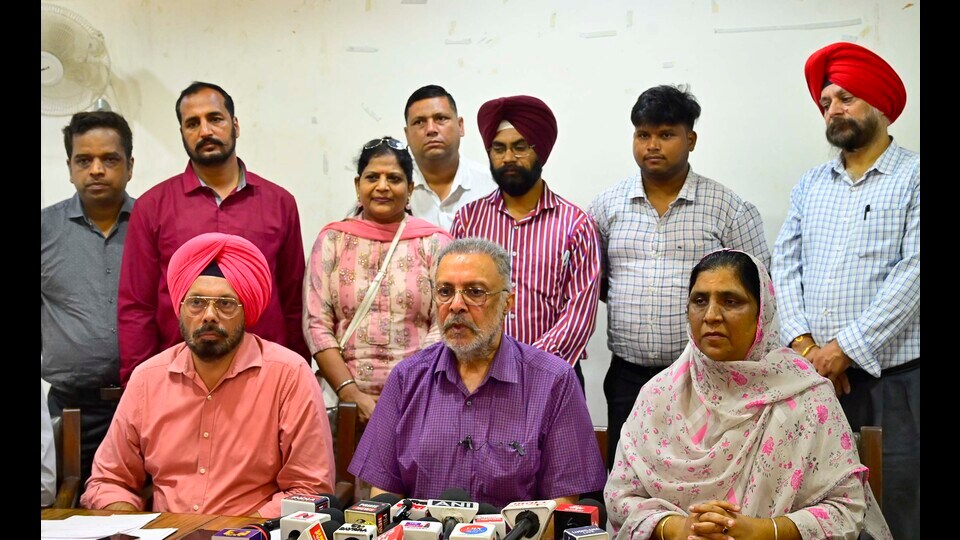
In a meeting at the Circuit House here, with the district administration, health department, MCL, the Indian Medical Association (IMA), and representatives from various NGOs, the minister accompanied by Jagraon MLA Sarvjit Kaur Manuke, spoke about the risks of water-borne and vector-borne diseases.
Dr Singh highlighted the heightened chances of diseases such as dengue, malaria, fever, skin infections, and gastroenteritis because of widespread waterlogging, and increased mosquito breeding. To counter these risks, he announced that health teams will conduct door-to-door surveys across every village in Punjab once flood water recedes, raising awareness about essential health practices. Affected people are being provided with chlorine tablets to purify water tanks and advised to eliminate stagnant water to prevent dengue.
The minister also directed the Municipal Corporation (MC) and the Rural Development and Panchayats Department to initiate immediate fumigation in affected areas to curb disease outbreaks, emphasizing that prevention is both cost-effective and life-saving compared to post-outbreak responses. Food safety teams have been tasked with inspecting eateries in flood-hit zones to ensure safe consumption.
To ensure access to clean drinking water, Dr Singh ordered the installation of Reverse Osmosis (RO) systems in government schools where required and mandated the chlorination of all water sources by MCL and rural authorities. He also stated that Aam Aadmi Clinics, Community Health Centres (CHCs), Primary Health Centres (PHCs), and district hospitals are fully equipped with essential medicines, including free treatments for snake and dog bites.
Ludhiana has got 24 new doctors, with an additional 24 set to join soon, deployed to special health camps in affected areas for immediate care. Dr Singh encouraged residents to use the 104 state-level health helpline for any kind of emergency.
The minister also called on social organizations and the IMA to volunteer and adopt flood-affected families, describing it as a noble cause to support people in these crises. He reaffirmed the Punjab government’s round-the-clock efforts to protect public health, urging collective action to overcome the challenges. Additionally, he also spoke about Punjab government’s historic decisions of ₹20,000 per acre compensation for farmers whose fields and crops were damaged, alongside a policy allowing farmers along riverbanks to extract and sell sand without permits, among other welfare measures.
Following the meeting, Dr Singh flagged off a new ambulance to enhance emergency services in the flood-affected communities.


