E-Paper



NBAGR registers seven new indigenous breeds
These seven breeds were discovered in Gujarat, Chhattisgarh, Maharashtra, Andhra Pradesh, Uttar Pradesh, Uttarakhand and Andaman and Nicobar Islands, while the cattle were developed by the Central Institute for Research on Cattle (CIRC), Meerut

 Prefer HTon Google


The Karnal-based National Bureau of Animal Genetic Resources (NBAGR) under the Indian Council of Agricultural Research (ICAR) has registered eight new breeds, including seven breeds of indigenous livestock species and one synthetic cattle breed.
These seven breeds were discovered in Gujarat, Chhattisgarh, Maharashtra, Andhra Pradesh, Uttar Pradesh, Uttarakhand and Andaman and Nicobar Islands, while the cattle were developed by the Central Institute for Research on Cattle (CIRC), Meerut.
The newly registered breeds include the Aravali Chicken distributed in Gujarat which has an average annual egg production of 72 eggs, and the Anjori goat, a medium-sized, meat-purpose breed with average milk production per lactation of 26 kg, and is present in six districts of Chhattisgarh; Bhimthadi horse of Maharashtra used for transportation of household material during migration of pastoral communities in the region, and Macherla sheep, meat purpose breed of Andhra Pradesh with distribution in some parts of Telangana as well. The central body has also registered three breeds in Andaman and Nicobar Islands, namely Andamani Duck, Andamani Goat and Andamani Pig.
With this, the total number of registered breeds has reached 220, including 53 for cattle, 45 for sheep, 39 for goat, 20 each for buffalo and chicken and various others, ICAR-NBAGR director Dr BP Mishra said.
The decision was taken after a meeting of the ICAR breed registration committee (BRC), the apex body for registration of newly identified animal breeds, held in December. The meeting was chaired by Dr JK Jena, deputy director general (animal science) of ICAR and was attended by several officials of the department, Dr Mishra added.
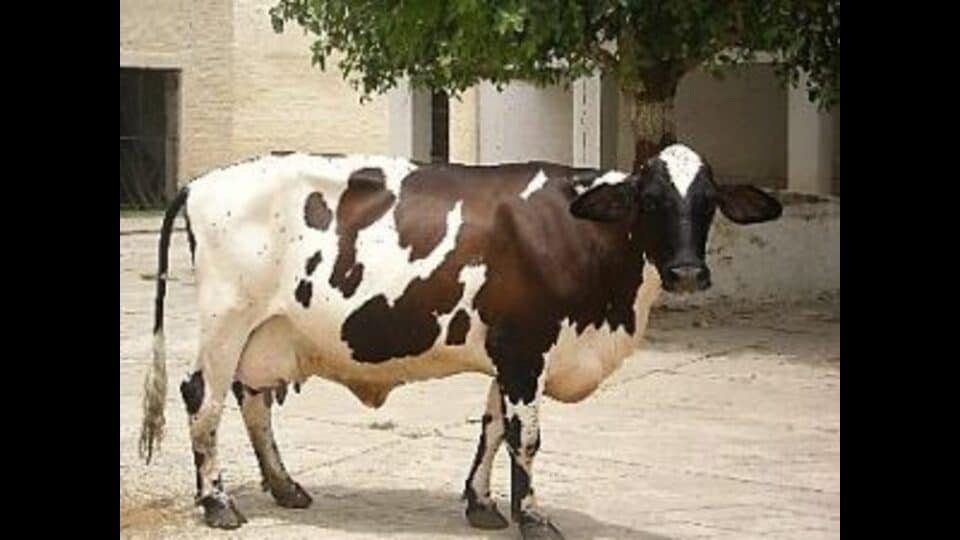
The synthetic dairy cattle namely Frieswal Cattle, which is one of the cross-breeds of Holstein Friesian (62.5) and Sahiwal (37.5) inheritance, is capable of producing about 7,000 kg of milk yield in a standard lactation with a peak yield of about 41 kg. This breed is acclimatised to all agro-climatic regions of the country, scientists said.
Dr RK Pundir, principal scientist and in charge of the breed registration cell said that the synthetic cattle was developed after collaboration between the military farms of Union ministry of defence and CIRC, with livestock resources and infrastructure provided at the military farms and technical expertise from ICAR, under the All India Coordinated Research Project (AICRP) of 1968 for which the CIRC is working since 1987.
“There are currently over 20,000 such cattle in 16 states at the military farms and at four project sites in Uttrakhand, Maharashtra, Punjab and Kerala, where they were evaluated. The average weight of a male is 445 kgs and female is 412 kgs, while a calf can weigh up to 27.5 kgs (male) and 26.5 kgs (female),” Dr Pundir, also head of animal genetics said.
All these eight newly registered breeds have been allotted accession numbers.
Dr Mishra said that the Union government will soon issue a gazette notification in this regard.
“There is a need to identify and register new breeds as it helps in their conservation. After our registration process, apart from the central government, the state governments are also informed about these indigenous breeds that form development programmes for them accordingly,” he said.