
 E-Paper



PGIMER Chandigarh becomes first in north India to perform minimally invasive heart valve procedure
Transfemoral Transseptal Mitral Valve Replacement is a minimally invasive method used to replace a damaged or faulty mitral valve in the heart without having to perform traditional open-heart surgery


The Post Graduate Institute of Medical Education and Research has become the first hospital in north India to perform a minimally invasive heart valve replacement procedure, the institute said on Saturday.
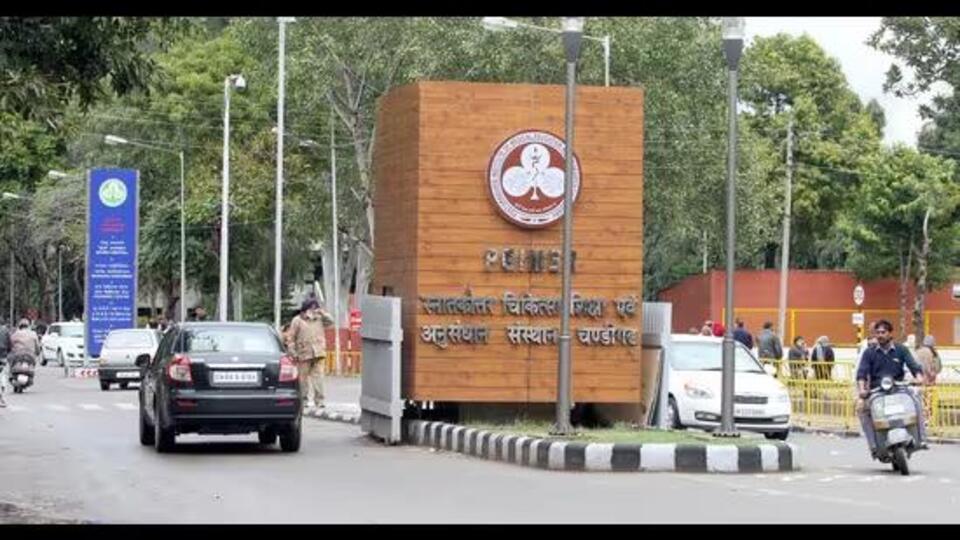
Transfemoral Transseptal Mitral Valve Replacement (TMVR) is a minimally invasive method used to replace a damaged or faulty mitral valve in the heart without having to perform traditional open-heart surgery.
A cardiac team, led by interventional cardiologist and structural heart specialist Dr Parminder Singh Otaal, performed this complex procedure on a 78-year-old patient.
The procedure is specifically designed for patients who have a narrowed or leaky mitral valve, or a combination of both conditions. It is particularly suitable for patients who are at high risk for surgery or who have previously received a bioprosthetic heart valve that is no longer working properly. According to Dr Otaal, the patient had undergone bypass surgery and had his mitral valve replaced in 2005.
Additionally, he has been dealing with hypertension, kidney problems and low platelet counts (thrombocytopenia). Lately, he had been experiencing difficulty breathing for several months and was admitted to the hospital due to heart failure.
Upon diagnosis, it was discovered that the previously implanted bioprosthetic surgical valve had deteriorated, causing both leakage and blockage. Reintervention was necessary to address this issue. However, due to his high risk for traditional redo valve surgery, TMVR was chosen as a minimally invasive alternative for valve replacement, carrying a significantly lower risk, added Dr Otaal.
Dr Otaal, a cardiology professor and the primary operator of the procedure, along with a team of supporting cardiologists, cardiac anaesthesiologists with expertise in perioperative imaging, and skilled technical and nursing professionals, emphasised the potential of this innovative technology in treating patients with advanced mitral valve disease, particularly those who are considered high-risk for conventional surgery.


