The Punjab agriculture department has increased its target to seven lakh acres to be sown under the direct seeded rice (DSR) technique this kharif season, but achieved only 8.8% so far as the ideal period for sowing under this procedure is coming to the end.
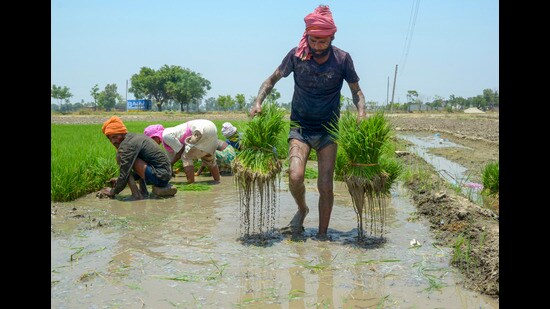
The DSR is a process of growing rice from seeds sown in the ground as opposed to transplanting seedlings from a nursery. It saves over 25% water and also improves soil health.
As per the field reports collected by the state agriculture department from all the districts, Punjab has managed to bring only 61,776 acres of land under the DSR till June 13. The recommended period of implementing the DSR technique is till the second week of June. Experts blame the ongoing heatwave for the poor response.
The last year’s target was five lakh acres but only 1.73 lakh acres witnessed paddy cultivation under the DSR method. In 2022, only 1.71 lakh acres of land saw the DSR method.
Punjab agriculture director Jaswant Singh said, “The heatwave has put a strong impact on paddy sowing through the DSR system as farmers are reluctant. This year, we have increased the target but around 62,000 acres of land have been brought under DSR so far. Teams of the department are sensitising farmers to the benefits. The state government is offering ₹1,500 per acre to farmers for taking up the DSR technique.”
He said the southern Malwa districts of Punjab had got a very limited response. “Malwa farmers, who were using DSR, have also shifted towards moong and basmati. We are expecting jump in the area under basmati cultivation this year. However, Amritsar and surrounding districts have got a better response. During the field visits, we found that some farmers are waiting till June 15. They want to sow the PR 126 variety through transplantation and the DSR. So the final figure may vary. Some Amritsar farmers have told us that sowing after June 15 under the DSR gives them good results,” he said.
{{/usCountry}}He said the southern Malwa districts of Punjab had got a very limited response. “Malwa farmers, who were using DSR, have also shifted towards moong and basmati. We are expecting jump in the area under basmati cultivation this year. However, Amritsar and surrounding districts have got a better response. During the field visits, we found that some farmers are waiting till June 15. They want to sow the PR 126 variety through transplantation and the DSR. So the final figure may vary. Some Amritsar farmers have told us that sowing after June 15 under the DSR gives them good results,” he said.
{{/usCountry}}The department had allowed the farmers to sow paddy through the DSR method from May 15, but the state appears to be set to miss its DSR target by a huge margin again. The sowing of paddy through the conventional method is ongoing in Muktsar, Bathinda, Fazilka, Faridkot, Mansa and Ferozepur since June 11 while it will be started in the rest of the state from Saturday (June 15).
In Faridkot, only 2,400 acres have been sown under the DSR technique against the target of 25,000 acres. Similarly in Moga, only 900 acres of land have so far been brought under DSR against the target of 25,000 acres this year.
Faridkot chief agriculture officer Amrik Singh said, “Farmers should go for the DSR as it saves labour, water and energy. But soil should have good water-holding capacity, so the paddy cultivation under DSR is recommended only in medium to heavy textured soils. Farmers must get their soil tested for knowing the texture category. We have a target of testing the soil on 6,500 acres of land in Faridkot, the major area will include cotton fields,” he added.
Moga plant protection officer Jaswinder Singh Brar said the DRS process should never be used in light textured soils as these suffer from severe iron deficiency.