
 E-Paper



Only six of 23 districts in Punjab equipped to monitor air quality
Of 23 districts, Punjab Pollution Control Board (PPCB) has installed gadgets in only six of them and there is no official mechanism for constant monitoring or analysis of air quality in 17 other districts


The Punjab government continues to escape with transparency on the deteriorated air quality as 76% of the state districts lack continuous ambient air quality monitoring stations (CAAQMS).
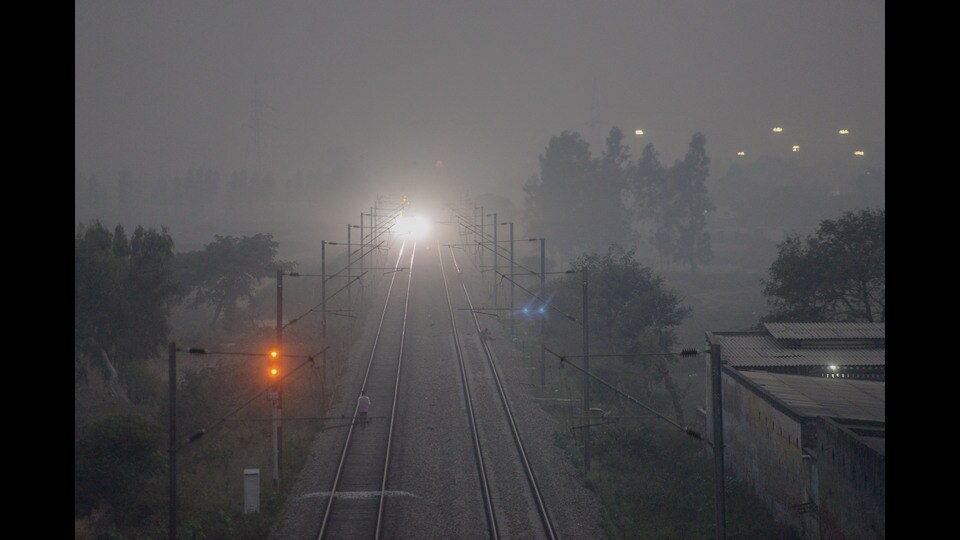
During the current kharif crop harvesting season, districts like Sangrur, Ferozepur and Tarn Taran have registered a larger number of rice residue burning incidents but there is no official data on air pollution at these places.
Environment experts say in the absence of validated data, public policy to improve the air quality index (AQI) gets a backseat.
Of 23 districts, Punjab Pollution Control Board (PPCB) has installed gadgets in only six of them and there is no official mechanism for constant monitoring or analysis of air quality in 17 other districts.
Ludhiana, Punjab’s largest district has the maximum three monitoring stations at Khanna, Mandi Gobindgarh and Ludhiana city and Bathinda, Jalandhar, Amritsar, Patiala and Rupnagar have one CAAQMS each.
On the contrary, the neighbouring state of Haryana has a total of 32 CAAQMS covering all 22 districts.
According to Ludhiana-based Punjab Remote Sensing Centre (PRSC) data, of the 17,403 incidents of paddy stubble burning till November 5, with 2,698 cases, Sangrur, the home district of chief minister Bhagwant Mann is the single largest contributor to the farm fires this season so far.
Similarly, Ferozepur has reported 1,830, the second highest this season so far while with 1,762 cases, Tarn Taran is in third place. Mansa has also recorded 1,256 cases.
Other districts like Kapurthala, Fatehgarh Sahib and Moga are also recording high farm fire rate but these places fail to get attention of the policymakers regarding the poor air quality.
CAAQMS not required in each dist: PPCB chief
PPCB chairperson Adarsh Pal Vig said on Sunday that having CAAQMS in each district is not desired as people are well aware of the air pollution.
“CAAQMS analyses air quality in a radius of about a kilometer and it is more symbolic of AQI. Stakeholders in society should own the responsibility to make the environment cleaner and avoid indulging in mudsling for deteriorated air quality,” said Vig.
Prof VK Garg of the department of environmental science and technology of Bathinda-based Central University of Punjab, differs while adding that Punjab indeed needs an extensive network of monitoring stations for greater transparency on air quality.
Multiple factors are responsible for air pollution and the authorities need to focus on improving the AQI. “But it is possible only if we have data on pollution levels. There should be round-the-clock monitoring of pollution levels as the adverse impact of burning organic waste can be felt in the air we breathe. A long-term policy can be formed only if the government has a database to highlight the seriousness of an issue,” said the professor.


