
 E-Paper



Peak paddy transplantation period nears: Rajasthan farm labourers make beeline for Punjab
Farm labourers from Rajasthan, including a large number of women, are travelling to Punjab for the peak paddy transplantation period, marking a new trend. Usually, male workers from Bihar and Uttar Pradesh complete the work, but farmers' growing preference for manual transplantation may be why the Rajasthan workers are in demand. Unseasonal rain in June has also played a part as it reduced the demand for mechanised direct sowing of rice.

 Prefer HTon Google


As peak paddy transplantation period nears, farm labourers from Rajasthan, including a large number of women, are making a beeline to Punjab to sow the major kharif crop.
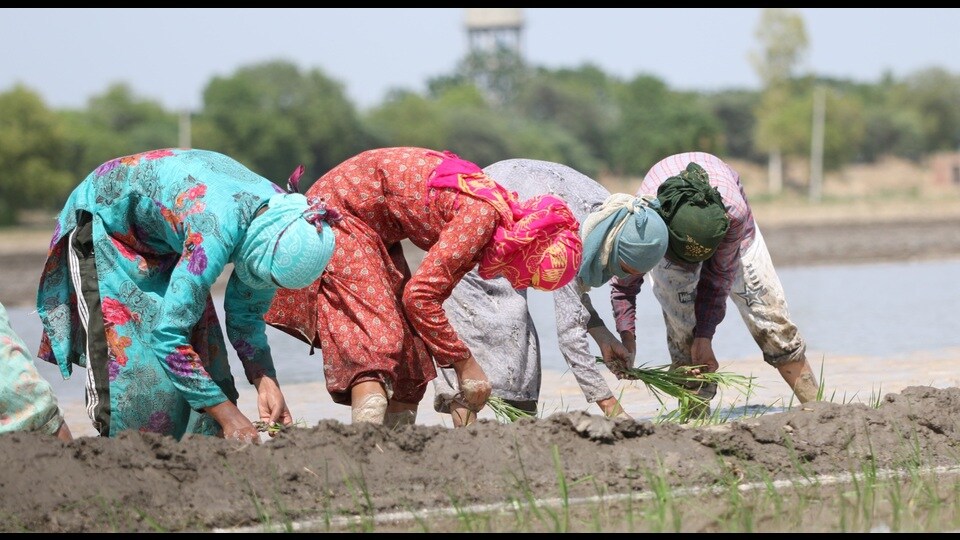
For the past two days, rice cultivators of the south Malwa districts are rushing to Bathinda railway station to woo Rajasthan workers.
Usually, male workers from Bihar and Uttar Pradesh complete paddy transplantation in the state.
Bathinda chief agricultural officer (CAO) Dilbag Singh said it was unheard of that farm workers from Rajasthan are in demand for sowing in Punjab.
“I am unaware of this new trend and it needs to be studied. But it may be due to farmers’ growing preference for conventional methods of manual transplantation this year over DSR or mechanised direct sowing of rice,” said the official.
Singh said in 2022, about 21,000 acres were covered under DSR in Bathinda whereas this year it is unlikely to cross the 5,000-acre mark.
“Unseasonal rain in June played a spoilsport for DSR push this time. Higher areas for manual transplantation in different places this year have boosted demand for more workers,” he added.
On Monday, a large number of labourers, in groups of 15-25 workers, from Alwar and Bharatpur were found camping at the local railway station.
A cross-section of Rajasthan workers said, unlike migrant farm labourers from UP and Bihar, they do not have a long-term work commitment with rice farmers of Punjab.
Moga CAO Manjit Singh said labour crunch is not felt at the ground-level but the arrival of farm workers from the adjoining state has evoked curiosity.
One such labourer from Hajipur in Alwar, Hari Om said Rajasthan natives, including women, are coming in large groups to work in fields. “We have an experience of working in rice fields in Punjab and elsewhere. We see a good season in Punjab this year. Many of our fellow workers have struck a fair deal with Punjab rice growers,” he added.
Mandeep Singh from Kothe Kalash village in Faridkot on Monday hired a group of about 15 Rajasthani workers for a daily wage of ₹3,800 per worker and food and shelter arrangement. He said Punjab farmers now have another option to hire workers, who are coming in large numbers from Rajasthan, even if it may cost little higher.
A native of Bharatpur, Pritam Singh is leading a group of about 20 persons, half of them women, to work in paddy fields. “We all are experienced paddy workers, who have been jobless after rice cultivation reduced in Rajasthan, due to poor water quality,” he added.
Another farmer from Sailbrah in Bathinda, Gursewak Singh said this year, local workers are demanding daily wages of ₹3,000 to ₹4,000 per person. “Hiring Rajasthan workers may cost me ₹4,500 per person per day, but a window to negotiate with them still exists,” he added.


