
 E-Paper



Private job quota law found no mention in Khattar’s budget speech
Though officials said the private sector job quota law does not warrant a financial liability and it was not necessary to incorporate it in the budget speech, political observers are sensing a political meaning in the omission.


The BJP-JJP government’s recently enacted law providing for 75% of the new employment to local candidates in private sector jobs in Haryana did not find a mention in the budget speech of chief minister ML Khattar on Friday.
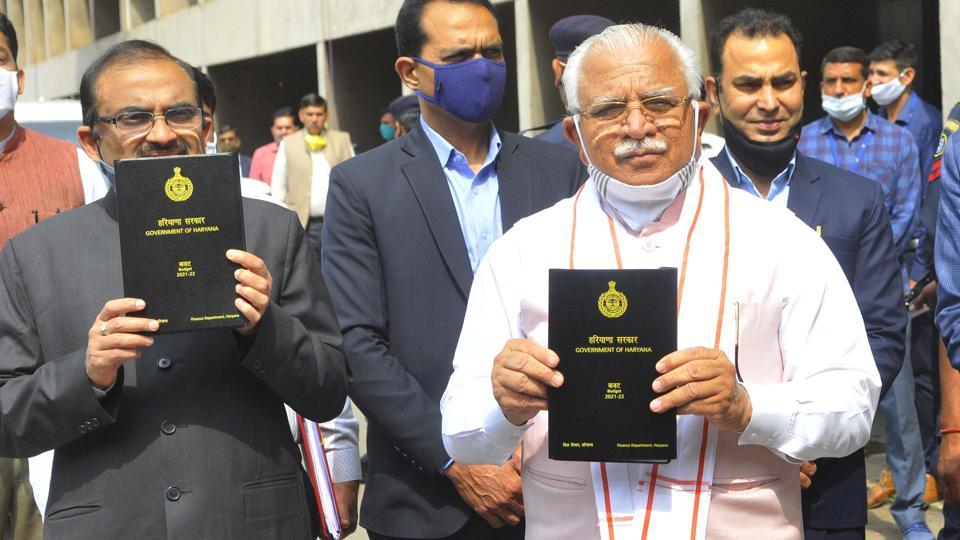
Though officials said the private sector job quota law does not warrant a financial liability and it was not necessary to incorporate it in the budget speech, political observers are sensing a political meaning in the omission.
“The RSS functionaries are hostile to this law. Even the BJP knows that it is a stillborn legislation which will be challenged and struck down by the courts. It seems the BJP-led state government is trying to keep it a low-profile matter,’’ said a political analyst. The quota law though was mentioned in the Governor’s address on March 5.
“The budget speech is not only about finances but also the policy and vision of the state. The omission is striking,” said an official.
It is well known that the BJP top brass, including chief minister ML Khattar, was not keen on enacting the private sector job quota law, a move piloted by Dushyant Chautala’s Jannayak Janta Party (JJP), BJP’s alliance partner in the state.
Khattar during a briefing on February 7 last year had sounded non-committal on the prospect of enacting a law to provide 75% reservation in private sector jobs to Haryana youth. The draft Bill was also deliberated many times by the cabinet and vetted by the Law Secretary who had raised objections regarding the constitutional validity of the proposed law. The clause providing for preference in jobs to the local candidates domiciled in Haryana, legal experts said, was in contravention of Article 14 of the Constitution pertaining to equality before the law and Article 19 (1)(g) which provides for protection of certain rights to practice any profession, or to carry on any occupation, trade or business.
In fact, two BJP central ministers in separate response to Parliament questions on private sector reservation had replied in the negative. In reply to a query on whether the government proposes to formulate any scheme to implement reservation in appointment in private companies, the then Union Minister of State for Commerce and Industry, CR Chaudhary had told the Lok Sabha in March 2018 that a coordination committee for affirmative action for scheduled castes and tribes in the private sector was set up in 2016 by the Department of Industrial Policy and Promotion (DIPP). In accordance with the decisions of the committee, apex industry associations - Confederation of Indian Industry (CII), Federation of Indian Chamber of Commerce and Industry (FICCI) and Associated Chambers of Commerce and Industry of India (ASSOCHAM), prepared a voluntary code of conduct (VCC) for member companies centered around education, employability, entrepreneurship and employment to achieve inclusion.
Former Union minister of state for social justice and empowerment, Vijay Sampla had in response to an un-starred question on whether the government intends to provide reservation in jobs to persons belonging to the SC/ST category in the private sector had told the Rajya Sabha in May 2016 that there is no such proposal.
The governor also sat on the quota Bill for close to four months before assenting to it. A near similar ordinance approved by the cabinet in July last was however reserved by the governor for the consideration of the President. Though the ordinance was withdrawn by the cabinet in October last, the Union Labour and Employment Ministry which examined the ordinance had advised the state government against enacting such a law.


