E-Paper



Prolonged dry spell, severe cold worry locals, agri experts
Except for some light bouts of snowfall over higher reaches, the month of December has behaved against expectations with no major snowfall in plains or the mountains causing cold wave conditions and affecting normal life in the Himalayan region

 Prefer HTon Google


Like November, the month of December in Kashmir valley has been largely dry with extremely cold temperatures going as low as -10 degree Celsius triggering concern among the weather and agricultural experts while also alarming the J&K government.
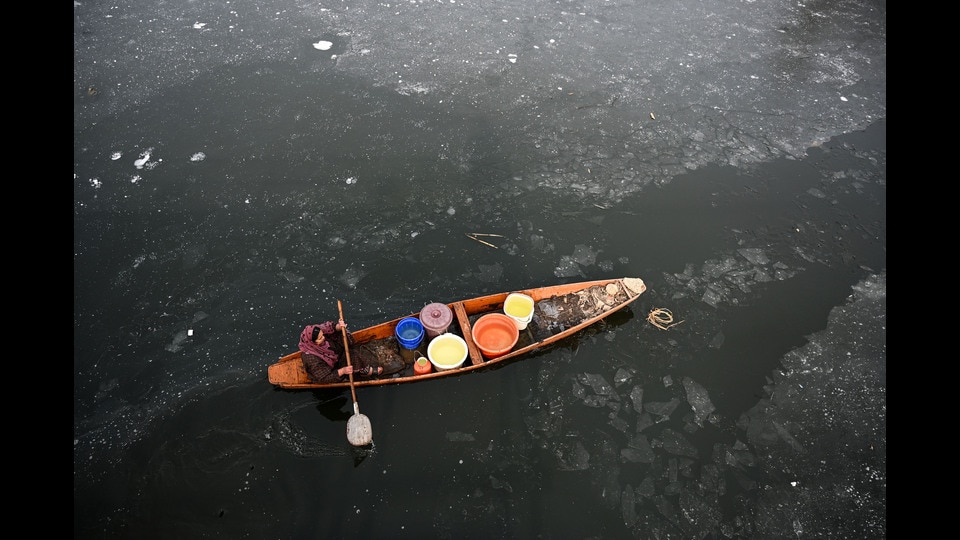
Except for some light bouts of snowfall over higher reaches, the month of December has behaved against expectations with no major snowfall in plains or the mountains causing cold wave conditions and affecting normal life in the Himalayan region.
Last week on Saturday when the Himalayan region’s 40-day harsh winter period Chilai Kalan started, the capital Srinagar witnessed -8.5 degree Celsius, the coldest in five decades, while mercury in south Kashmir’s Konibal plunged to as low as -10.5 degree Celsius. Since then the weather has been consistently cold. On Thursday, the minimum temperature in Srinagar and Konibal was -7 and -9 degree Celsius respectively.
The weather experts had warned of upcoming harsh winter and heavy snowfall in Jammu and Kashmir this winter season owing to La Nina effect – cooler sea surface temperatures in central and eastern Pacific bringing more precipitation in India – even though the J&K region witnessed around 70% deficit in rainfall in November affecting agriculture and power production.
While the temperatures have been extreme but the precipitation has been minimal. Director meteorological centre in Srinagar Mukhtar Ahmad said that December would mostly end with no major precipitation.
“Our big sources of precipitation or snowfall are Western Disturbances (moisture laden winds from Mediterranean). So far we have witnessed 7-8 WDs which were weak with no moisture and hence no major impact. That is why December has been largely cold and dry,” he said.
He said that owing to La Nina they had expected good snowfall. “La Nina does not always bring snowfall. In 50-55% of the La Nina years, there has been heavy snowfall and extreme cold. So far we have only witnessed cold weather but no wet spells,” he said.
He said they are expecting a mild wet spell between January 3 and 5. “There is forecast of extended rains and snowfall in middle and lower reaches in early January,” he said.
This extreme weather pattern could be dangerous for Kashmir’s water resources and horticulture industry especially if cold wave and dry spell continues.
Attempts being made to minimise power cuts: Omar
Chief minister Omar Abdullah expressed his predicament over the unusual cold and drought like conditions on Thursday.
“There is extreme effect of cold amid the drought like conditions. We pray for the snowfall so that we could get rid of this drought. Attempts are being made to make electricity cuts as minimal as possible,” he said.
Omar said that the cold conditions affect the supply of drinking water. “When temperatures go down during the night, it freezes the taps. Irrespective of that, attempts are being made by the government to work efficiently,” he said.
Mohammad Amin, expert at horticulture department, said that the cold and dry spell may affect agriculture and horticulture if it continues.
“Agriculture crops will get affected immediately because they need irrigation while in the long run if there are no rains in coming months as well, it will tell upon growth of horticulture crops like apple, pear and others,” he said.