
 E-Paper



Punjab agri department looking for ways to cut use of pesticides on basmati crop
Officers of the Punjab agriculture department, experts from PAU and basmati exporters are meeting on Monday to take a final decision on how to reduce the usage of insecticides and pesticides on the basmati crop


: With the sowing of the aromatic basmati nearing an end in Punjab, the agriculture department is looking for alternative ways to reduce the use of insecticides and pesticides by farmers on the premium rice crop and increase its acceptability in the international market.
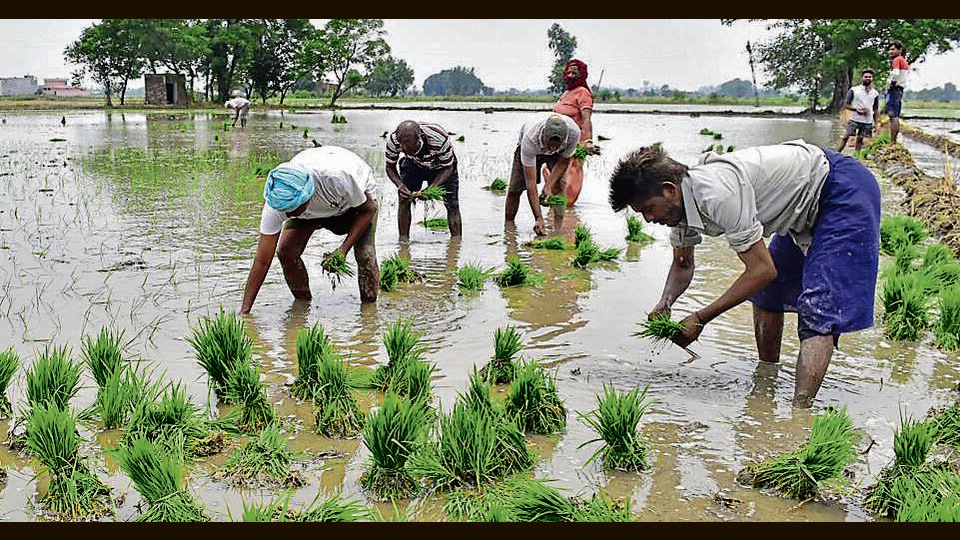
The basmati rice crop is harvested in October-November and the state department and PAU are expected to issue an advisory over the usage of alternative compounds to fight unwanted weeds, pests and insects attacking the crop.
“We have taken it as a challenge to fight against the usage of agro-chemical compounds and cut its usage to minimum,” said director agriculture Gurvinder Singh.
He said that all officers, experts from Punjab Agricultural University (PAU) and basmati exporters are meeting on Monday to take a final decision on how to reduce the usage of insecticides and pesticides on the basmati crop.
Punjab’s basmati has acceptability in foreign countries, including North America, Europe and the Middle East, for its special aroma and long grain. The state contributes to almost 40% of India’s ₹ 40,000 crore basmati exports.
However, in the past, some consignments of the basmati rice exported to foreign countries have been rejected as traces of insecticides were found on them.
The state department had in June proposed to ban on 10 compounds of agro-chemicals (pesticides, insecticides, and weedicides) farmers normally spray over premium aromatic basmati paddy so as to avoid rejection in the international market.
Apart from the two agro-chemical compounds, tricyclazole and carbendazim other agro-chemicals placed on the ban list are acephate, buprofezin, chlorpyrifos, methamidophos, propiconazole, thiamethoxam, profenofos and isoprothiolane.
“We have made a case and sent it to the government for a ban, hopefully decision will be taken in the upcoming week,” said a senior officer of the agriculture directorate.
As per the Centre’s Insecticide Act, 1968, a state government can impose a ban for 60 days which is automatically revoked after that and a permanent ban is the prerogative of the Centre’s ministry of fertiliser.
“In case of need, we may extend the ban for 60 more days,” the officer said.
Against the last kharif season’s area of 4.38 lakh hectares (10.73 lakh acres) under basmati cultivation, this year, the department is targeting to cross 5 lakh hectares (12.25 lakh acres) under the premium crop and so far, it has been sown on 4.75 lakh hectares (11.63 lakh acres). Paddy is sown over an area of 30 lakh hectares.
Due to the ongoing Russia-Ukraine war, the basmati prices are expected to shoot up in the coming season. Last season (2021), it was sold between ₹ 3,000 and 4,000 per quintal and in 2020, due to the price crash, it was sold at the minimum support price offered on the coarse variety paddy given in the public distribution system.


