
 E-Paper



Punjab: Despite dip in farm fires, air quality poorer than last year
Rain in second week of November last year had improved air quality, says an official of the Punjab Pollution Control Board. The Air Quality Index continues to getting worse as Amritsar on Thursday recorded a pollution level of 326, which falls in the ‘very poor’ bracket.

 Prefer HTon Google


Even as the state recorded 73% less cases of stubble burning in this kharif season than last year, the air quality level has remained poorer this time. The Air Quality Index (AQI) continues to getting worse as Amritsar on Thursday recorded a pollution level of 326, which falls in the ‘very poor’ bracket. The state reported only five cases of stubble burning on the day, taking the tally to 7,626. Kapurthala reported two such cases, while Fatehgarh, Ludhiana and Tarn Taran witnessed one each.
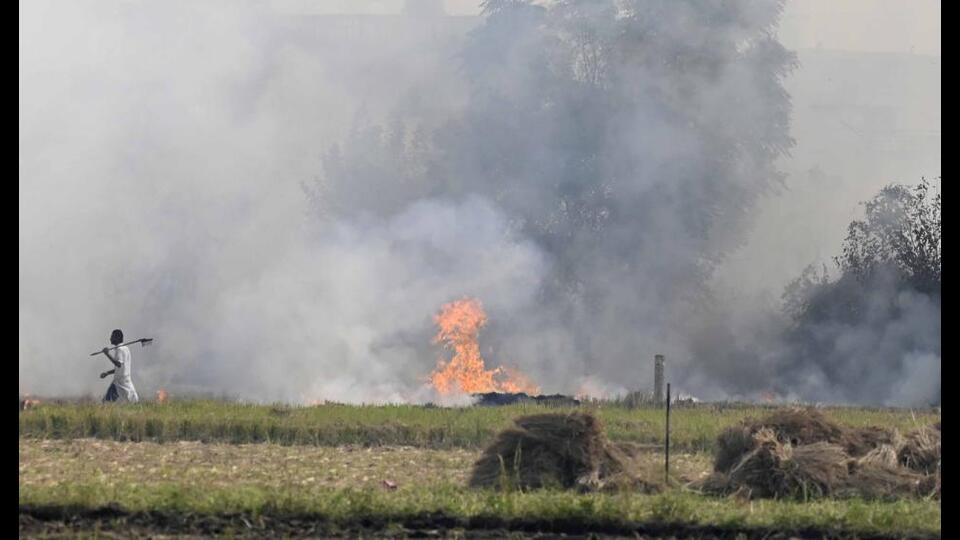
This time, only Patiala city recorded an average AQI level (186) in ‘moderate’ category (on Thursday), while two other cities fell in the ‘very poor’ bracket and five cities reported pollution levels in ‘poor’ category.
Rupnagar witnessed a high pollution level with an AQI of 303 (very poor), followed by 236 in Khanna, 223 in Mandi Gobindgarh, 216 in Ludhiana, 210 in Jalandhar, 206 in Bathinda, all in poor category.
Last year on this day, the state had recorded 1,776 active farm fire events. The AQI level recorded last year on November 14 was better than this year’s as four cities reported pollution levels in moderate category, while three cities were in poor bracket. Bathinda had reported an AQI of 390, which fell in ‘very poor’ bracket.
On this day last year, Patiala recorded an AQI of 256, followed by 240 in Ludhiana and 231 in Jalandhar, all in ‘poor’ category. Mandi Gobindgarh had witnessed a pollution level with an AQI of 199, Amritsar 192, Rupnagar 149 and Khanna 111, all in moderate category.
An official of the Punjab Pollution Control Board (PPCB) said there is a sudden dip in the temperature this year than last year due to which a thick layer of smog can be seen for the past three days. “Moreover, the second week of November last year reported heavy rainfall due to which the AQI levels improved in most of the cities. The average AQI on November 14, 2023, was 158 (moderate) whereas it is 239 (poor) this year,” the official, wishing not to be named, said.
Amrik Singh, BKU (Qadian) general secretary, said the figures clearly stated that there are multiple factors behind the high pollution levels. “The government and people should stop blaming farmers for causing pollution post paddy harvesting. If the authorities are claiming that the cases of stubble burning come down significantly, they should find the exact reasons behind the pollution levels and smog,” he said.
PPCB president Adarsh Pal Vig could not be contacted despite repeated attempts.
The state recorded a significant reduction of 26.55% in stubble burning cases in 2023 than 2022 when it reported 49,992 farm fire cases. The cases dropped by 29.84% in 2022 as compared to 2021 when 71,159 such cases were recorded. In 2020, Punjab had recorded 76,929 cases of stubble fires.


